The DTOF area-array laser sensor is one of the core technologies enabling high-precision, high-speed 3D spatial perception. With breakthroughs in miniaturization, solid-state design, and area-array imaging, it is widely used in robot navigation, autonomous driving, AR/VR, and industrial inspection. This article dives deep into its principles, advantages, and real-world applications, helping you truly understand this cutting-edge technology that is transforming human-machine interaction.
What Is It? — A Leap from “Seeing Far” to “Seeing Deep”
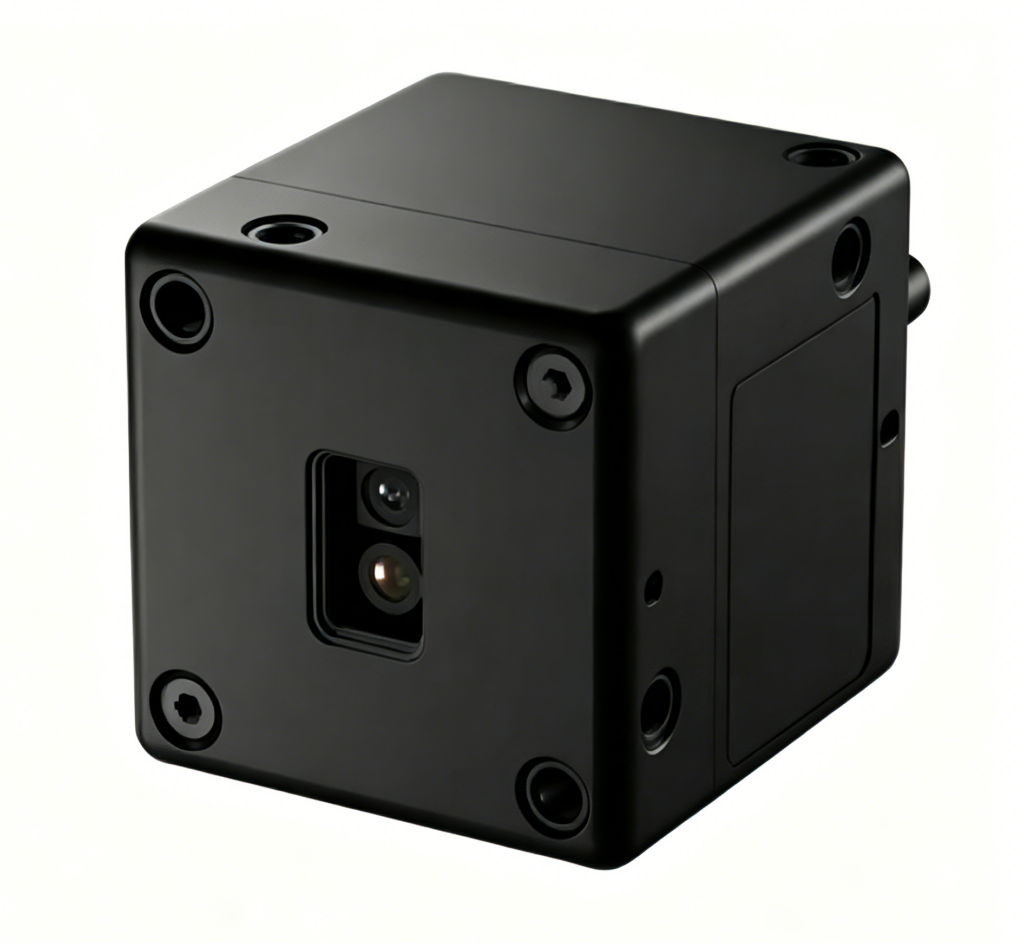
Don’t let the name intimidate you. A DTOF laser area-array sensor is, simply put, an intelligent eye that can measure the distance to objects.
You might be familiar with ordinary cameras, but they only capture 2D images — color, brightness, and shape. A DTOF sensor, however, does more than just “see”; it also “measures depth” — accurately calculating how far each pixel is from the lens, generating a 3D “depth map.”
Its core lies in “DTOF” (Direct Time-of-Flight) technology: it emits an ultra-short laser pulse, then receives the signal reflected from an object. By calculating the time it takes for the light to travel back and forth, it determines the precise distance. Sounds like a physics experiment? It is, but implemented on millimeter-scale chips.
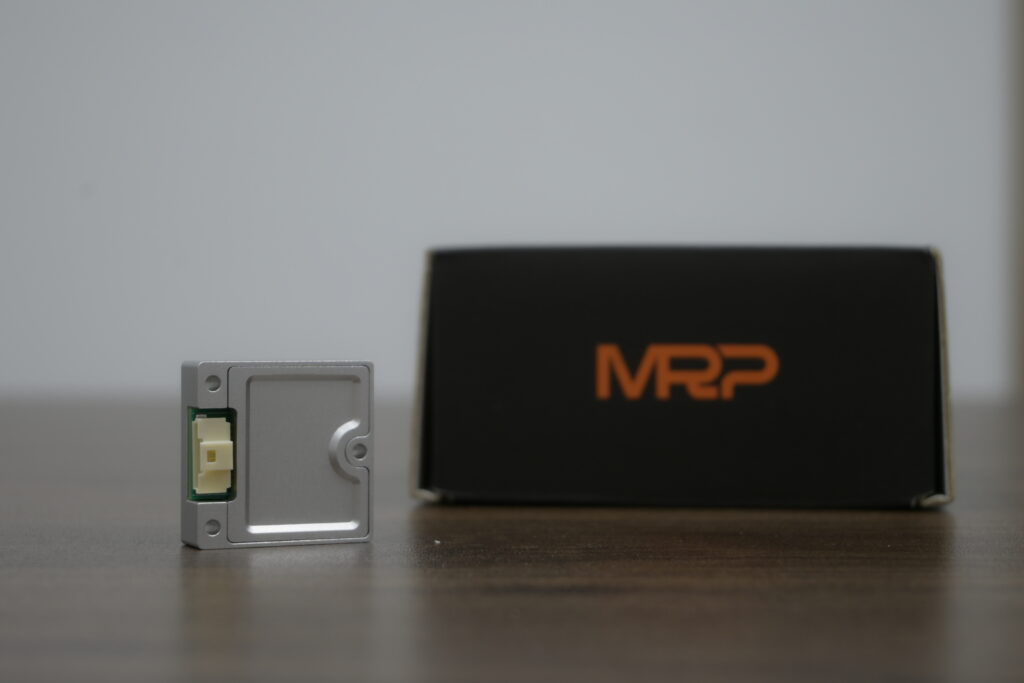
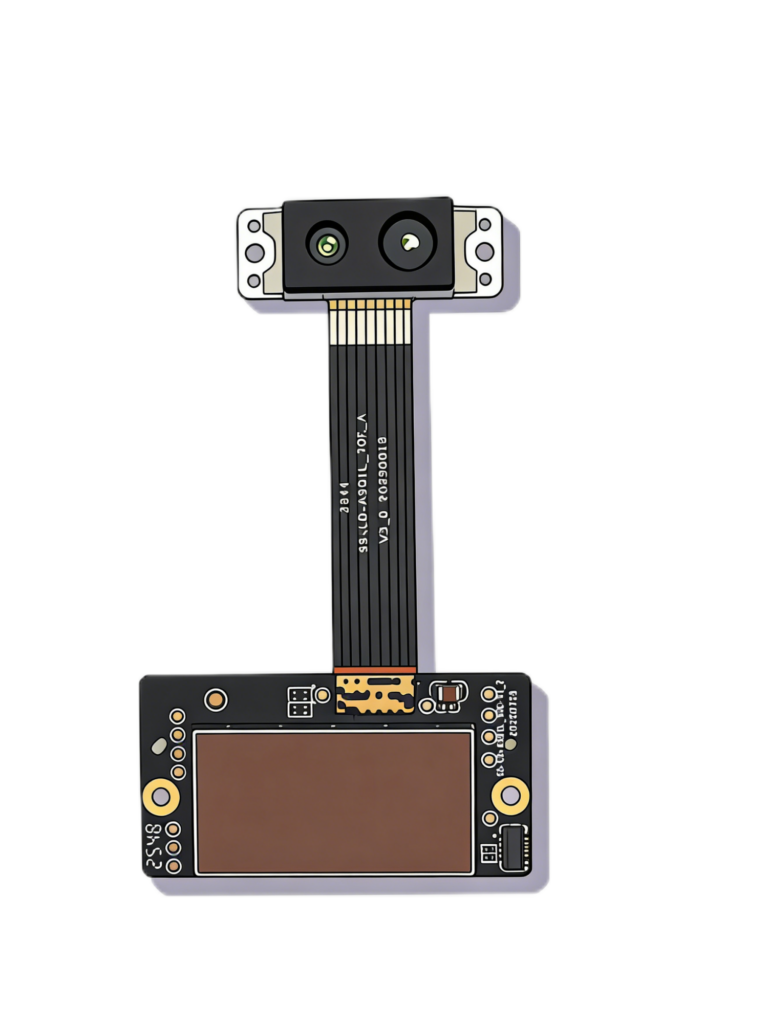
The “area-array” and “multi-pixel” features are its killer advantages. Traditional distance measurement methods often scan point by point (like single-line LiDAR), which is inefficient. The area-array design allows the entire field of view to be detected simultaneously, like taking an instant “depth photo,” dramatically increasing speed and capturing complete data. For example, the commercially available HM-LD1 module uses 940nm VCSEL and SPAD detection technology to achieve 40×30 area-array detection in a coin-sized form factor.
Even more importantly, it is “solid-state” — with no moving mechanical parts, relying entirely on electronic control. This results in a long lifespan, high vibration resistance, and a compact size, making it an ideal choice for embedded devices.
Why Has It Become a “Standard” in the AI Era? — Three Unbeatable Advantages
You might ask: Aren’t there other solutions like structured light, stereo vision, and ToF? Why is DTOF area-array laser sensor so popular?
The answer lies in its “triple superiority”:
First, higher accuracy. Compared to conventional ToF, DTOF measures time directly, is immune to ambient light interference, and maintains stable centimeter-level accuracy even under strong sunlight. For instance, the HM-LD1 achieves a typical accuracy of ±3cm and supports ambient light rejection up to 80KLux, delivering reliable data even in intense sunlight. It can also capture micrometer-level distance changes, missing no small obstacles or surface details.
Second, extremely fast response. The area-array + solid-state design enables refresh rates of 30 fps or higher, achieving near real-time depth perception. In autonomous driving, this means the system can determine within 0.1 seconds whether a pedestrian or obstacle has suddenly appeared ahead — reacting faster than a human. Even the HM-LD1 module, with its 40×30 resolution and 10fps frame rate, is sufficient for real-time perception needs on robots and drones.
Third, impressive integration. Today’s DTOF modules are as small as a few millimeters on each side, with power consumption as low as milliwatts. They can be easily embedded into phones, glasses, robot vacuums, drones, and even wearable devices. For example, the HM-LD1 weighs only 5 grams and consumes about 1.2 watts, yet integrates a complete solid-state LiDAR function, making it ideal for power- and space-constrained embedded applications.
Where Is It Making a Difference? — From Smartphones to Space Exploration
In smartphones, they have become standard in high-end models — used not only for portrait bokeh effects but also for “air gesture recognition”: wave your hand to switch music, lift to wake the screen, with even subtle finger movements captured precisely.
In smart home appliances, robot vacuums use them to “navigate” — no more bumping into walls and wandering randomly. Instead, they skillfully avoid chair legs, cables, and pet toys, planning optimal cleaning paths.
For robot developers, DTOF sensors are a core component. A plug-and-play module can significantly shorten development cycles. The HM-LD1, for example, not only delivers solid performance but also provides a full SDK for x86 Windows, x86 Linux, and ARM Linux, supporting multiple communication protocols like UART, UDP, and UVC. This allows developers to quickly equip robot dogs, drones, and industrial robots with powerful 3D perception capabilities.
In industrial automation, DTOF is replacing the “sense of touch” in traditional robotic arms: through real-time 3D modeling, it automatically determines part positions, enabling high-precision gripping and assembly, greatly improving production line efficiency.
In medical imaging and robotic surgery, it helps doctors build accurate 3D models of patient surfaces, assisting in pre-operative planning and post-operative evaluation.
Even more astonishingly, some of NASA’s Mars rovers are considering similar technologies for terrain mapping. Just imagine: a sensor smaller than a coin helping to “read” the landscape of a distant planet — that’s the power of technology.
The Road Ahead: Not Just “Seeing Clearly,” But “Understanding”
Currently, DTOF area-array sensor technology is still evolving rapidly. The next generation will move toward higher resolution, lower power consumption, and stronger anti-interference capabilities. For example, by integrating AI algorithms, sensors will not only measure distance but also recognize object types and predict motion trajectories, truly achieving “environmental understanding.”
At the same time, costs continue to fall. Modules that once cost tens of thousands of yuan now have mature solutions for as little as a few dozen yuan, available for consumer-grade products. If you are looking for a cost-effective, reliable, and easy-to-integrate DTOF area-array sensor, take a look at products like the HM-LD1. They are bringing high-end technology into everyday robotics projects and maker hands. This indicates that in the near future, every children’s smart robot and every entry-level AR glasses will have the ability to “see the depth of the world.”
Of course, challenges remain — such as penetration in rainy or foggy conditions, and the difficulty of recognizing transparent or reflective materials. But with advances in materials science and chip manufacturing, these issues will eventually be overcome.
It is foreseeable that DTOF area-array laser sensors will not just be “tools”; they will become the most natural “bridge” between humans and the digital world — enabling machines to truly “see” and “understand” the space we inhabit.