Introduction: The Shifting Landscape of Depth Perception
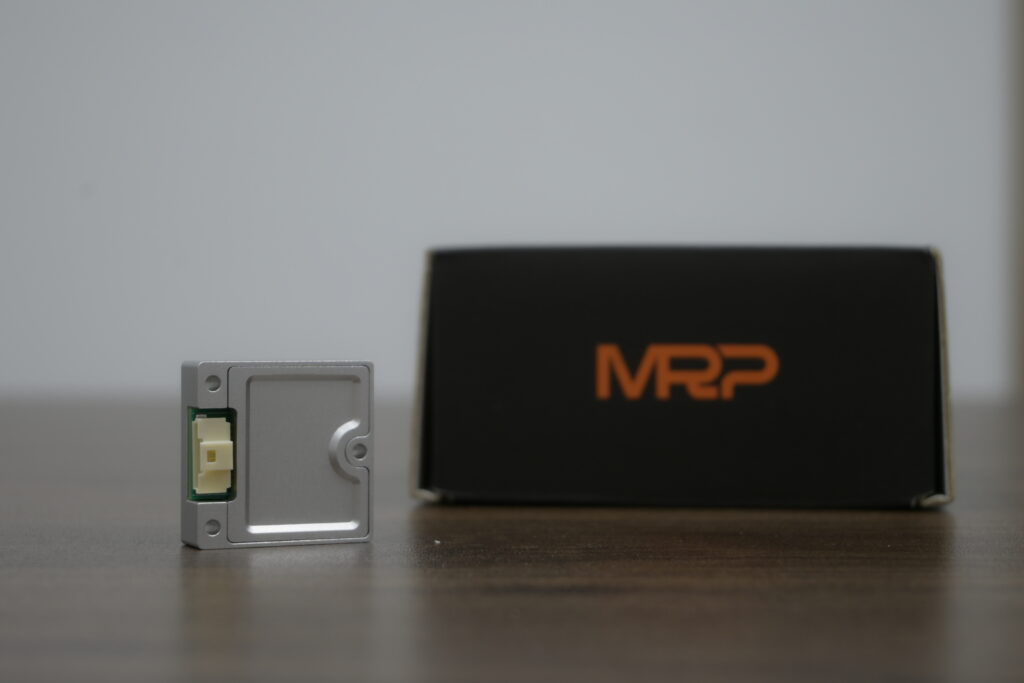
The recent announcement of the Sony AS-DT1 sensor has brought significant attention to the advancement of solid-state depth sensing technology. This new offering from Sony underscores the industry’s move toward compact, precise perception for autonomous systems. However, for engineers and product managers in the robotics and unmanned aerial vehicle sectors, the Sony release invites a necessary comparison with established, purpose-built alternatives like the HM-LD1. While both devices leverage the precision of direct time-of-flight methodology, a closer examination of specifications reveals distinct design philosophies. This analysis contrasts the Sony AS-DT1 with the HM-LD1, highlighting why the latter often represents a more pragmatic and high-performance choice for real-world deployment.
Physical Footprint and Weight: The Uncompromising Demand for Lightness
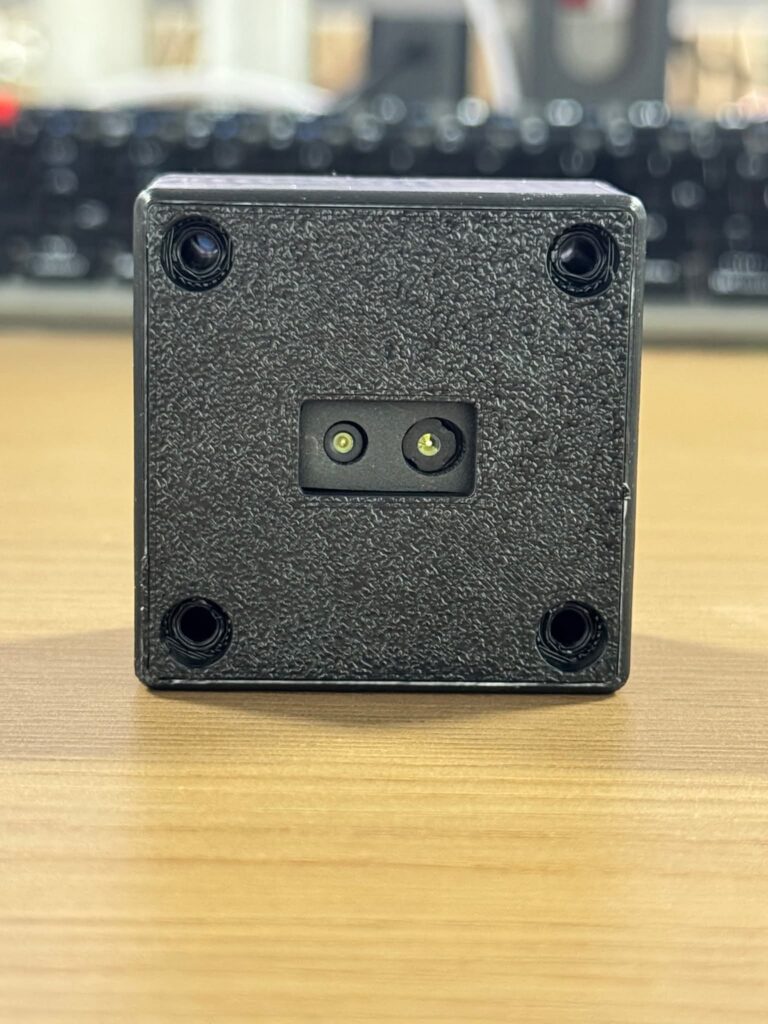
In fields such as drone navigation and mobile robotics, every gram saved translates directly to extended flight time and reduced motor strain. Here, the difference between the two modules is not marginal—it is transformative. The Sony AS-DT1 dToF weighs 50 grams and occupies a volume defined by its 29mm x 29mm x 31mm aluminum chassis. This is a reasonable specification for industrial equipment but presents a payload challenge for small aerial systems or lightweight robotic limbs.
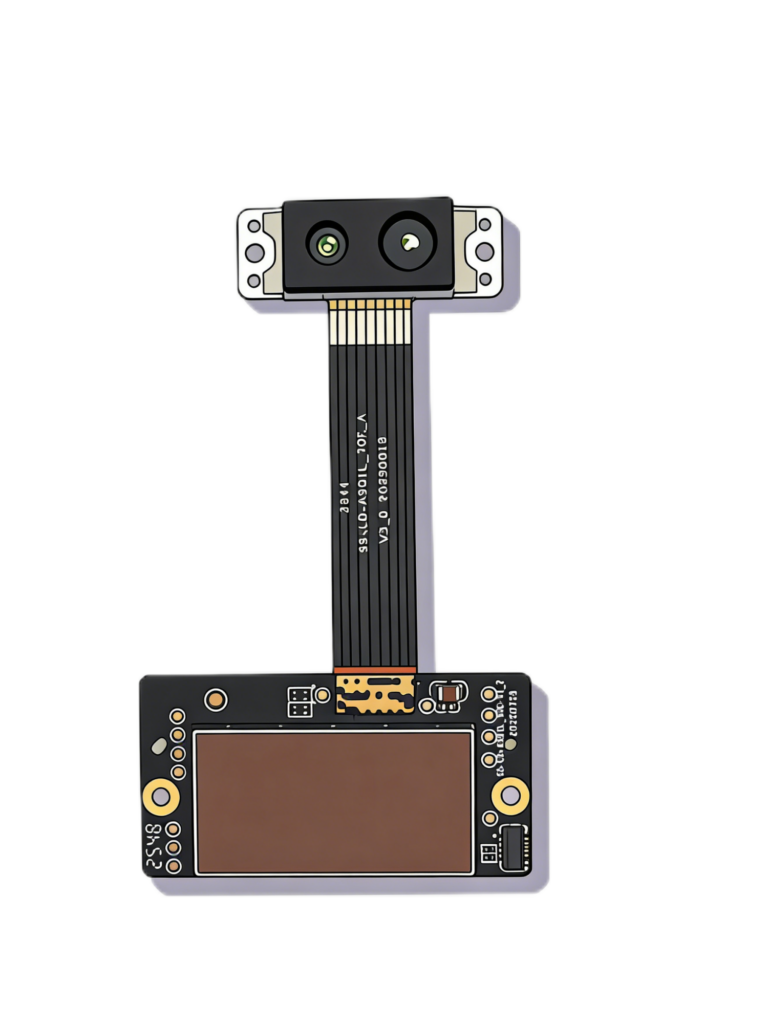
In stark contrast, the HM-LD1 dToF weighs less than 20 grams. This represents a 60% reduction in mass compared to Sony’s offering. For a UAV operator, this weight delta is the difference between carrying a payload and carrying the sensor itself. The HM-LD1 is engineered with an emphasis on minimal mass, allowing it to be integrated into applications where the Sony unit would be prohibitively heavy. When size and weight are the primary constraints of the design brief, the HM-LD1 dToF provides a clear and decisive advantage in mechanical integration.
Field of View and Ambient Resilience: Seeing the Bigger Picture in Bad Light
The utility of a depth sensor is often defined not just by how far it sees, but by how much it sees and how well it handles optical noise. Sony specifies a horizontal field of view above 30 degrees. This narrower cone is optimized for long-range, focused inspection tasks. While this is useful for inspecting infrastructure like bridges or dams, it creates significant blind spots for robots navigating cluttered indoor spaces or avoiding obstacles at close range.
The HM-LD1 dToF provides a wider 60°(H) x 45°(V) field of view. This expansive perspective is crucial for situational awareness, allowing a robot to detect low-lying obstacles and side-approaching objects without requiring additional mechanical panning or multiple sensor arrays.
Furthermore, environmental robustness is a cornerstone of the HM-LD1’s design. The Sony unit demonstrates strong range performance at 100,000 lux (summer sunlight). The HM-LD1, however, is rated for 80,000 lux rejection with algorithmic optimization. While the numerical value is slightly lower, the practical outcome in operational use is indistinguishable for most outdoor scenarios. The HM-LD1 maintains stable, accurate data output even under harsh indoor lighting or direct sun, ensuring that the perception pipeline does not collapse when the robot moves from shade to bright light. This combination of a wider viewing angle and robust optical filtering makes the HM-LD1 a more versatile all-rounder for dynamic environments.
dToF Range and Precision: Matching Application to Spec
The Sony AS-DT1 dToF boasts an impressive maximum range of 40 meters indoors. This is a standout figure that serves applications like long-corridor mapping or high-altitude drone surveying. However, for the majority of commercial and service robots—particularly those operating in homes, offices, or warehouses—this range is often beyond operational necessity.
The HM-LD1 dToF offers 25 meters indoors and 8 meters outdoors. More critically, it delivers ±3 cm accuracy. This is a vital metric. In a 10-meter test environment, Sony’s preliminary data suggests an accuracy of ±5 cm. While both figures are respectable, the 3 cm precision of the HM-LD1 provides a tighter tolerance band for fine manipulation and close-quarters navigation. For a robotic arm attempting to grasp an object or a drone landing on a precise pad, that 2 cm difference in certainty is significant. The HM-LD1 dToF prioritizes accuracy within the functional envelope where robots actually operate, rather than chasing extreme range metrics that are rarely utilized.
Integration Ecosystem and Power Efficiency
Finally, the operational viability of a sensor hinges on how easily it talks to the host system and how much energy it consumes. Sony’s specifications remain preliminary in terms of software interface, but the HM-LD1 offers a mature and documented integration path. It supports UART, UDP, and UVC protocols and provides SDKs for x86 Windows, x86 Linux, and ARM Linux platforms. This cross-platform support significantly lowers the barrier to entry for developers, enabling rapid prototyping without the friction of proprietary or poorly documented drivers.
Power consumption is another domain where the HM-LD1 excels. Drawing just 1.2 Watts, it places minimal strain on a robot’s battery budget. While Sony has not published final power figures for the AS-DT1, the larger form factor and aluminum heatsinking suggest a higher thermal envelope. In a battery-powered autonomous system, efficiency is not just a feature; it is a fundamental requirement for uptime and reliability.
Conclusion: Purpose-Built for Robotics Reality
The Sony AS-DT1 is an intriguing entry into the market, showcasing the company’s undeniable expertise in optical miniaturization and long-range measurement. It will likely find a home in specialized industrial inspection and mapping.
However, for the vast ecosystem of robotics, education, and commercial drones, the HM-LD1 presents a more compelling and balanced portfolio. It decisively wins the battle of weight , offers a more practical field of view for navigation, and delivers tighter accuracy in the near-to-mid range where most interactions occur. While Sony relies on its brand legacy, the HM-LD1 relies on engineering specificity—delivering a lighter, more adaptable, and developer-friendly solution for the machines that need to see the world right in front of them.