RTK Doesn’t Fail in the Lab — It Fails in the Field
It’s late afternoon on a job site. You’re working near tree cover, maybe alongside a partially constructed building. Your RTK receiver shows a fixed solution, and everything looks stable — until it suddenly isn’t. The signal drops, the fix is lost, and you find yourself waiting again.
This is not a rare edge case. It’s a pattern. And for many teams, it becomes part of the daily workflow: reacquire, reposition, retry.
The issue is not whether RTK works. On paper, most systems can deliver centimeter-level accuracy. The real issue is whether that accuracy can be maintained when conditions are no longer ideal. That is where the difference between single-band GNSS and multi-band RTK becomes impossible to ignore.
What Actually Changes with Multi-Band RTK GNSS
At first glance, both single-band and multi-band systems appear similar. Both track satellites. Both output positioning data. Both claim high accuracy. But the difference is hidden in how they handle imperfect signals.
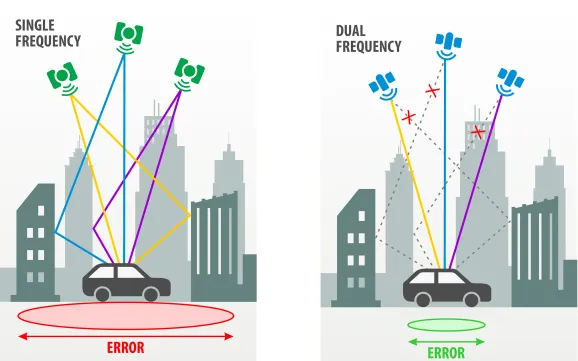
Single-band receivers rely on one frequency, typically L1. In open environments, this is often sufficient. But as soon as signals are affected by tree canopy, reflections from buildings, or atmospheric interference, the system has no reliable way to distinguish between clean and corrupted data.
Multi-band RTK GNSS systems approach the problem differently. By processing multiple frequencies simultaneously, they can compare signal behavior and detect inconsistencies. This allows the receiver to correct ionospheric errors, reduce multipath effects, and maintain a stable solution even when the signal environment degrades.
The result is not just higher accuracy, but more importantly, consistent accuracy.
Why Multi-Band RTK Matters in Real Environments
In controlled environments, almost any GNSS system can perform well. But real-world work rarely happens under perfect sky conditions. Surveyors move between open areas and partial obstructions. Robots navigate spaces with unpredictable interference. Drones operate near structures that distort signals.
In these situations, the value of multi-band RTK becomes clear. It is not about achieving a better number on a specification sheet, but about avoiding interruptions in the workflow. A system that maintains fix longer, reacquires faster, and behaves predictably under changing conditions directly translates into time saved and errors avoided.
Over the course of a working day, even small improvements in stability accumulate. Fewer signal dropouts mean fewer repeated measurements. Less time spent troubleshooting means more time spent completing actual work.
The Cost of Losing RTK Fix
Many teams initially choose single-band solutions because of lower upfront cost. On paper, the difference may seem reasonable. But in practice, the hidden cost appears in lost productivity.
Every time a fix is lost, time is lost. Even short delays add up across a project. When multiplied over days and weeks, this becomes measurable impact on delivery timelines and operational efficiency.
Multi-band RTK is often seen as an upgrade. In reality, it is better understood as a tool for reducing uncertainty. And in field work, uncertainty is often more expensive than hardware.
Multi-Constellation Alone Is Not Enough
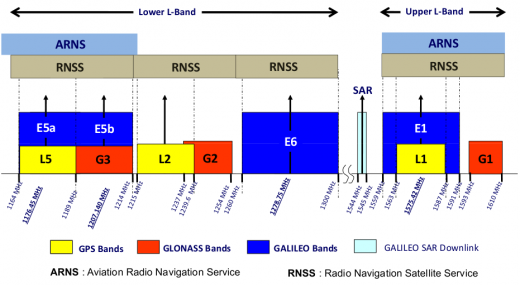
Modern GNSS systems support multiple constellations such as GPS, GLONASS, BeiDou, and Galileo. While this increases the number of visible satellites, it does not fully solve the problem of signal degradation.
Without multi-band capability, all these signals are still processed on a single frequency. The system gains quantity, but not necessarily quality.
Multi-band RTK changes that balance. When combined with multi-constellation support, it creates a system that not only sees more satellites, but also understands them better. This combination allows for both stronger initial acquisition and more reliable positioning when conditions become challenging.
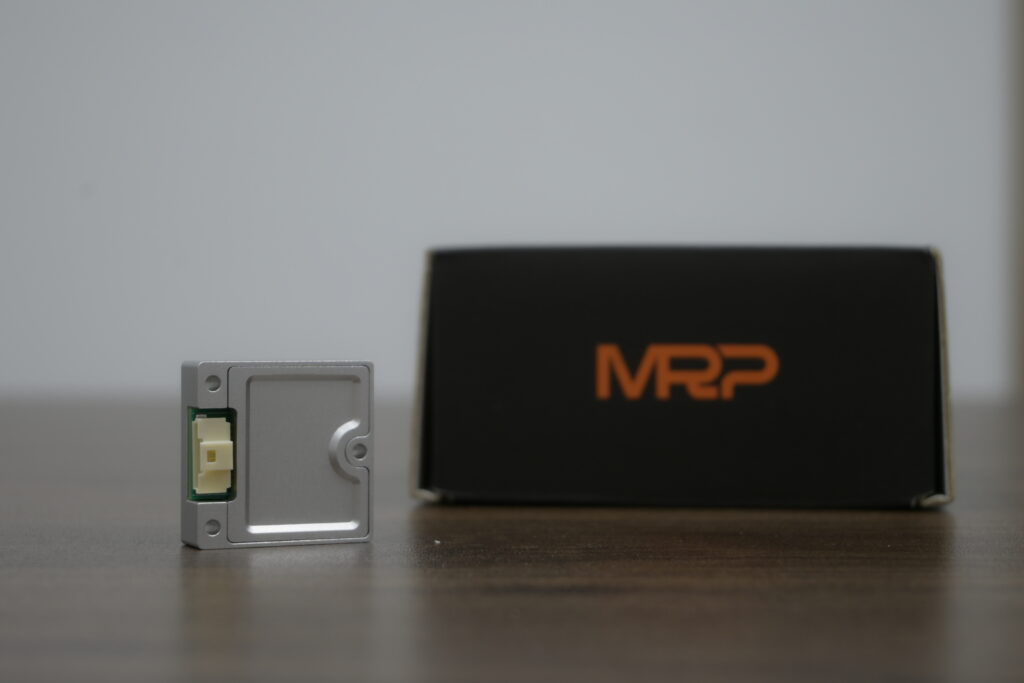
A Practical Solution: HM-D13 Multi-Band RTK Module
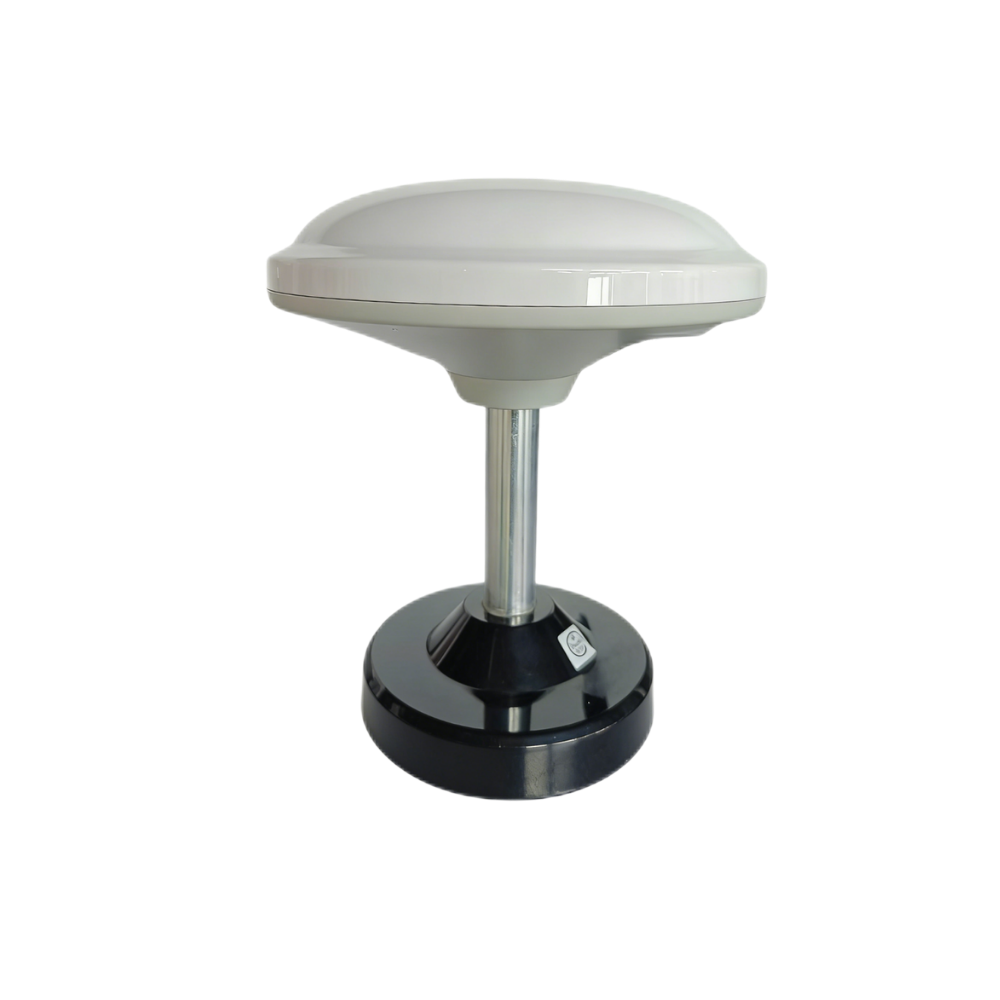
For developers and professionals working in real-world environments, the need is not theoretical performance but dependable results. The HM-D13 multi-band RTK module is designed with that requirement in mind.
Instead of focusing purely on specifications, it emphasizes stability and usability. Its mushroom antenna design improves signal reception, especially in environments where traditional flat antennas struggle. Combined with multi-band GNSS processing and multi-constellation support, it provides a positioning system that is resilient to interference and capable of maintaining RTK fix under more demanding conditions.
This makes it suitable not only for surveying, but also for drones, robotics, and autonomous systems where reliability matters more than peak performance.
Learn more:
https://myrobotproject.com/product/multiband-rtk-survey-module-hm-d13/
GNSS vs RTK: Choosing Based on Reality, Not Specs
The decision between GNSS and RTK is often framed as a question of accuracy. But in practice, it is a question of application.
For basic navigation, GNSS is often sufficient. For development and embedded systems, it provides a balance between cost and performance. But when consistent precision is required across varying environments, RTK becomes necessary — and within RTK, multi-band capability becomes the baseline rather than the upgrade.
Final Thought
Accuracy is easy to achieve under ideal conditions. Reliability is much harder.
Multi-band RTK GNSS does not just improve accuracy. It ensures that accuracy remains usable when conditions are no longer perfect. And in real-world applications, that difference is what defines whether a system is merely functional or truly dependable.