一、Test Conclusions
- Overall Performance (all data in this round): UM980 ≥ UM960 ≈ D20 >> u-blox F9P
- Overall Fixed Solution Ratio in Dynamic Scenarios: UM980 (94.6%) > UM960 (90.5%) ≈ D20 (89.5%) >> u-blox F9P (73.3%)
- When traversing under tree canopy: D20 exhibited the lowest fixed solution rate (73%) < F9P (75%) < UM960 (83%). When passing under bridges: D20 required the longest recovery time to reacquire fixed solution (28.4s) > UM960 (26.9s) > UM980 (23.8s) > F9P (23.7s)
- In relatively open scenarios: The overall performance of high-performance modules (UM980/UM960/D20) is comparable, with differences clearly converging.
二、Test Overview
• Evaluation Subjects: Four RTK modules — UM980, UM960, u-blox F9P, and D20.
• Test Items: This test encompasses six distinct test areas.
• Test Equipment and Configuration:
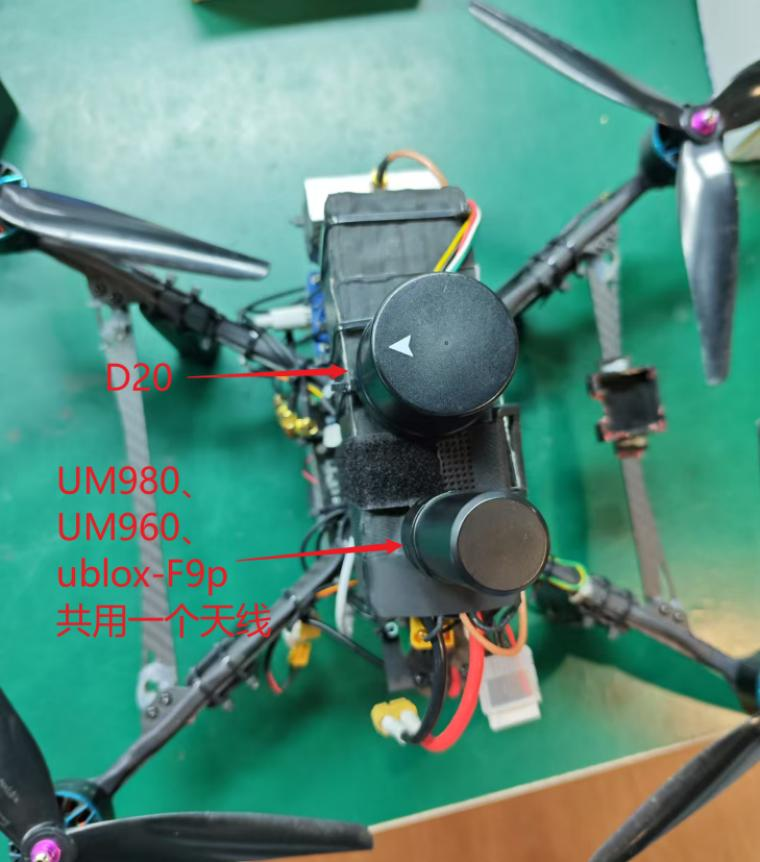
- Signal Source Consistency for Three Modules: Three modules share a single quadrifilar helix antenna, while the D20 module utilizes its own dedicated quadrifilar helix antenna.
- Identical Correction Source: Each of the four modules employs an individual Qianxun CORS account for differential corrections.
- Data Output: 10 Hz NMEA output; GGA sentences are parsed for analysis.
- UAV Flight Controller Integration: The UAV utilizes the RTK positioning results from the u-blox F9P module as the GPS positioning input for the flight controller.
三、Test Results
3.1 Test Environment Selection
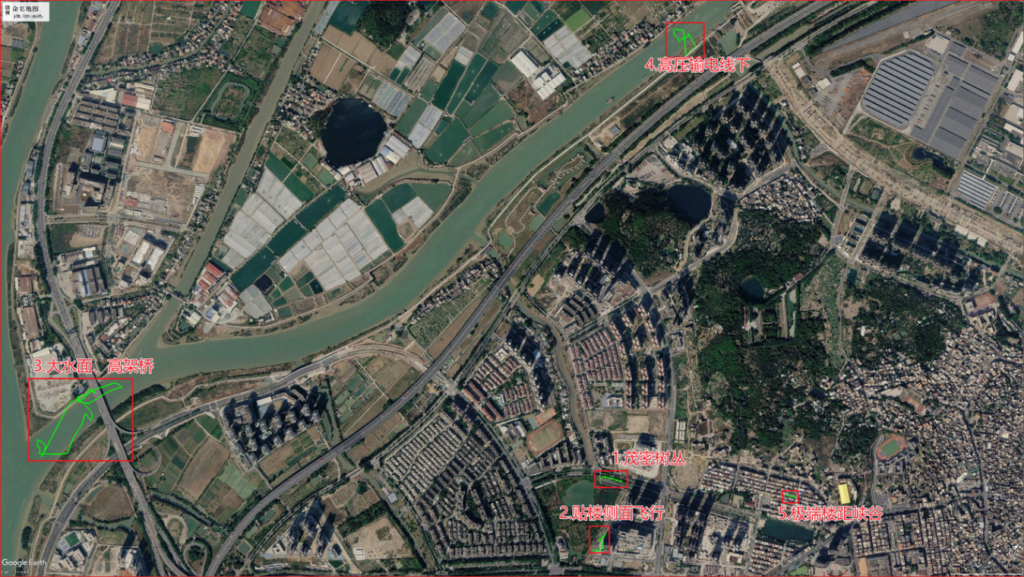
The test environments consist of six distinct test areas:
1. Dense Tree Canopy: Flight from an unobstructed area into regions heavily occluded by dense tree canopy.
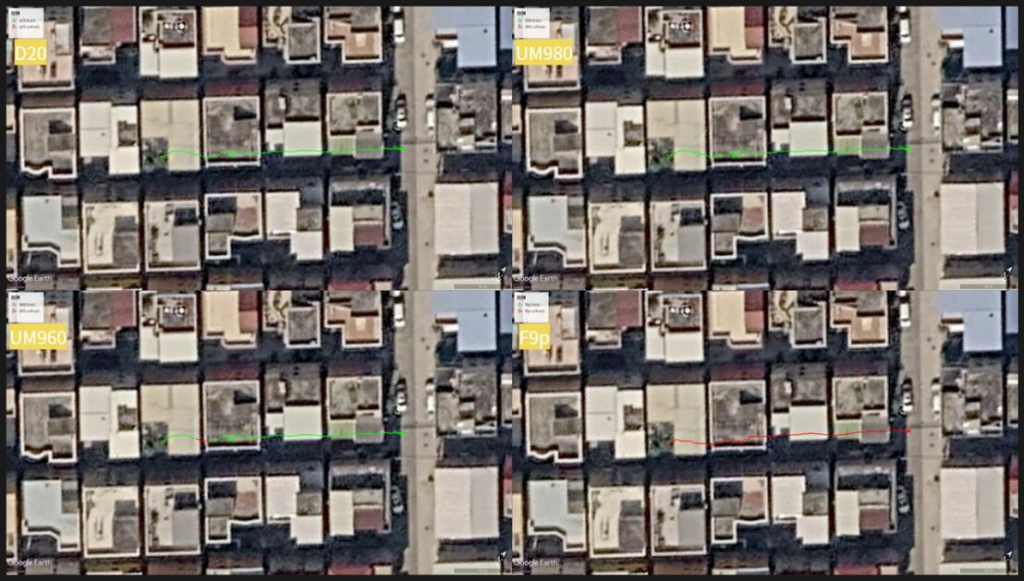
2. Close to Building Facade: Low-altitude flight beside a shopping mall facade at a lateral distance of 1 to 3 meters.
3. Large Water Surface: High-speed flight and sharp turning maneuvers over a water channel.
4. Under Overpass/Viaduct: Traversing directly beneath a viaduct, as well as flying along the edge of the bridge with partial sky visibility.
5. High-Voltage Power Lines: Flight at an altitude approximately 20 meters below high-voltage transmission lines, including traversing directly beneath the cable array.
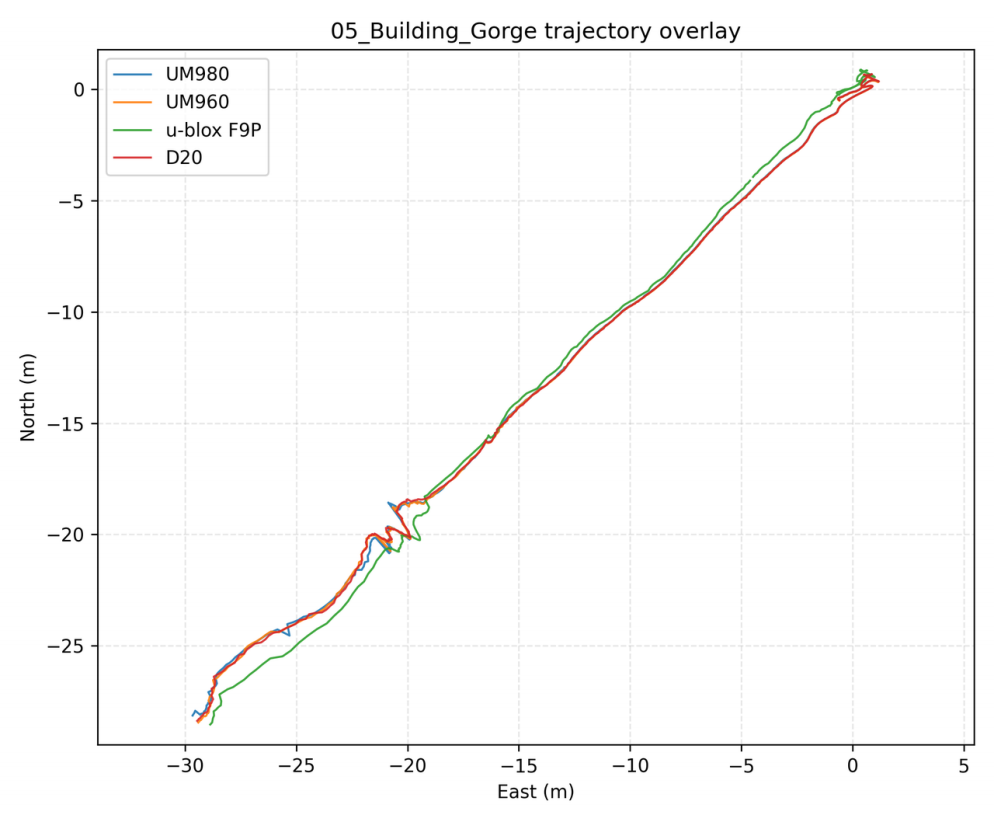
6. Extreme Building Canyon: Flight through an extremely narrow corridor between buildings with a clearance of only 5 meters, designed to evaluate performance in the most constrained urban scenarios.
3.2 Fixed Solution Rate Summary
| Equipment Fixed Solution Rate | Average Fixed Rate | Test1 | Test2 | Test3 | Test4 | Test5 | Test6 | Test7 |
| UM980 | 0.946 | – | 99.92% | 100.00% | 100.00% | 100.00% | 88.47% | 79.26% |
| UM960 | 0.905 | 83.43% | 99.84% | 96.24% | 95.87% | 96.80% | 85.74% | 75.25% |
| D20 | 0.895 | 73.88% | 100.00% | 96.90% | 100.00% | 100.00% | 80.28% | 75.58% |
| u-bloxF9P | 0.733 | 75.37% | 88.46% | 95.50% | 95.75% | 0.00% | 84.92% | 72.86% |
3.3 Visual Comparison Chart
Test 1: It can be observed that upon initial entry into the wooded area, the D20 experienced a prolonged segment where fixed solution positioning switched to non-fixed solution status. This segment lasted for a duration of 37 seconds, covering a distance of 23 meters.
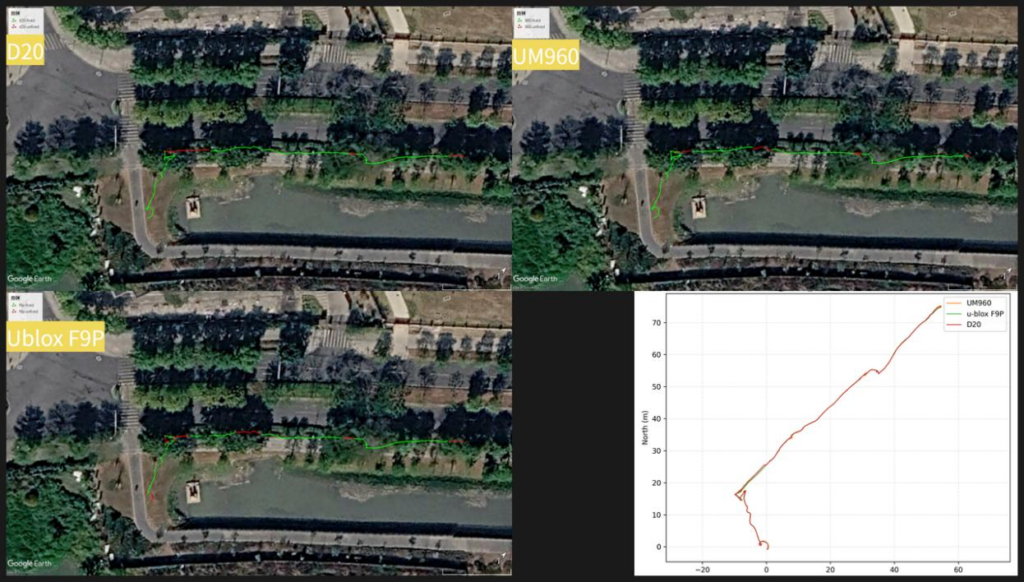
The figure above displays the trajectories of the three modules. The green trajectory indicates a fixed solution, while the red trajectory indicates a non-fixed (float) solution. For this specific data segment, no usable data was collected for the UM980 module due to connectivity issues.
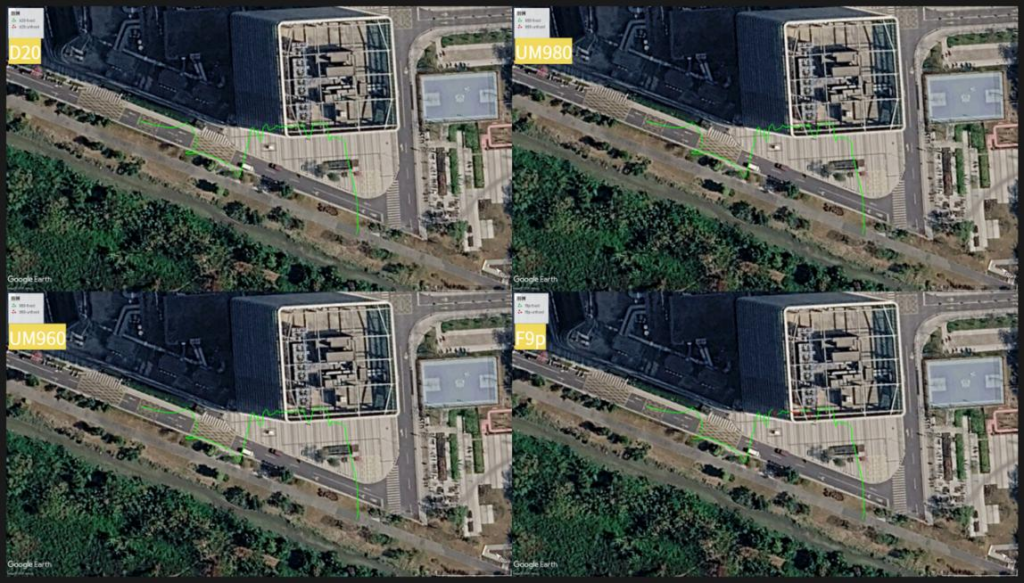
Test 2: Close-proximity flight test adjacent to building exterior
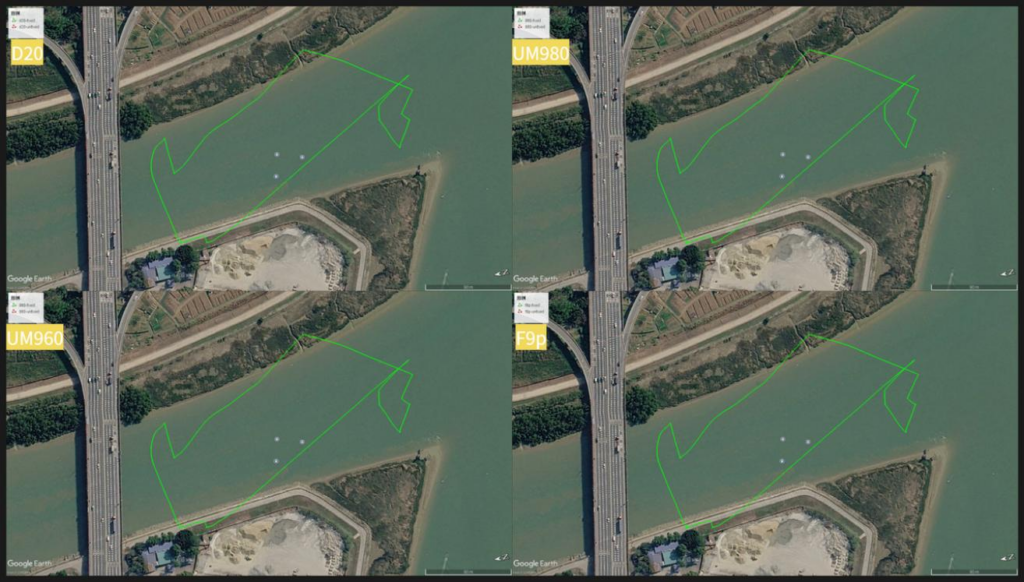
Test 3: Large water surface test. No major offsets were detected during this segment
Test 4: Flight test conducted beneath high-voltage transmission lines
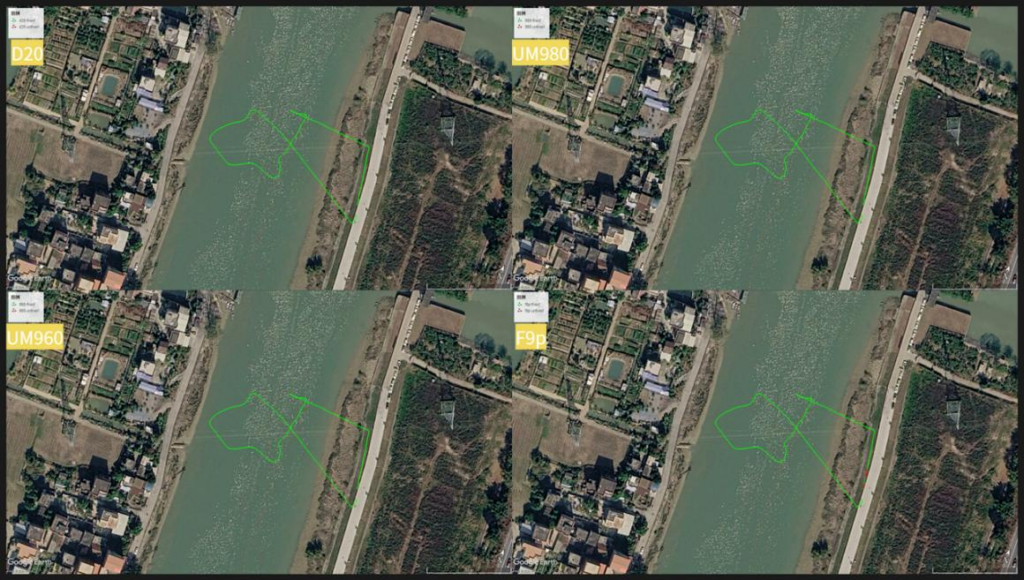
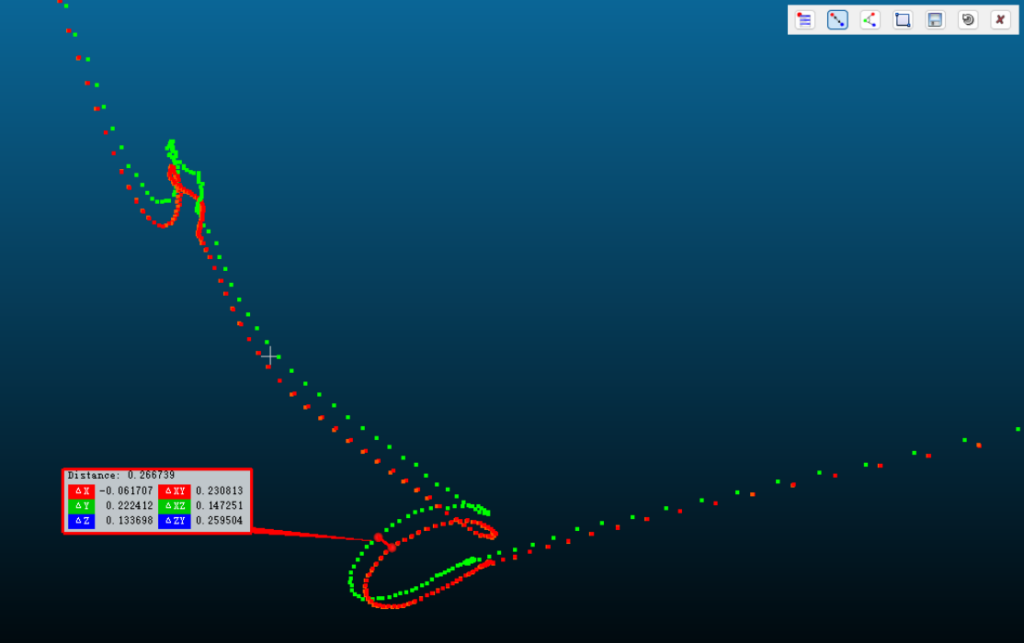
Figure below: The D20 trajectory (green) exhibits an offset of 26 cm compared to the UM980 (red) and UM960 (orange) trajectories. Trajectory alignment in other areas remains highly consistent.
Test 5: Positioning test conducted in an extreme building canyon environment with narrowly spaced structures
With the exception of the D20 device, all other equipment exhibited varying degrees of non-fixed solution occurrences. Among them, the F9P performed the most poorly, rendering its output practically unusable. Under this specific scenario, the flight controller was barely able to maintain positioning relying solely on the F9P output
Test 6: Two lateral traverses beneath a bridge structure
| Loss-of-Lock Time Comparison | Maximum Loss-of-Lock Duration | Percentage of Time in Loss-of-Lock |
| D20 | 28.4s | 19.73% |
| UM980 | 23.8s | 11.54% |
| UM960 | 26.9s | 14.27% |
| ublox-F9p | 23.7s | 12.66% |
All devices at this location experienced a solution status transition from 4 to 5 to 2. Therefore, the significant position jump observed in the UM960 module is also considered normal under these conditions
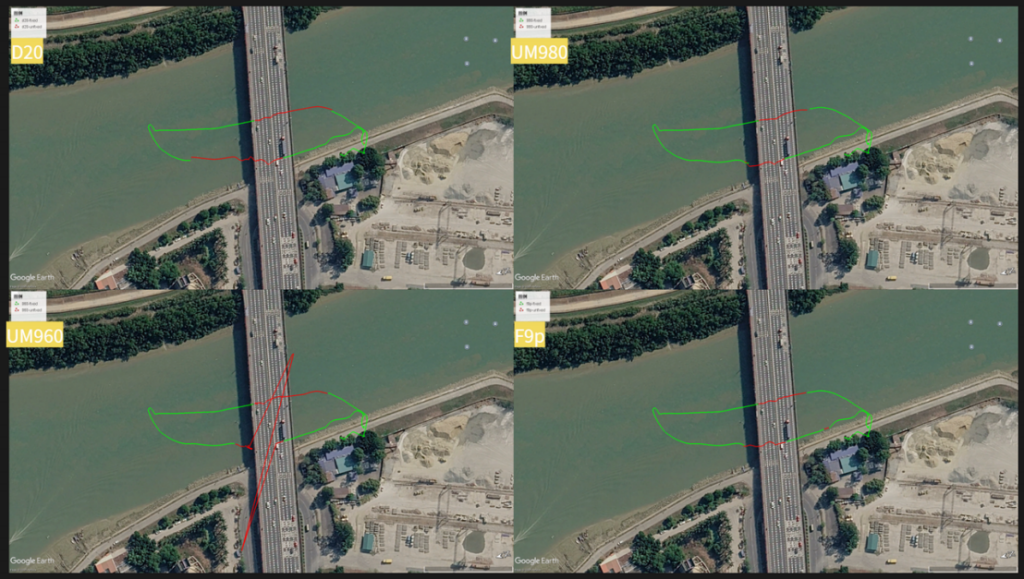
In this scenario, the D20 module exhibited the longest recovery time to reacquire a fixed solution among the four devices tested
All four devices experienced degradation of the fixed solution status to level 2 (DGPS) while under the bridge. Relatively speaking, the D20 module exhibited the slowest recovery speed
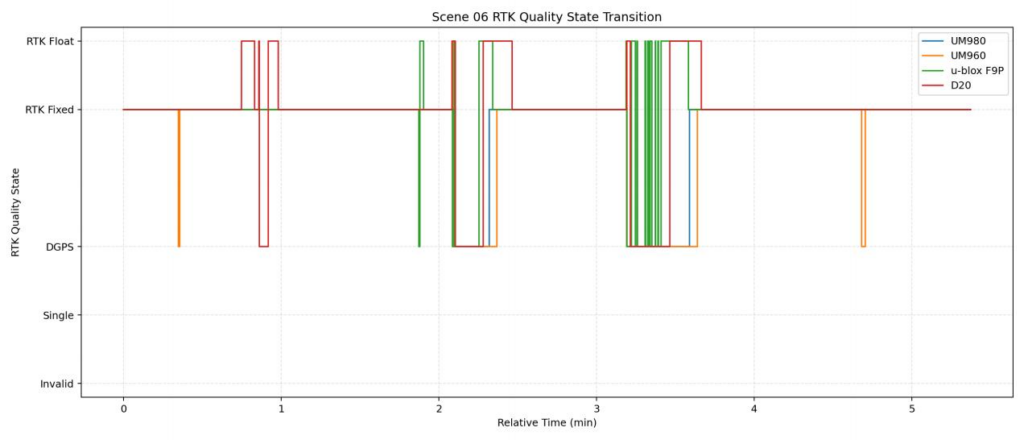
Overall trajectory plot of under-bridge traversal:
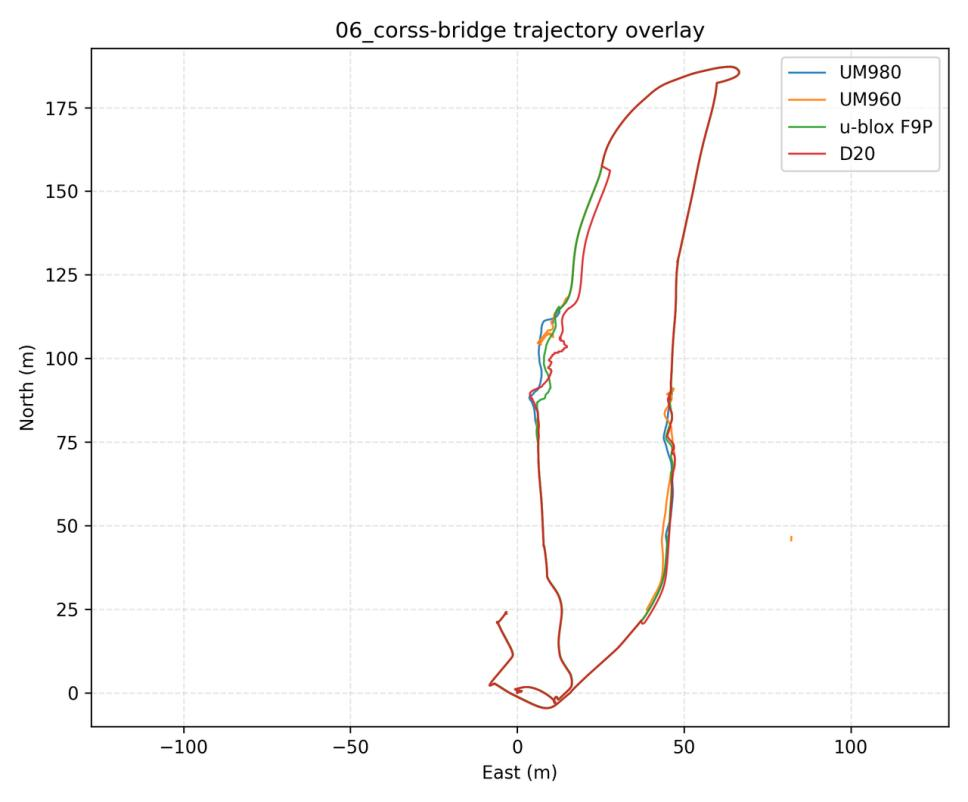
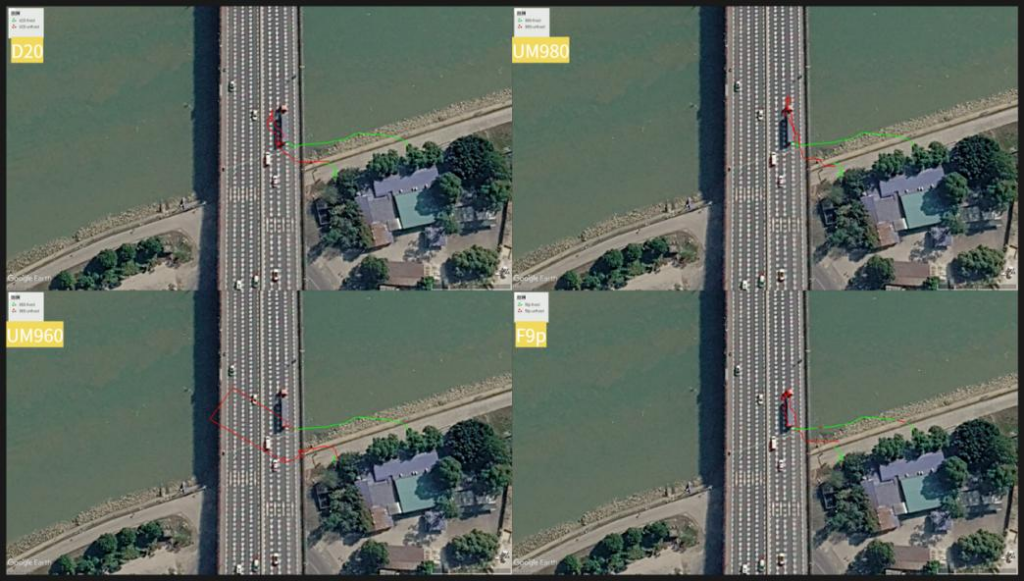
Test 7: Flight along the bridge edge under partial bridge coverage
All devices at this location experienced a solution status transition from 4 to 5 to 2. Therefore, the significant position jump observed in the UM960 module is also considered normal under these conditions.
If you would like to learn more about this product, you can click to visit our official website.