Why Obstacle Sensing Is Non‑Negotiable for Modern Drones
Today’s drones operate far beyond basic aerial photography. They perform industrial inspection, agricultural spraying, logistics delivery, search and rescue, and indoor autonomous flight—often in complex, dynamic, or GPS‑denied environments. In these scenarios, weak or delayed obstacle sensing leads to collisions, equipment damage, mission failure, and even safety hazards. Whether flying near power lines, trees, buildings, bridges, or moving objects, drones need fast, accurate, and robust depth perception to react instantly and avoid obstacles.
Traditional sensing solutions have critical limits. Cameras struggle in low light, strong sunlight, fog, or against low‑reflectivity surfaces. Ultrasonic sensors lack precision and range. Many lightweight rangefinders only offer single‑point detection, not full spatial awareness. For real‑world drone missions, you need a dedicated, high‑performance depth module that combines long range, high accuracy, strong anti‑interference, compact size, and low power consumption. That is exactly where our HM‑LD1 dToF solid‑state LiDAR excels, providing stable obstacle sensing so drones can avoid obstacles with confidence.
What Is dToF and How It Elevates Drone Obstacle Sensing
Direct Time‑of‑Flight (dToF) is a leading depth‑sensing technology that sends sub‑nanosecond laser pulses and measures the exact round‑trip time of reflected photons to calculate distance with extreme precision. Unlike indirect ToF or stereo vision, dToF delivers strong ambient light resistance, high temporal resolution, and stable ranging across diverse surfaces and lighting conditions.
The HM‑LD1 uses advanced dToF tech paired with high‑sensitivity SPAD detectors and a 940 nm VCSEL Class‑1 eye‑safe light source. This combination ensures every measurement is fast, reliable, and safe. For drones, dToF means consistent obstacle sensing even in bright sunlight up to 80,000 lux, delivering clear depth data and point clouds that let the flight controller make quick decisions to avoid obstacles.
Key Specs of HM‑LD1 That Strengthen Obstacle Sensing
To support stable obstacle sensing and help drones avoid obstacles in real time, the HM‑LD1 is built with performance‑driven hardware:
- Ranging: Indoor 0.5–25 m; Outdoor 0.2–8 m
- Accuracy: ±3 cm under standard conditions
- FOV: 60° (H) × 45° (V) for wide spatial coverage
- Resolution: 40×30 depth pixels for detailed environmental modeling
- Frame rate: 10 fps for real‑time perception
- Interface: UART, UDP, UVC for easy integration
- Power: 1.2 W at 5 V
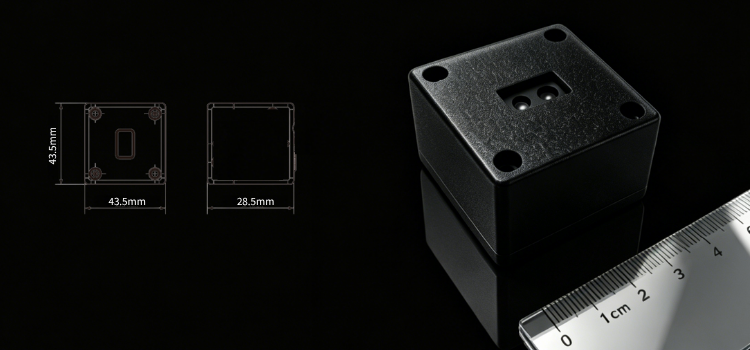
- Dimensions: 43.5×43.5×28.5 mm
- Weight: Only 28 g
These specs make the HM‑LD1 ideal for drones. Its wide field of view reduces blind spots during obstacle sensing, so the drone can detect obstacles early and avoid obstacles smoothly. High accuracy ensures stable hovering and precise navigation. Low power consumption preserves flight time, while the compact, lightweight form factor fits almost any drone platform without compromising payload or agility.
How HM‑LD1 Improves Obstacle Sensing to Help Drones Avoid Obstacles
The HM‑LD1 turns raw depth data into reliable obstacle sensing that lets drones avoid obstacles safely and intelligently.
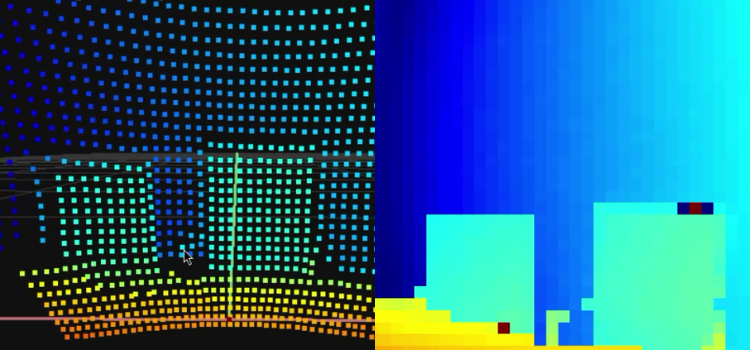
First, it generates real‑time depth maps and point clouds to build a live 3D model of the surroundings. Every pixel carries accurate distance information, allowing the drone to identify static and dynamic obstacles, judge their position and size, and plan a safe path.
Second, the module’s strong ambient light resistance ensures stable obstacle sensing indoors, outdoors, at night, or in direct sunlight. Unlike cameras that lose performance in glare or darkness, the HM‑LD1 maintains consistent detection to help drones avoid obstacles in nearly any lighting condition.
Third, its solid‑state design means no moving parts, delivering higher reliability, longer lifespan, and better shock resistance—critical for drone flight vibration and impact. The module maintains stable obstacle sensing during high maneuvering, so drones can avoid obstacles even in agile flight.
Fourth, the HM‑LD1 supports multiple platforms including Windows, Linux, ARM, and Android, with ready‑to‑use SDKs to speed up integration. Developers can quickly connect it to flight controllers or onboard computers to implement obstacle sensing and autonomous functions that help drones avoid obstacles without heavy custom development.
Real‑World Drone Missions Powered by HM‑LD1 Obstacle Sensing
The HM‑LD1 adds value across many drone applications where strong obstacle sensing is required to avoid obstacles and complete missions safely:
Industrial Inspection
Drones inspect bridges, transmission towers, wind turbines, and buildings. The HM‑LD1 provides close‑range obstacle sensing to maintain safe distances from structures, prevent collisions, and capture clear data.
Agricultural Drones
When spraying or monitoring fields, drones face wires, poles, and uneven canopies. The HM‑LD1 enables steady obstacle sensing to avoid obstacles and maintain consistent flight height for even application.
Logistics & Delivery
Delivery drones fly in urban areas with buildings, trees, and cables. The HM‑LD1 supports real‑time obstacle sensing to avoid obstacles dynamically, ensuring safe, reliable delivery.
Indoor & Autonomous Flight
In warehouses, hangars, or buildings without GPS, the HM‑LD1 provides continuous obstacle sensing to help drones avoid obstacles, navigate corridors, and perform autonomous missions.
Search & Rescue
In low‑light or cluttered disaster areas, the HM‑LD1 maintains stable obstacle sensing to help drones avoid obstacles while locating people or assessing hazards.
In every case, the HM‑LD1 turns dToF performance into practical obstacle sensing that helps drones avoid obstacles, improve safety, extend service life, and boost mission success.
Why Choose HM‑LD1 for Drone Obstacle Sensing
Many lidar modules claim to support drones, but few match the HM‑LD1’s balance of performance, size, power, and usability for obstacle sensing to avoid obstacles:
- Proven dToF precision: Stable ±3 cm accuracy for reliable obstacle sensing.
- Eye‑safe 940 nm VCSEL: Legal for global drone deployment.
- Strong sunlight resistance: Works up to 80,000 lux outdoors.
- Ultra‑light & compact: 28 g, small footprint for easy integration.
- Low power: 1.2 W for longer flight time.
- Solid‑state reliability: No moving parts, rugged for flight.
- Cross‑platform SDK: Fast integration to help drones avoid obstacles quickly.
If you need a dependable, high‑performance sensing solution to strengthen sensing so your drone can avoid obstacles in real time, the HM‑LD1 is engineered for your success.
Conclusion
Obstacle sensing is the foundation of safe and intelligent drone flight. With advanced dToF technology, the HM‑LD1 solid‑state LiDAR delivers precise, stable, and responsive depth perception to help drones avoid obstacles in complex indoor and outdoor environments. Its compact design, low power consumption, high accuracy, and strong anti‑interference make it the ideal sensing choice for consumer, industrial, and commercial drones.
Upgrade your drone’s environmental awareness with the HM‑LD1 and experience next‑level obstacle sensing that lets you fly safer, complete missions smarter, and avoid obstacles with total confidence.
Learn more about the HM‑LD1 dToF solid‑state LiDAR: https://myrobotproject.com/product/dtof-solid-state-lidar-hm-ld1/