6 ways stereo vision camera navigation safeguards ROI
I’ve seen too many warehouse managers lose sleep over expensive robots that just… stop. In the high-stakes world of automated logistics, the gap between a fat profit and a massive overhead usually comes down to how your robots “see” the floor.
Standard 2D Lidar often hits a wall in messy, 3D dynamic spaces, leading to “navigation freezes” or expensive crashes. This is exactly where stereo vision camera navigation changes the game for good.
By mimicking how we humans use both eyes, this tech gives robots the depth perception that basic sensors lack. Honestly, it’s not just about moving from point A to point B; it’s about the rock-solid reliability of that movement.
1. Improving spatial mapping accuracy in messy layouts
To get a real ROI, your robot has to stop “getting lost.” Every second a robot spends spinning in circles trying to find its way is cash down the drain. Stereo vision camera navigation provides the raw data needed for high-end environment reconstruction.
Unlike old-school sensors that see the world in a thin slice, stereo vision camera navigation leverages spatial mapping accuracy to build dense 3D maps. This lets robots tell the difference between a stray cable and a solid pallet.
I’ve found that seeing volume, rather than just lines, is the ultimate game-changer. You can dive into the math behind this in the paper: StereoNavNet: Learning to Navigate using Stereo Cameras with Auxiliary Occupancy Voxels.
Another big win? Dropping the “marker” costs. Stereo vision camera navigation enables “markerless” movement, meaning you don’t need floor magnets or QR codes. That’s a huge cut in your initial CAPEX and long-term maintenance.
2. Proactive obstacle avoidance for safer workspaces
Safety is the biggest ROI protector you have. One bad accident can wipe out years of gains. Most Lidar systems only scan a single horizontal plane near the floor, which is a recipe for disaster.
However, stereo vision camera navigation allows for true 3D obstacle avoidance. It catches forklift forks at eye level or low-hanging pipes that 2D sensors simply ignore.
For high-precision work, the P100R Depth Camera is the industry gold standard right now. It delivers the resolution needed to dodge dangling hazards that would stop a standard AMR cold.
Look, we also need to talk about “Ghosting Errors.” These happen when dust or steam tricks a robot into stopping for no reason. Stereo vision camera navigation fixes this by understanding the context of what it’s seeing, keeping your workflow moving.
3. Rock-solid SLAM integration where GPS fails
In big metal warehouses or deep urban spots, GPS is pretty much useless. This is where stereo vision camera navigation really earns its keep compared to signal-heavy tech.
By using SLAM integration, robots build maps and find themselves using visual landmarks. This is a lifesaver for drones or floor robots operating in “GPS-denied” zones like cold storage or heavy manufacturing plants.
I tell my clients all the time: the reliability of your SLAM system dictates your fleet’s “uptime.” If a robot loses its way, your ROI tanking. Stereo vision camera navigation acts as a permanent visual anchor.
| Feature | Standard 2D Lidar | Stereo Vision Camera Navigation |
|---|---|---|
| Detection Range | Flat horizontal plane | Full 3D volumetric field |
| Overhanging Hazards | Blind (dangerous) | Clear detection (safe) |
| Infrastructure Needs | Requires reflectors/tags | Natural feature navigation |
| Environmental Adaptability | Fixed maps | Self-healing maps |
What’s more, there’s the “Self-Healing Map.” If a shelf gets moved, a robot using stereo vision camera navigation recognizes the change and adapts on the fly. No more manual map updates every time you move a box.
4. Crushing point cloud processing for tighter turns
Raw data is just noise; you need navigation. Efficient point cloud processing ensures low latency, which means your robots can move faster without sacrificing safety.
Modern systems use Edge AI to filter out the junk data. If your robot can safely bump its speed by 10% because it processes data faster, your ROI climbs by that same margin. It’s simple math.
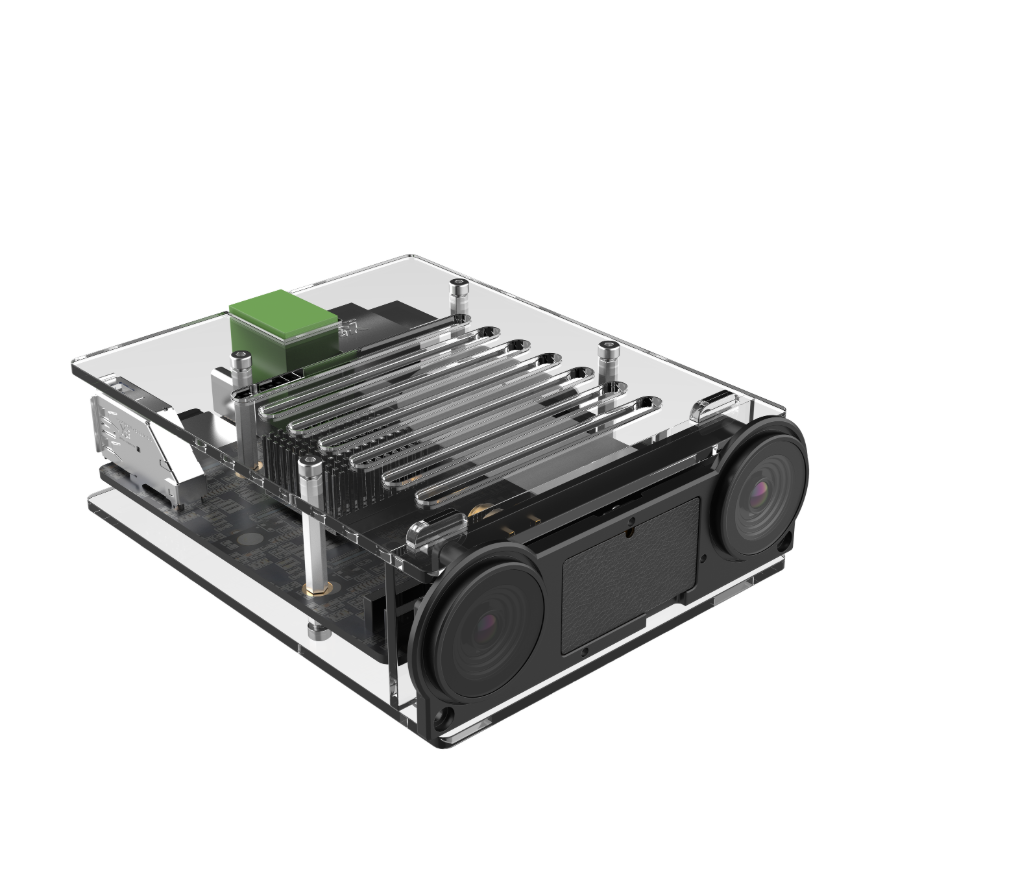
The Viobot2 module is a beast for this. It handles all that point cloud processing locally. This means the robot reacts to a sudden obstacle in milliseconds, not seconds.
Warehouse floors are also dirty and vibrating. Research like the Stereo Vision-Based Navigation for Autonomous Surface Vessels shows how these systems survive in environments far tougher than a dry floor.
5. Scaling across aerial and ground platforms
You get the best ROI when you use the same tech across your whole fleet. Using the same logic for drones and floor robots makes training your tech team ten times easier.
The core of stereo vision camera navigation works the same whether it’s on a forklift or a delivery drone. This cross-compatibility is a massive “soft” ROI factor that most people overlook until they are knee-deep in spare parts.
To better understand stereo vision camera navigation, this video tutorial is highly recommended:
Watching how a robot actually “thinks” in 3D space makes it obvious why spatial mapping accuracy is so vital. It’s the difference between a smart tool and a blind machine.
6. Customization is the secret to long-term gains
Off-the-shelf cameras often fail when they hit “Edge Cases.” If your floor is super shiny or your lighting is weird, a standard setup might struggle. That’s where customization saves your investment.
We see this a lot with high-gloss floors. A basic stereo vision camera navigation setup might get blinded by reflections. Custom IR projectors or special filters can fix this, preventing the “blindness” that leads to downtime.
Here’s the kicker: don’t just buy a sensor; buy a platform. Stereo vision camera navigation paired with Edge AI hardware means you can do “over-the-air” updates. Your hardware gets smarter while it sits on the floor.
This future-proofs your fleet. Instead of buying new robots every three years, you just push a software update to improve the obstacle avoidance or SLAM integration. That’s how you protect a long-term budget.
Frequently asked questions (FAQ)
How does stereo vision improve robotic path planning?
Stereo vision camera navigation gives a 3D view. Unlike 2D sensors, it lets the robot decide if it can go *under* or *over* something. This leads to much smarter routes and less wasted battery power.
Can stereo vision cameras work in dark warehouses?
Yes, if they use “active stereo.” These cameras use infrared light to see even in pitch-black rooms. I’ve seen stereo vision camera navigation maintain perfect spatial mapping accuracy in 100% darkness.
What is the main difference between stereo vision and Lidar?
Lidar is great for distance, but stereo vision camera navigation is king for object recognition. Most pro-grade setups use both—what we call “Sensor Fusion”—to get the best safety and ROI possible.
Bottom line: the future of navigation
Moving to stereo vision camera navigation isn’t a luxury anymore; it’s a survival tactic for B2B logistics. By mastering point cloud processing and spatial mapping accuracy, you’re building a fleet that actually works.
At MRP Solutions, we build the gimbals, robotic modules, and Edge AI hardware that power this tech globally. Whether you’re in North America or Europe, our team can help you customize a solution that actually fits your floor.
The future is about seeing clearly. By picking a solid stereo vision camera navigation system, you aren’t just buying a part—you’re investing in a more productive, safer, and more profitable workforce.
Ready to fix your robot’s vision?
Contact our technical sales team today for a custom consultation on Viobot2 and P100R solutions.
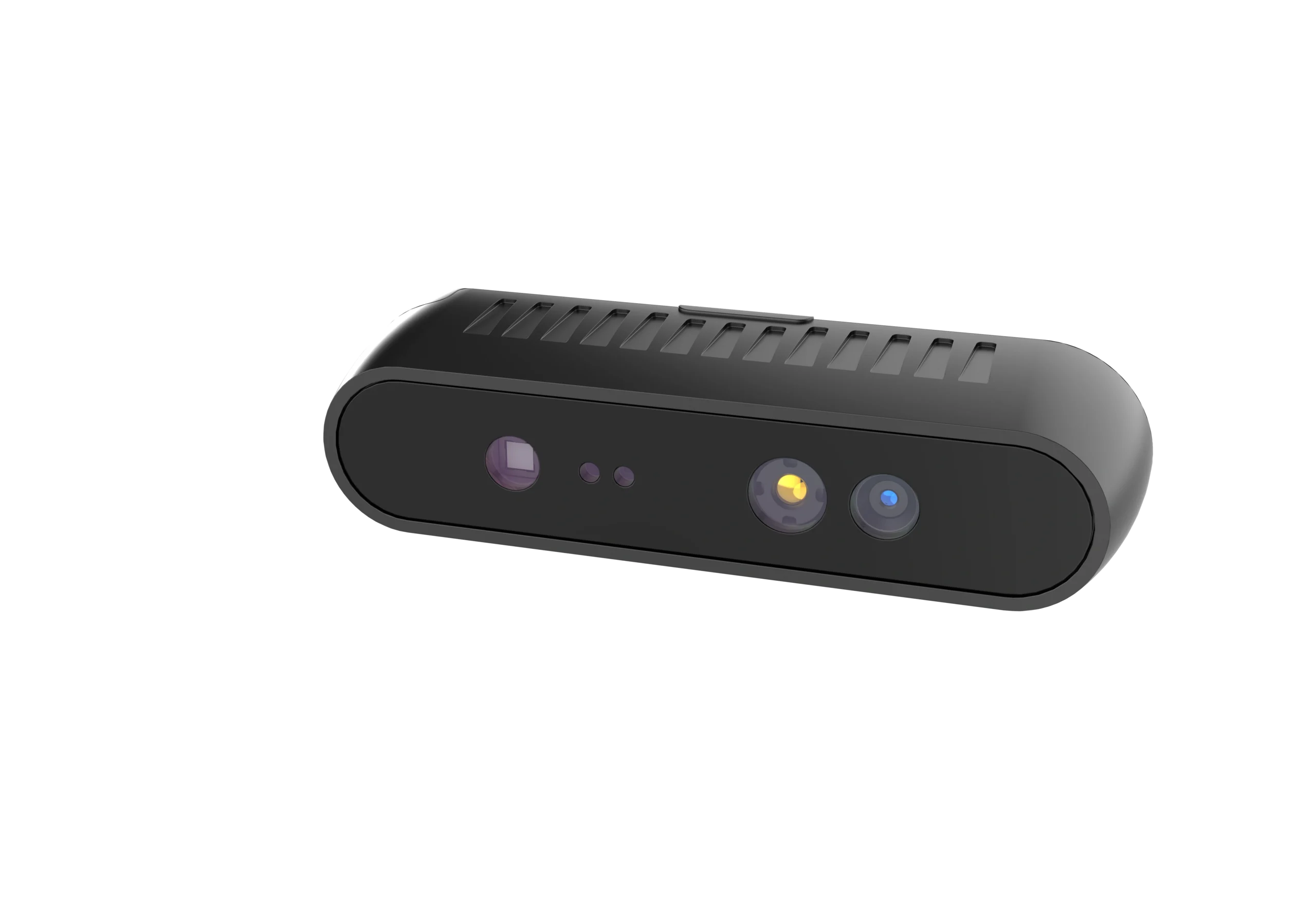
Image by: Gustavo Fring
https://www.pexels.com/@gustavo-fring