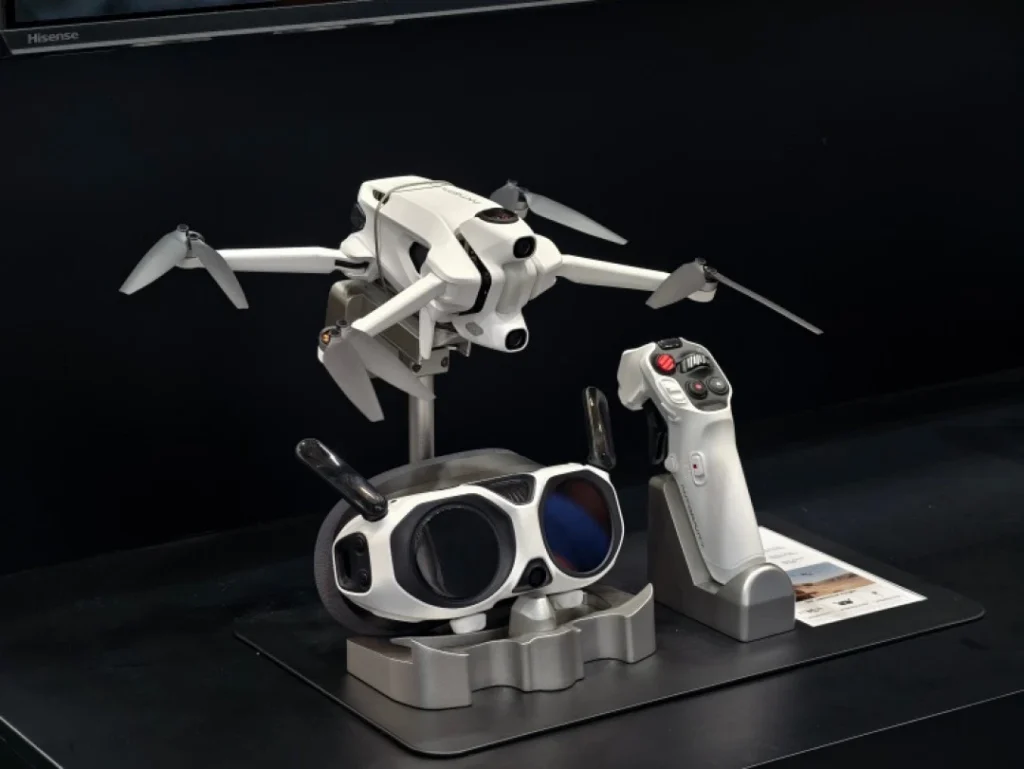
Revolutionize 3d depth camera robotics: 5 hidden truths to save your roi
Mastering the 3D depth camera robotics landscape is the only way to safeguard your investment. Stop guessing and learn the 5 hidden truths about industrial automation. Get custom OEM solutions that actually work. Contact us today!
Stop picking sensors based on spec sheets
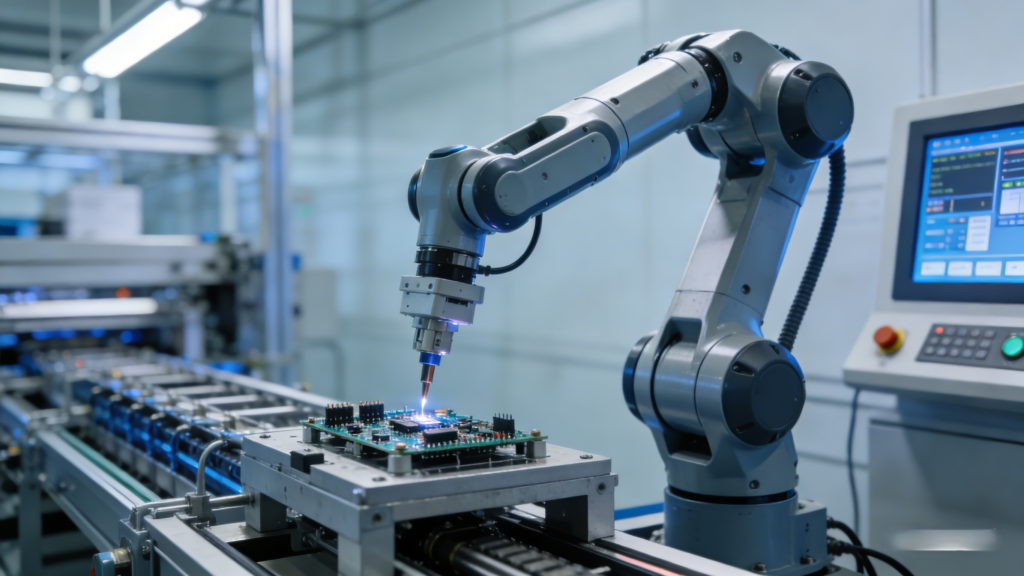
Let’s be real for a second. The global push for high-precision automation has put 3D depth camera robotics right at the center of the industrial world. Whether you’re running a massive smart warehouse or building surgical bots, spatial awareness isn’t a luxury anymore—it’s the whole ball game.
I’ve seen dozens of multi-million dollar projects stall because a procurement manager looked at megapixels and ignored the “unseen” technical grit of spatial perception. They chose a sensor that looked amazing in a clean lab but choked the moment it hit a real factory floor. Don’t let that be you.
In this guide, I’m laying out five truths that will change how you pick vision hardware for your next edge AI or robotic build. By the time we’re done, you’ll see why 3D depth camera robotics needs a strategy, not just a plug-and-play purchase.
Truth #1: Sensing methodology dictates where your robot can actually breathe
Look, the biggest mistake I see is the “one-size-fits-all” trap. In the world of 3D depth camera robotics, the physics of how light hits the sensor determines where that robot can live. If the physics are wrong, the software can’t save you.
Precision vs. speed: The reality of the structured light sensor
For high-accuracy jobs like electronics assembly, a structured light sensor is usually the gold standard. These things project a grid onto an object and calculate depth based on the warp. It’s surgical, giving you sub-millimeter precision that’s perfect for “Bin Picking.”
But here’s the kicker: they hate bright lights. If your factory has massive overhead LEDs or big windows, a standard structured light sensor will deal with “Pattern Washout.” The pattern gets lost in the glare, and suddenly your robot is blind.
Pro tip: “Many engineers over-spec precision and end up with a sensor that fails when a warehouse door opens and sunlight hits the floor. Always test for ambient light interference before you sign that purchase order.”
High-speed navigation with TOF sensor technology
If you’re building mobile robots or AGVs, TOF sensor technology (Time-of-Flight) is your best friend. Instead of looking at patterns, TOF measures how long a photon takes to bounce back. It’s insanely fast, allowing the robot to “see” at light speed.
In my experience, TOF sensor technology is the king of low-latency mapping. It’s the difference between a robot that stops smoothly for a pedestrian and one that slams into a moving forklift because its brain was 200 milliseconds behind reality.
Truth #2: The processing bottleneck is hiding in your point cloud
A high-res camera is just a paperweight if your computer can’t handle the data. This is a hard truth that hits most labs right in the face after they spend $5k on hardware. 3D depth camera robotics is data-heavy—really heavy.
Efficient point cloud processing for real-time moves
Raw point cloud processing is a computational beast. Every single frame creates millions of data points that your system has to filter, align, and segment in real-time. If you don’t have the horsepower, your frame rate drops, and your robot starts lagging.
To keep things moving without a “Pixel Crunching” nightmare, you need hardware that handles the load at the edge. If you’re sending this data to the cloud to be processed, your robot is basically walking with its eyes closed while it waits for a signal.
To offload these heavy vision algorithms and keep your integration smooth, many of our B2B clients use the K1 High-Performance Edge AI Board. It’s built to chew through point cloud processing data without killing your battery.
Leveraging edge AI for vision-guided robotics
We always recommend putting the “intelligence” right next to the sensor. This “On-Device Intelligence” means the robot can react to a falling object in milliseconds. In the high-stakes world of 3D depth camera robotics, those milliseconds save lives and equipment.
Truth #3: Obstacle avoidance is only as good as your blind spot strategy
What your robot *doesn’t* see is what’s going to cost you money. Most 3D depth camera robotics setups have a “Minimum Detection Range.” If something gets too close to the lens, it effectively disappears. That’s a recipe for disaster.
Integrating a robust obstacle avoidance module
A modern obstacle avoidance module creates a safety “halo” around the machine. But if the software isn’t tuned to the camera’s specific Field of View (FOV), you get “Ghost Collisions.” This is when the robot thinks the path is clear just because the obstacle is too close to see.
To fix this, you need a mix of wide-angle depth feeds and proximity sensors. A 360-degree safety net is the only way to operate 3D depth camera robotics in a space where humans are walking around. Check out this comparison table for common sensor tech:
| Technology Type | Best Use Case | Major Weakness | Typical Accuracy |
|---|---|---|---|
| Structured Light | Static Bin Picking | Ambient Light Interference | < 1mm |
| TOF (Time of Flight) | Mobile Navigation | Lower Spatial Resolution | 10mm – 20mm |
| Stereo Vision | Outdoor Ag-Tech | Featureless Surfaces | Variable |
Sensor fusion: Combining depth with the world
For complex UAV or ground robot tasks, one sensor is never enough. We focus on “Sensor Fusion.” By mixing a 3D depth camera robotics feed with thermal or RGB, your robot can navigate through smoke, dust, or total darkness.
If you want to get into the weeds on the physics, read this guide on 3D depth sensing for robots 101. It’s a solid foundation for any manager who wants to know what they’re actually buying.
Truth #4: Customization is the only way to scale your ROI
I’ve seen plenty of companies try to use cheap consumer depth cameras for industrial work. To be honest, it’s a disaster. While the price tag looks good on day one, the “Long-Term Downtime” will eat your lunch within six months.
Why off-the-shelf hardware usually fails B2B requirements
Consumer cameras lack “Industrial Hardening.” They aren’t built for the vibration of a 24/7 assembly line, and they definitely don’t have the thermal management for a 100-degree warehouse. In 3D depth camera robotics, you need “Tolerance Precision.”
That means every single robot in your fleet of 1,000 needs to perform exactly the same. Consumer-grade gear varies too much from unit to unit to be reliable. You need something that was built for the grind.
Oem/odm solutions for specialized applications
Whether you’re a university lab or a global distributor, you likely need a custom tweak. Maybe it’s changing the baseline of a camera to see further or adjusting the IR wavelength so it doesn’t mess with other machines. Customization is where the real ROI lives.
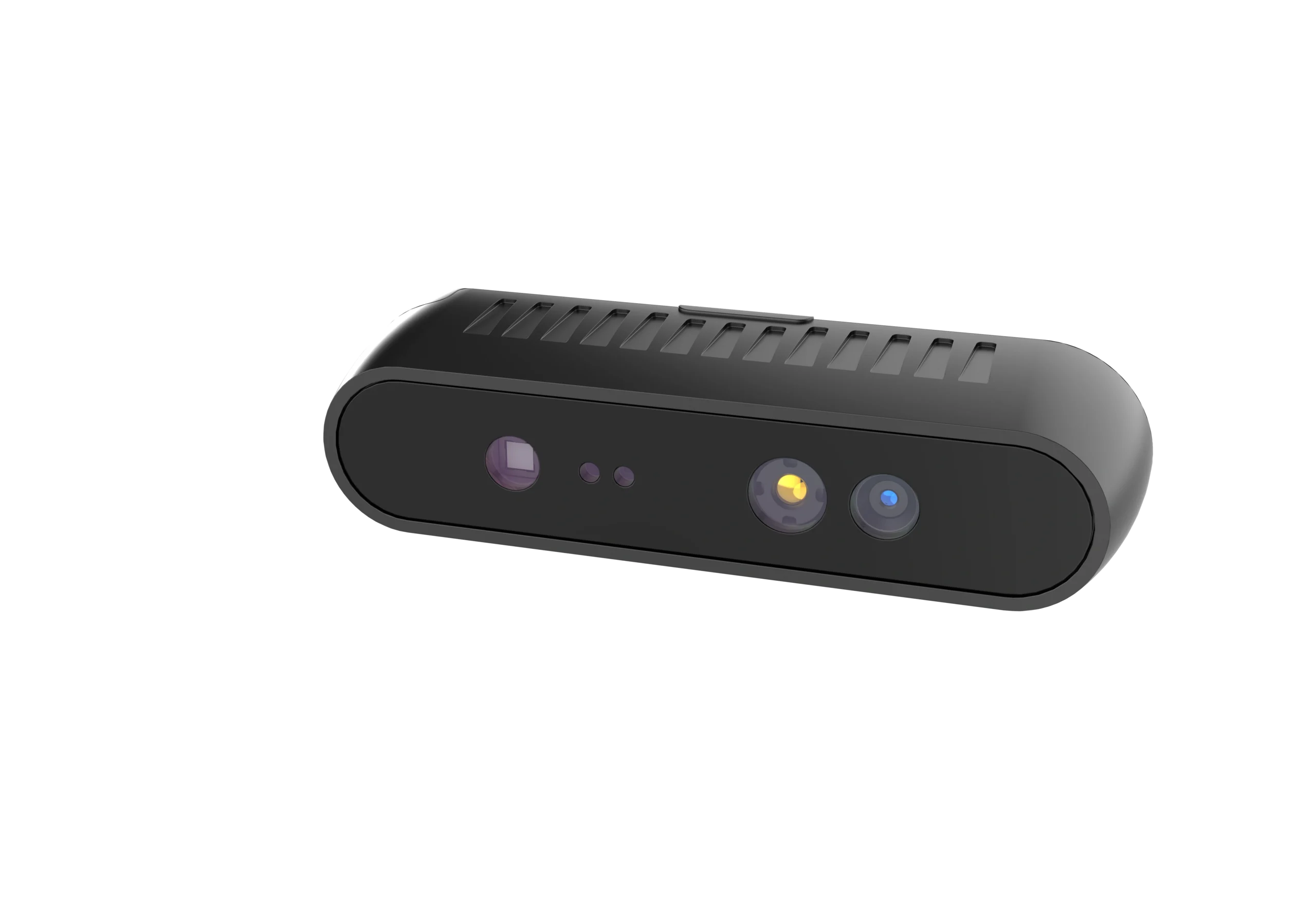
For anyone looking for a rugged, pro-grade solution, the P100R Industrial Depth Camera is the answer. It’s engineered for robotic grasping and 3D depth camera robotics tasks in environments where consumer gear just dies.
Truth #5: Software compatibility beats hardware specs every time
You can have the most expensive 3D depth camera robotics hardware on the planet, but if it doesn’t talk to your software, it’s just a fancy paperweight. I tell my clients: “Check the drivers before you check the resolution.”
ROS and SDK support for the real world
Your hardware has to play nice with your stack. In the pro world, that means robust ROS and ROS2 drivers. A good SDK should let you tap into raw data, depth maps, and IR feeds all at once without jumping through hoops.
If you want to see what other devs are actually using in the field, there’s a great thread on r/robotics regarding the current best depth camera. It’s some of the best real-world feedback you’ll find online.
Future-proofing with firmware updates
Bottom line is: the best hardware investment you can make is in a platform that actually gets updated. Improving noise filtering through software can extend your hardware’s life by years, keeping your 3D depth camera robotics tech relevant long after the warranty expires.
To better understand 3D depth camera robotics, this video tutorial is highly recommended:
Frequently asked questions (faq)
How to improve robotic picking accuracy in smart warehouses?
Accuracy comes down to combining a high-res structured light sensor with smart filtering. You also have to calibrate for “Albedo”—the reflectivity of your items. Most 3D depth camera robotics systems fail because they can’t see black plastic or shiny metal.
Which depth camera works best for low-light obstacle avoidance?
Active sensing is your answer. Specifically, TOF sensor technology or IR-assisted stereo cameras work best because they don’t need ambient light; they bring their own. This lets your robots navigate pitch-black aisles with zero issues.
Can I use 3d depth camera robotics for outdoor tasks?
Yes, but you need “Sunlight Rejection.” The sun’s IR radiation blinds most cheap cameras. For outdoor work, look for global shutters and narrow-bandpass filters so the sensor only sees its own light, not the sun’s glare.
What is the difference between a stereo camera and a TOF camera?
A stereo camera uses two lenses to “triangulate” depth (like your eyes), which is great for long distances. A TOF sensor technology camera measures the time light takes to bounce back, making it much faster for indoor mapping and obstacle avoidance module tasks.
Bottom line: The future is 3D
Navigating 3D depth camera robotics is about more than just reading a spec sheet. It’s about understanding the physics, the edge processing bottlenecks, and the need for industrial-grade toughness. Don’t fall for consumer-grade shortcuts.
By picking the right mix of TOF sensor technology and custom hardware, you ensure your project is future-proof. Focus on integrated solutions that provide long-term ROI and keep your robots moving.
Ready to elevate your robotics project?
MRP Solutions specializes in the design and manufacture of high-precision vision systems. We provide the “eyes” for the future of industry. Contact MRP Solutions today for custom OEM/ODM 3D vision consulting and safeguard your automation ROI with the most reliable 3D depth camera robotics solutions on the market.
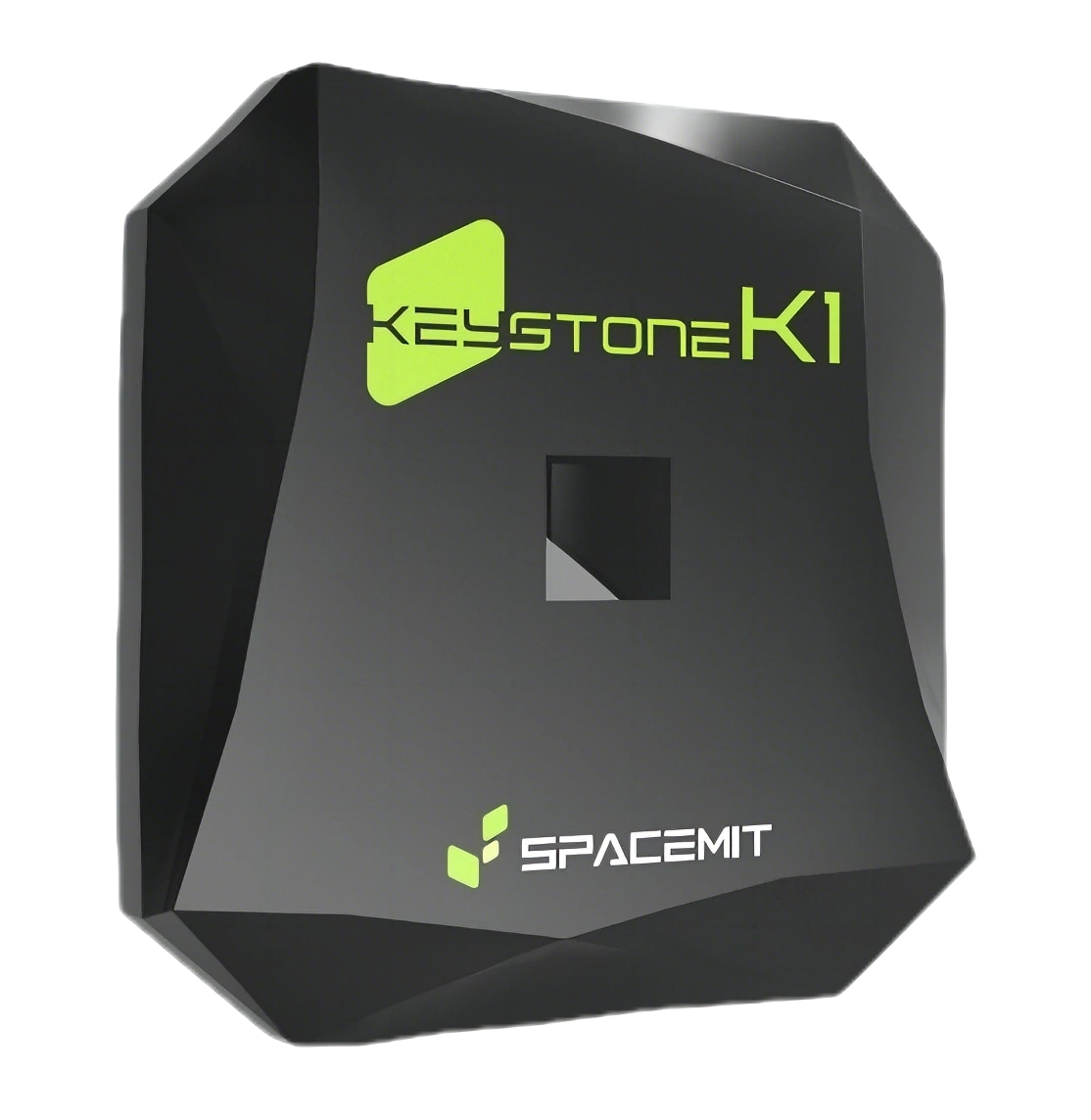
Image by: Reve2k
https://www.pexels.com/@reve2k-1861808491