7 ways warehouse depth camera efficiency safeguards profit
Look, in the high-stakes world of global logistics, every millimeter of error is basically burning money. As labor costs climb and delivery windows get tighter, maximizing Warehouse depth camera efficiency isn’t just a “nice-to-have” technical upgrade anymore—it is a financial survival strategy.
I’ve seen dozens of procurement managers ignore the raw data coming from their vision systems, only to find out later that poor calibration is costing them thousands in damaged goods. The difference between a profitable quarter and a total logistical nightmare usually comes down to the reliability of your Warehouse depth camera efficiency.
For B2B teams and robotics labs, understanding how depth sensing turns raw data into actionable automation is the secret to staying ahead. This guide breaks down exactly how optimizing your vision systems protects your bottom line.
1. Enhancing pick-and-place precision with spatial sensing technology
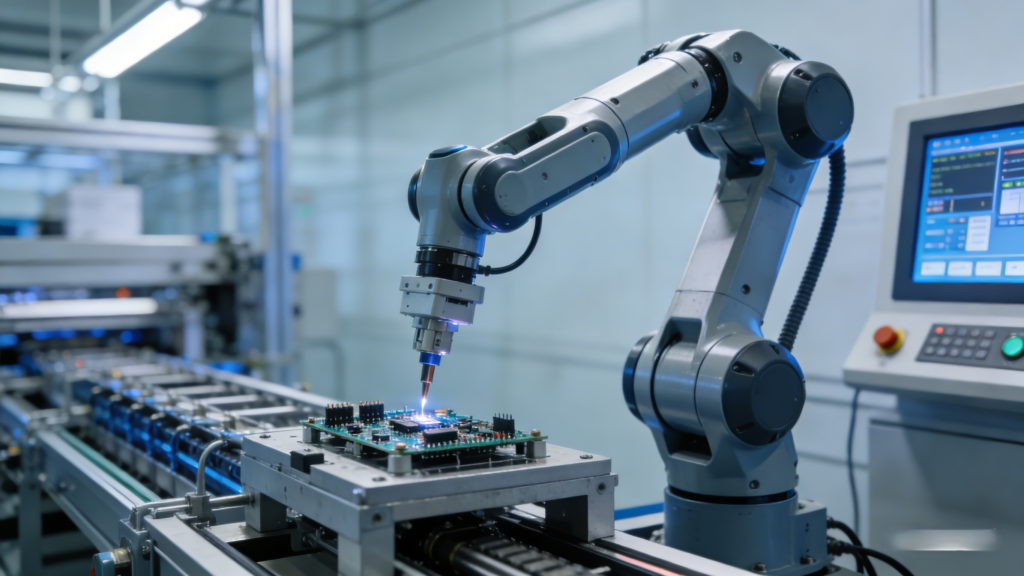
Poor depth resolution leads to what we call “ghost picks”—where a robotic arm tries to grab an item that isn’t actually where the system thinks it is. By integrating advanced spatial sensing technology, warehouses can hit sub-millimeter accuracy.
This ensures robotic grippers engage perfectly every time, preventing the “fumble” that usually shuts down an entire line. High-efficiency sensors help systems tell the difference between a tightly packed box and the tiny gaps between them.
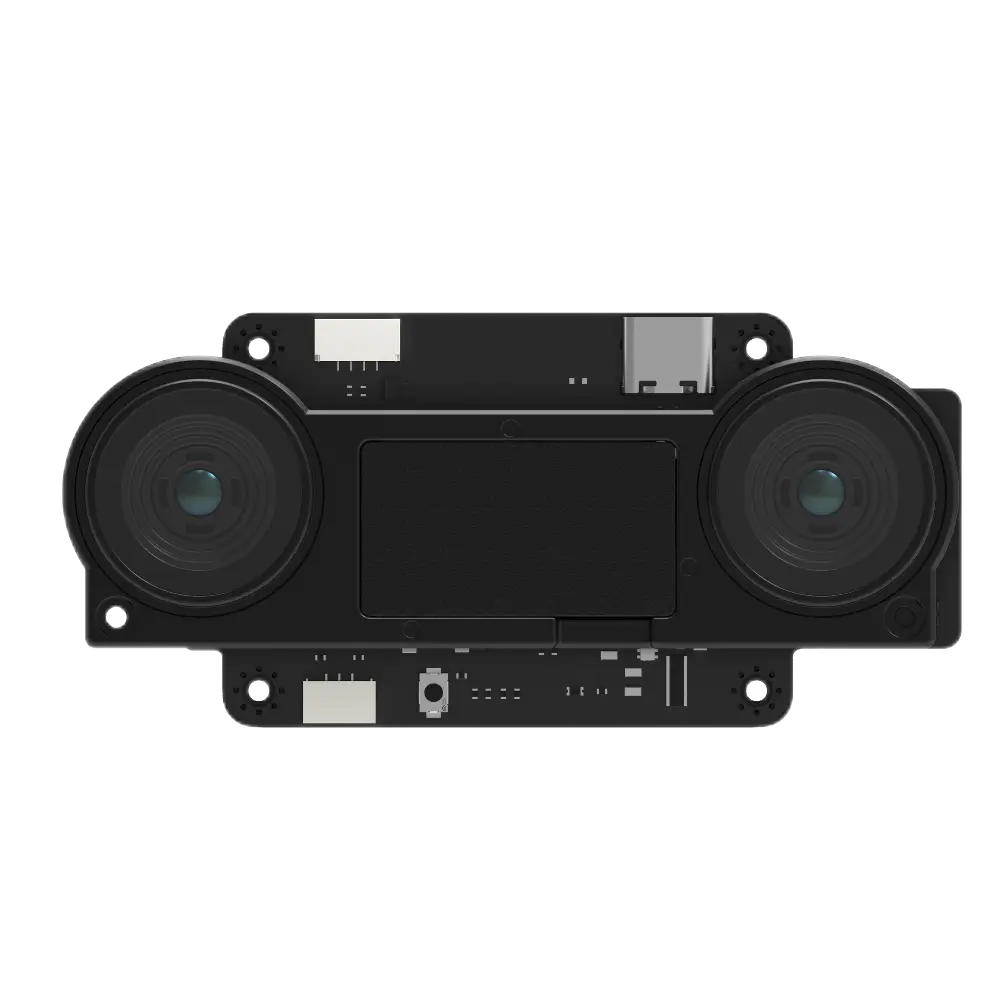
In “Dark Warehouse” operations—those fully automated, unlit environments—this level of Warehouse depth camera efficiency is the only thing standing between smooth sailing and a catastrophic pile-up on the belt. Check out our P100R Depth Camera for high-precision grasping tasks.
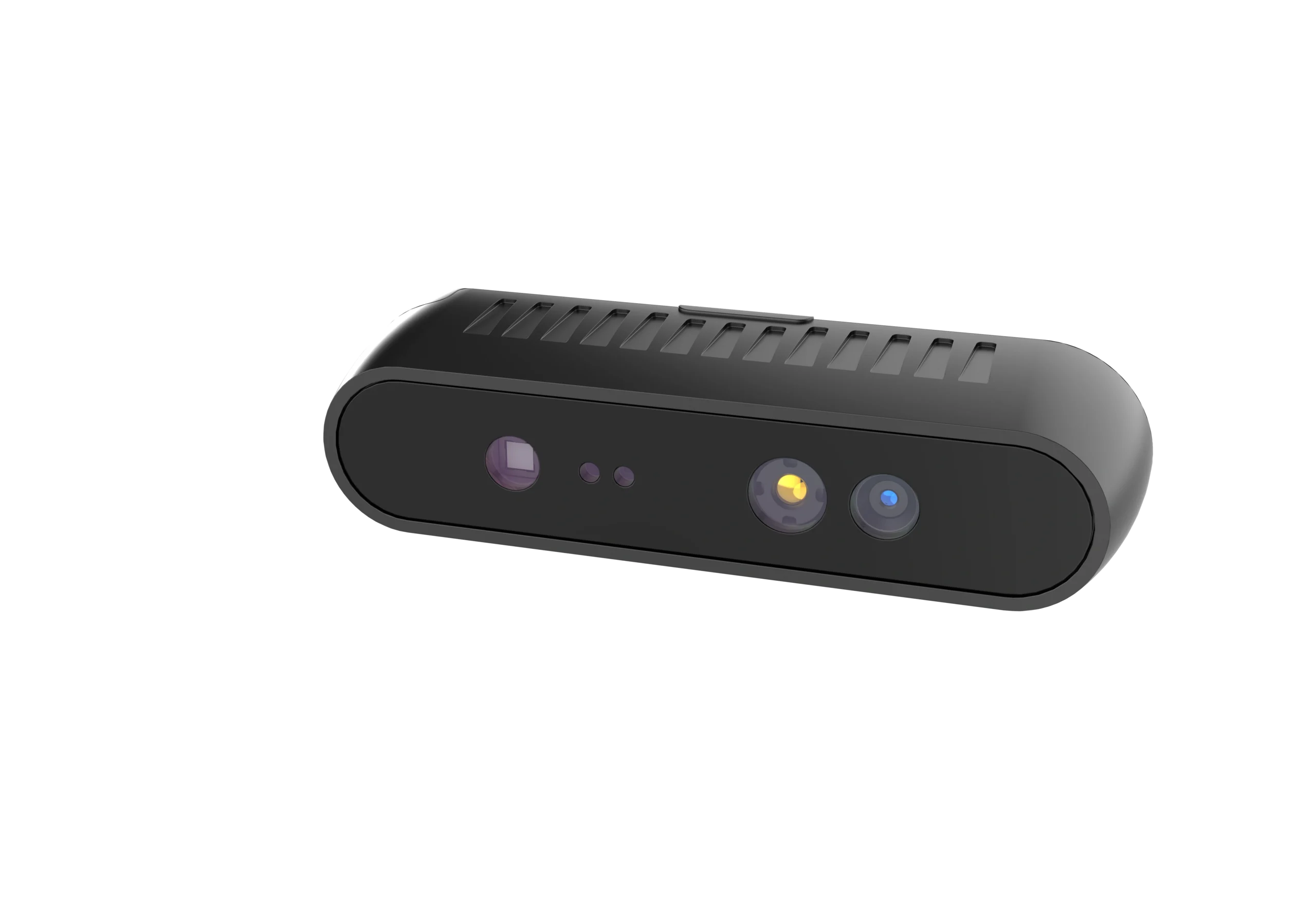
Efficient depth cameras also allow for real-time volume calculation. This means you stop paying for “air shipping” because your system can map negative space in a bin with Tetris-like precision. From a B2B perspective, this is about maximizing the ROI of every square meter you own.
2. Streamlining navigation via advanced path planning modules
A warehouse is a living, breathing environment. Standard 2D sensors often miss overhanging obstacles or low-profile debris on the floor. High-performance path planning modules fed by reliable depth data let robots recalculate routes in milliseconds.
Here’s the kicker: “near-misses” between robots are a hidden cost. They trigger safety stops that require a human to come over and reset the machine. Improving your Warehouse depth camera efficiency allows for “soft stops” and fluid rerouting, keeping the flow of goods constant.
When the vision system is optimized, the computational load on the robot’s brain drops. This leads to smoother movement in narrow aisles. If you need a solid navigation stack, the Visio positioning system offers the tri-light gimbal integration needed for complex spatial mapping.
Our Visio module is built specifically for GPS-denied zones. It provides the high-fidelity visual odometry required to maintain Warehouse depth camera efficiency even when traditional signals completely fail.
3. Using industrial-grade automation hardware for 24/7 reliability
To be honest, many startups make the mistake of using consumer-grade modules for industrial work. These fail the moment dust obscures the lens or the temperature fluctuates. Protecting profit requires automation hardware that can actually handle the grind.
Industrial depth cameras are designed for high duty cycles, meaning they don’t give up on you mid-shift. If you’re calculating long-term margins, the upfront cost of a ruggedized sensor is always lower than the cost of a three-hour breakdown.
Industry leaders agree that 3D vision is the biggest driver of ROI in modern logistics. To get into the technical weeds of these systems, take a look at this analysis: The Power of 3D Depth Time of Flight Cameras in Warehouse Management.
Time of Flight (ToF) technology has totally changed how we view Warehouse depth camera efficiency. By measuring light bounce-back time, these sensors provide clarity that old-school stereo vision just can’t match in low-contrast settings.
4. Optimizing logistics sensor integration for unified data
Profit leaks usually happen in “data silos.” Effective logistics sensor integration ensures your depth data plays nice with Edge AI hardware for real-time floor analytics. I usually recommend processing 3D point clouds locally so the robot doesn’t have to wait for a cloud response.
| Feature | Consumer Camera | Industrial Depth Camera |
|---|---|---|
| Dust Resistance | Low (IP50) | High (IP67) |
| Precision | +/- 5cm | +/- 1mm |
| Data Reliability | Drops in low light | Consistent 24/7 |
When Warehouse depth camera efficiency is part of a unified data stream, you get a “God-eye view” of the facility. This allows for predictive maintenance—knowing a robotic arm is losing precision before it actually drops a $500 package.
For OEM and ODM partners, using standardized modules makes life easier. If you’re building a custom solution, the P100R is a perfect candidate. It’s “plug-and-play” with most ROS environments, which keeps development costs down.
5. Minimizing equipment downtime and collision costs
Collisions between robots and humans (or walls) are the fastest way to drain your bank account. High Warehouse depth camera efficiency lets you create “Dynamic Safety Bubbles” around equipment. Unlike physical cages, these digital barriers let humans and robots work close together safely.
To better understand Warehouse depth camera efficiency, this video tutorial is highly recommended:
AI-driven camera systems aren’t optional anymore if you care about safety compliance. You can read more about how these systems protect both people and profit here: AI Camera Systems For Improving Warehouse Safety And Efficiency.
Investing in Warehouse depth camera efficiency usually pays for itself in the first year just by reducing insurance premiums. I’ve seen facilities cut their incident rates by 40% simply by ditching 2D LiDAR for 3D depth sensing.
6. Solving the “GPS-denied” navigation challenge
Warehouses are notorious for blocking GPS signals thanks to metal roofs and massive racking. This is a huge headache for drones and AGVs. High-efficiency depth cameras provide the “eyes” for visual SLAM, letting machines navigate without any satellite data.
The ability to operate in GPS-denied zones separates Tier-1 logistics providers from those struggling with manual intervention costs. If your robot “gets lost” every time it goes under a mezzanine, your Warehouse depth camera efficiency is the bottleneck.
In our world, we talk about “tolerance precision.” When you’re navigating tight aisles, your margin for error might be as low as 2cm. Achieving this requires a camera that can update its position 60 times a second without adding noise to the point cloud.
7. Maximizing throughput with depth-informed edge computing
Using Edge AI ensures depth data is processed right on the device. This gets rid of the “lag” that makes robots hesitate, directly increasing how many units you move per hour. We want to keep critical “stop or go” decisions at the edge where Warehouse depth camera efficiency is highest.
I’ve seen many systems fail because they tried to push raw point cloud data to a central server. The bandwidth costs alone would kill your margins. By processing 3D data on-site, you only send the “actionable intelligence” to the cloud, saving massive data overhead.
What’s more, higher point cloud density lets you see the difference between a damaged pallet and a good one. If your Warehouse depth camera efficiency is high enough, it can flag problems before they get stuck in an automated sorter. That’s proactive profit protection.
Frequently asked questions (FAQ)
How does depth sensing improve warehouse throughput?
By giving robots precise 3D coordinates, they move faster and handle objects more accurately. This cuts down cycle times and removes the need for human fixes, which is the whole point of Warehouse depth camera efficiency.
Can depth cameras really reduce collision costs?
Absolutely. These cameras see the full 3D field, catching low-profile obstacles that 2D LiDAR misses. This slashes repair bills and keeps your insurance company happy. High Warehouse depth camera efficiency means no more blind spots.
What’s the advantage of industrial-grade automation hardware?
Industrial gear handles the vibration, dust, and electrical noise of a real warehouse. Consumer cameras will fail in months, while industrial versions maintain Warehouse depth camera efficiency for years of 24/7 operation.
Is this tech compatible with my existing AGVs?
Usually, yes. Through smart logistics sensor integration, modern depth cameras can be retrofitted onto your current fleet. It’s a cost-effective way to boost your fleet’s IQ without buying all new robots.
Bottom line
Optimizing Warehouse depth camera efficiency isn’t just about getting a prettier picture; it’s about building a robust, error-free logistics pipeline. By integrating the right automation hardware and spatial sensing technology, you can protect your margins against rising costs.
At MRP Solutions, we bridge the gap between complex 3D data and real-world performance. Whether you need high-precision grasping or stable indoor navigation, we’ve got you covered. Check out our P100R Depth Cameras and Visio Navigation Modules to stay ahead of the curve.
Contact MRP Solutions today for custom OEM/ODM consultations and let’s start protecting your profits together.
Image by: Tiger Lily
https://www.pexels.com/@tiger-lily