VIO/VINS/VSLAM Troubleshooting Guide:Core Issue Analysis of Binocular VINS-FUSION
Most issues with binocular VINS-FUSION stem from baseline configuration. Specifically:
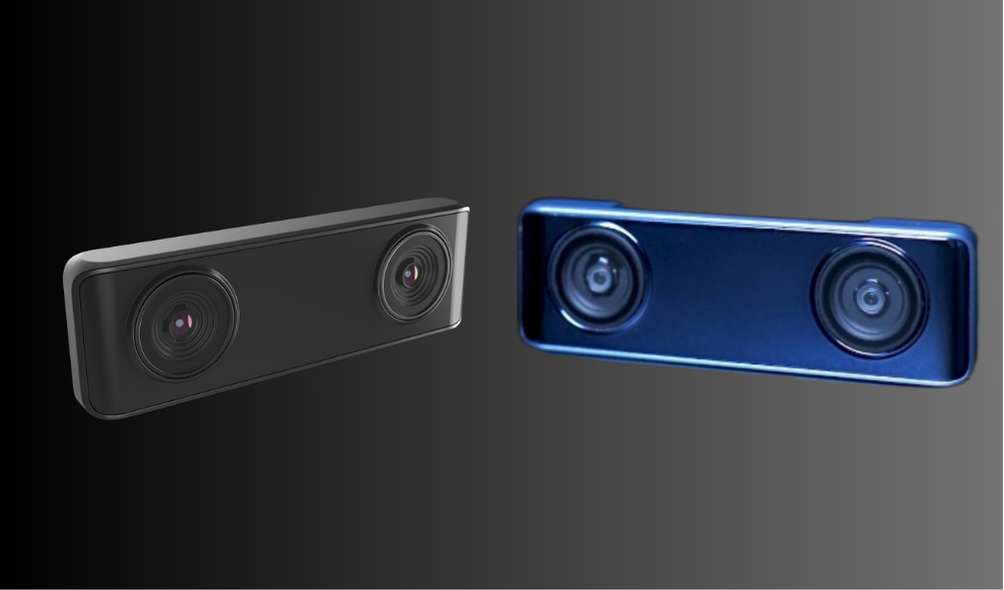
- Using a short baseline (e.g., 5cm, typical in RealSense devices) or a standard baseline (e.g., 14cm) often leads to scale loss in large scenes (e.g., outdoor environments with vast spaces and unevenly distributed features at varying distances). However, in indoor areas with rich textures, its performance is more stable compared to monocular VIO, with static initialization support being a significant advantage.
- VINS-FUSION requires fusing binocular camera features and disparity information, resulting in high computational overhead. Additionally, the external parameters of binocular systems are more complex, making parameter tuning more challenging.
- Adopting a larger baseline (e.g., the joint solution by DJI and Wuling) significantly extends detection and mapping distances, reducing drift in outdoor environments. However, it creates blind spots in close-range vision, which must be compensated for through supplementary imaging.


Beyond these characteristics, other issues with binocular VINS-FUSION are largely consistent with monocular VIO. These will be elaborated below, with conclusions generally applicable to mainstream VIO systems.
Typical Issues and Diagnostic Approaches for Monocular VIO
I. Process for Diagnosing Scale Collapse and Drift
- Shutter Type Check
- If using a rolling shutter, prioritize switching to a global shutter. Among rolling shutters, the REALSENSE series remains the best-performing option to date.
- Time Synchronization (TD) Verification
- Focus on the time synchronization accuracy between the camera and IMU. For example, with an IMU (200Hz) and a camera (30fps), if the time difference (TD) exceeds 30ms, the system will likely fail to function properly; aim to keep it within 10ms. Rolling shutter devices are harder to synchronize: a TD of 10–20ms may work temporarily but can cause cumulative errors during long-term operation. During hardware design, synchronization triggers via an MCU can improve accuracy.
- Front-End Computational Overhead Evaluation
- On high-performance platforms (e.g., NUC, XAVIER), front-end overhead is rarely a concern. For embedded systems, however, calculate the average per-frame latency of feature extraction, matching, geometric verification, and RANSAC. Latency exceeding 50ms may not only cause scale drift but also severely degrade accuracy in long-distance scenarios.
- Back-End Bundle Adjustment (BA) Overhead Evaluation
- The average per-frame latency of back-end BA should be controlled within 100ms (occasional delays in keyframes with complex textures are acceptable). The sliding window size must be at least 6 frames, with BA supporting 8+ frames. In ICE systems, the LBA sliding window requires 50 frames, while DMVIO uses 7 frames (larger windows are unnecessary due to differing judgment mechanisms).
- Point Cloud Matching Compatibility Analysis
- Depth data and point cloud data belong to distinct categories. Enabling the Iterative Closest Point (ICP) algorithm for point cloud matching incurs enormous computational costs and is unsuitable for sharing the same computing platform as VIO—systems lacking depth optimization struggle to operate stably.
Note: Embedded systems running VIO should avoid simultaneous ICP execution on depth cameras (even with efficient data structures like KD-Trees or octrees). Current mainstream SOCs (including automotive main SOCs, typically equipped with powerful NPUs, weak main cores, mid-performance GPUs, and often no DSPs) have limited support for such parallel tasks. These hardware designs are more suited for laser and depth data processing, not concurrent VIO and ICP operations.
- Initialization Quality Verification
- Judging initialization quality is straightforward: in texture-rich scenes, effective initialization can be achieved through simple fan-shaped movements or head rotations. VINS initialization mechanisms (both monocular and binocular) perform well; poor initialization leads to rapid drift, which can be directly identified via code logic.
- ZUPT-Related Issues
- Other factors causing scale drift are linked to ZUPT, as detailed in previous articles.
- Special Considerations for DMVIO/DM-VIO
- Beyond the above points, the core issue with DMVIO/DM-VIO lies in photometric calibration, particularly critical for TUM-series devices (ranking 5th in priority). In contrast, ICE-BA (ICEBA) can largely avoid drift by addressing points 1 and 2 above, though its robustness comes at the cost of accuracy—it focuses more on the BODY coordinate system with weak coupling to the world coordinate system, making it prone to “unexplained drift” and less suitable for robotics deployment.
II. Diagnostic Approaches for Accuracy Issues
- Camera Intrinsics Verification
- Camera intrinsics significantly impact accuracy, but users familiar with Zhang Zhengyou’s calibration method or Kalibr tools rarely make errors here, so intrinsic errors are less likely.
- Extrinsic Parameter Qbc (Rotation Relationship) Verification
- Qbc is a 3×3 matrix describing the rotational relationship between the IMU and camera. If coaxial, it can be simplified to an identity matrix, but actual values must align with the relative mounting positions (e.g., potentially adjusted from the identity matrix to [0,-1,0; 1,0,0; 0,0,1]). Incorrect Qbc renders the system inoperable; preset an initial matrix and allow the system to autonomously optimize and estimate values.
- Extrinsic Parameter Pbc (Position Relationship) Verification
- Pbc describes the relative x/y/z positions of the camera and IMU. Rough measurements with a vernier caliper during installation suffice for basic needs, as the system typically optimizes to high precision. Deviations of tens of centimeters in Pbc are likely caused by the 8 foundational issues mentioned earlier, not parameter errors themselves.
- Impact of Extrinsic Parameter Gc0
- Gc0 directly affects accuracy, not limited to the Z-axis (a commonly overlooked point). However, if its modulus is set correctly, errors from its autonomous estimation have minimal impact on the system.
In summary, when the system encounters accuracy issues, it is recommended to first investigate the 8 core problems mentioned above, rather than directly suspecting the 4 types of parameters. The key parameters strongly related to accuracy and their judgment criteria are as follows:
- Critical Impact of IMU Intrinsics
- All IMUs exhibit drift and require filtering to eliminate noise. For example, low-cost Bosch IMUs have poor yield and consistency, necessitating precise calibration with tools like Kalibr, combined with 6-face calibration or turntable adjustments (though adjustments for low-precision IMUs have limited effect). IMU intrinsics involve 4 core metrics: acceleration (acc) bias, acceleration noise, angular velocity (gyro) bias, and angular velocity noise.
*Evaluation Criteria:
- If any of the 4 metrics reaches the 1e-2 order of magnitude, the IMU is essentially unusable; cumulative errors will negate other optimization efforts.
- Metrics at the 1e-3 order or smaller are acceptable, as visual information can correct errors.
- If a system uses IMUs with an error level of 1e-2, it may perform adequately in texture-rich areas but is prone to rapidly entering a low-accuracy state in highly dynamic scenarios. For example, excessive angular velocity bias can cause deviations in steering input in textureless regions—even an accumulated error of just 0.5 degrees can render the data invalid during long-range exploration.
Solutions: Replace faulty IMU or cameras, or restrict device use to indoor texture-rich areas (outdoor use should be limited to small-loop scenarios).
Optimizing VSLAM and VIO is an ongoing process, but its technical path is becoming clearer. Research focus over the past two months has shifted to deeper optimization—improving performance not only through multi-core load distribution but also addressing core issues at their root. When VIO achieves a balance between “overhead, robustness, and accuracy,” integrates semi-dense mapping for complete scene perception, and incorporates relocalization technology, low-cost exploration of small to medium-sized scenes becomes feasible. This article aims to supplement industry-wide troubleshooting methodologies, serving as a reference for parameter tuning practices.