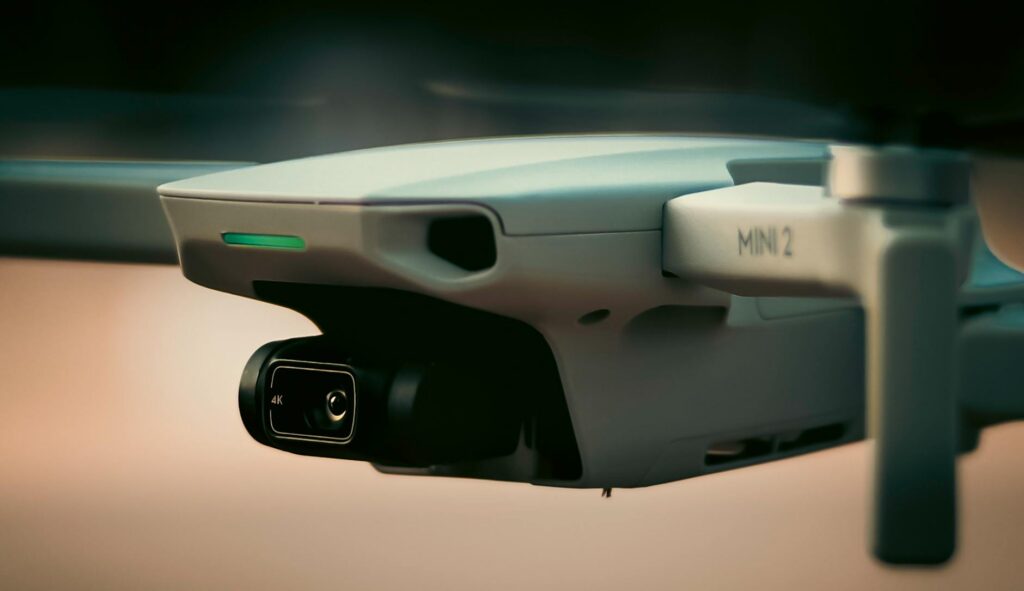
The rapid advancement of Unmanned Aerial Vehicle (UAV) technology has driven its widespread adoption across diverse sectors. UAV navigation, as a core enabler of autonomous flight and intelligent control, empowers drones to achieve precise positioning, obstacle avoidance, and task completion even in complex environments. This article delves into the current application status of navigation technology in UAVs and analyzes its future development trends.
I. Core Roles of Navigation Technology in UAVs
1. GPS Navigation
Technology Overview: The Global Positioning System (GPS) serves as the foundation for UAV navigation. By receiving satellite signals, GPS modules provide UAVs with real-time 3D position and velocity data. This enables UAVs to achieve precise positioning over large airspaces and fly along pre-planned routes.
Application Scenarios: GPS navigation is widely used in UAV autonomous flight, route planning, return-to-home (RTH) functions, and flight data logging. It delivers stable and reliable positioning services for UAVs in scenarios such as logistics delivery, farm patrols, and environmental monitoring.
2. Inertial Navigation System (INS)
Technology Overview: An Inertial Navigation System (INS) uses accelerometers and gyroscopes to measure a UAV’s acceleration and angular velocity. By combining this data with initial position and velocity information, it calculates the UAV’s current location. A key advantage of INS is its autonomy—it can continue providing positioning data even when GPS signals are lost.
Application Scenarios: INS is typically used in conjunction with GPS navigation to enhance positioning accuracy and system robustness. In complex terrains or urban environments, it helps UAVs maintain stable flight when GPS signals are blocked or interfered with.
Technology Overview: Visual navigation leverages cameras and computer vision technology to enable autonomous UAV navigation and obstacle avoidance by identifying and tracking landmarks, target objects, or environmental features. It offers unique advantages in low-altitude flight and complex environments, providing higher precision and flexibility.

Application Scenarios: Visual navigation is widely applied in UAV autonomous obstacle avoidance, object recognition, and precision operations (e.g., bridge inspection, building surveys). When integrated with deep learning and artificial intelligence (AI), it further enhances UAVs’ intelligent capabilities.
4. LiDAR Navigation
Technology Overview: Light Detection and Ranging (LiDAR) emits laser pulses and receives reflected light to generate high-precision 3D point cloud data, which is used for environmental modeling and navigation. In UAV applications, LiDAR navigation supports precise positioning and autonomous flight in complex environments.
Application Scenarios: LiDAR navigation is commonly used for tasks requiring high-precision mapping and obstacle detection, such as urban surveying, forest monitoring, and search-and-rescue operations. Its high precision and real-time performance make it a critical supplement to UAV navigation technologies.
II. Application Cases of UAV Navigation Technology
1. Agricultural UAVs
Background: In agriculture, UAV navigation technology is a cornerstone of precision agriculture, supporting tasks like farm monitoring, pesticide spraying, and seeding. Equipped with GPS and visual navigation, agricultural UAVs can operate efficiently along pre-defined routes, reducing pesticide usage and improving work efficiency.
Application Effects: By integrating multiple navigation technologies, agricultural UAVs enable high-precision farm patrols and operations. They provide farmers with detailed crop growth data, supporting optimized agricultural management decisions.
2. Logistics Delivery UAVs
Background: With the growth of e-commerce, logistics delivery UAVs have emerged as an effective solution to address the “last-mile” delivery challenge. Navigation technology is critical to ensuring their precise delivery capabilities.
Application Effects: Logistics UAVs use GPS for route planning, and integrate visual and LiDAR navigation to achieve high-precision obstacle avoidance and target recognition—ensuring safe and on-time cargo delivery. In remote areas and dense urban environments, navigation technology helps UAVs adapt to complex flight conditions and improve logistics efficiency.
3. Surveying UAVs
Background: Surveying is one of the traditional application fields of UAVs. Equipped with high-precision navigation systems and imaging equipment, UAVs can quickly complete large-area topographic surveys and map creation.
Application Effects: Surveying UAVs combine GPS and LiDAR navigation to generate high-precision 3D models and topographic maps. Through automated route planning and precise positioning, they significantly improve surveying efficiency and reduce operational costs.
Conclusion
Navigation technology not only drives the development of UAV intelligence and automation but also provides strong technical support for the modernization of various industries. As navigation technology continues to advance and integrate with emerging technologies, UAVs will play a more significant role in broader fields. In the future, the combined development of high-precision positioning, artificial intelligence, and multi-source fusion navigation will enable UAVs to demonstrate greater adaptability and reliability across an even wider range of application scenarios.