As a global emerging industrial track, the low-altitude economy’s development ceiling is directly determined by the safe flight of its core components—various aircraft (including consumer drones, industrial drones, and light general aviation aircraft). Compared with ground transportation, aircraft operate in more complex environments, face more diverse obstacle types in three-dimensional space (e.g., buildings, trees, power lines, and other aircraft), and suffer far more severe collision consequences: minor collisions may cause aircraft loss of control or equipment damage, while major ones can lead to crashes and secondary harm to ground personnel and property (such as fall risks near crowded areas or urban building clusters). Aircraft obstacle avoidance technology is the key to addressing this core safety pain point. By real-time detecting, identifying obstacles, and triggering evasive actions, it reduces flight accident rates technically and lays a safe foundation for the large-scale development of the low-altitude economy.
1. Why Must Aircraft Be Equipped with Obstacle Avoidance Systems? What Are the Limitations of Manual Operation?
In low-altitude flight scenarios, relying solely on pilots to manually avoid obstacles has inherent visual and operational blind spots, which are among the main causes of collision accidents. The specific limitations can be summarized in two points:
- Insufficient Pilot Visual Field of View (FOV) Creates “Invisible” Blind Spots
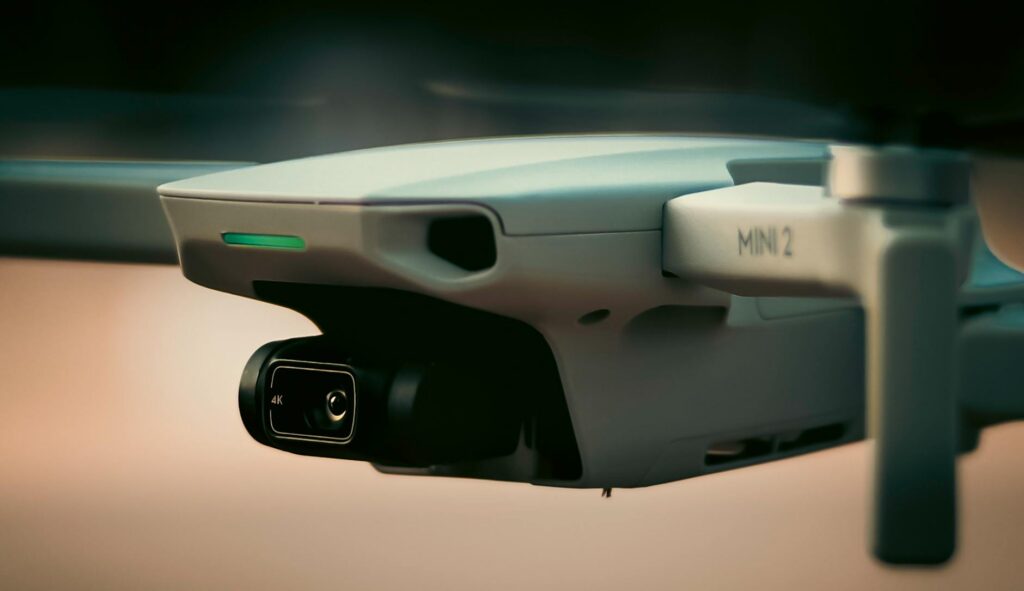
The onboard cameras of mainstream consumer drones typically have an equivalent focal length of 24mm, with an actual FOV of approximately 84°. In contrast, the natural FOV of human binocular vision exceeds 180°, and humans can cover a wider range by turning their heads. This FOV difference means that when pilots observe through the camera’s transmitted images, they miss over 50% of the surrounding environment—such as small obstacles (e.g., thin power lines, tree branches) on the side or rear of the aircraft, or low-contrast obstacles at long distances (e.g., gray buildings blending with the sky background). This makes it easy to misjudge safe distances due to “not seeing” obstacles, ultimately leading to scratches or collisions.


- Pilots Are Effectively “Flying Blind” During Lateral/Reverse Flight
When aircraft perform non-forward flight tasks such as lateral translation or reverse flight (e.g., aerial orbit shooting, precise hovering adjustments), the cameras of most drones cannot cover the visual range of these flight directions. Pilots can neither see obstacles in the flight path nor judge distances to obstacles, and can only rely on “experience-based estimation” or “blind operation,” which drastically increases collision risks.


2. Detailed Explanation of Mainstream Onboard Aircraft Obstacle Avoidance Technologies: Principles, Advantages, and Application Scenarios
- Ultrasonic Ranging Obstacle Avoidance: A Low-Cost “Entry-Level Solution” for Short Distances
Core Principle: A high-frequency sound wave (usually above 40kHz) is emitted toward the target via an ultrasonic sensor (transmitter + receiver). When the sound wave hits an obstacle, it reflects back to the receiver. The system calculates the distance between the aircraft and the obstacle using the time difference between transmission and reception, combined with the speed of sound propagation (approximately 340m/s) (formula: Distance = Time Difference × Speed of Sound / 2). When the distance is less than the safety threshold, evasive actions (e.g., hovering, turning) are triggered.
- Infrared Obstacle Avoidance: A “Short-Distance Supplementary Solution” for Low-Light Environments
Core Principle: Infrared light-emitting diodes (LEDs) emit infrared rays of specific wavelengths (usually 850nm or 940nm). When the infrared rays hit an obstacle, they reflect and are captured by an infrared receiver. The system identifies obstacles and enables avoidance by analyzing the intensity of the reflected light (to determine if an obstacle exists) and propagation time (to estimate distance).
- Laser Ranging (LiDAR Single-Point Ranging): A “High-Precision Ranging Tool” for Medium-to-Long Distances
Core Principle: Similar to infrared obstacle avoidance, but high-directionality, high-monochromaticity laser beams (usually 905nm or 1550nm) replace infrared rays. The distance between the aircraft and the obstacle is calculated by measuring the time difference (pulse method) or phase difference (phase method) between the laser’s transmission and reflection. Due to the stable propagation speed of lasers (speed of light is approximately 3×10⁸m/s), their ranging accuracy is far higher than that of ultrasonic and infrared technologies.
- LiDAR (Light Detection and Ranging): The “3D Perception Core” for Complex Environments
Core Principle: LiDAR is an advanced version of “laser ranging.” A laser transmitter emits high-density laser pulses (tens of thousands to millions of pulses per second), and a rotating or array-based scanning mechanism covers 360° or specific angles around the aircraft. After a large number of laser pulses reflect back, the receiver generates “point cloud data.” The system reconstructs a 3D model of the surrounding environment using the point cloud, thereby accurately identifying the position, shape, size, and distance of obstacles.
- Millimeter-Wave Radar: A “Reliable Perception Solution” for Severe Weather
Core Principle: Electromagnetic waves in the millimeter-wave band (30-300GHz) are used as detection signals. Millimeter waves are emitted via an antenna, and the echo reflected by obstacles is received. The system locates, measures the speed of, and tracks obstacles by analyzing the echo’s time difference (to calculate distance), frequency shift (Doppler effect, to calculate relative speed), and phase difference (to calculate angle).
- Visual Obstacle Avoidance: An “Intelligent Recognition Solution” with High Information Density
Core Principle: Environmental images are captured via onboard cameras (monocular, binocular, or multiocular) and processed using computer vision algorithms (e.g., deep learning, feature matching, stereoscopic vision):
Monocular Vision: Distance is determined through “changes in object size in the image” and “depth estimation”;
Binocular Vision: Simulating human eye principles, 3D distance is calculated using the parallax of images from left and right cameras;
Multiocular Vision: A wider FOV is covered by multiple cameras to achieve omnidirectional perception.
The system can further identify obstacle types (e.g., people, vehicles, trees, buildings) and trigger targeted evasive strategies.
Conclusion
Aircraft obstacle avoidance technology is the “cornerstone” of the low-altitude economy’s safe development. From low-cost ultrasonic and infrared technologies to high-precision LiDAR, millimeter-wave radar, and intelligent visual solutions, various technologies now cover all scenario needs—from indoor to outdoor, short-distance to long-distance, and simple to complex environments. In the future, with the maturity of multi-sensor fusion technology, upgrades to AI algorithms, and improvements to low-altitude traffic management systems, aircraft obstacle avoidance will evolve from “passive evasion” to “active prediction,” further reducing accident rates.