In the era of intelligent positioning, the demand for ultra-precise location data has never been higher. From precision agriculture to autonomous driving, traditional GNSS positioning falls short of the accuracy required for modern industrial applications—and that’s where RTK stands out as a game-changer. RTK, or Real-Time Kinematic, is a carrier phase differential technology that elevates satellite positioning from meter-level approximation to centimeter-level precision, solving the core pain points of GNSS signal errors and opening a new era of high-precision spatial perception.
The Core Principle: How RTK Redefines Positioning Accuracy
At its heart, GNSS positioning calculates distance by multiplying the satellite signal’s travel time by the speed of light, but this method is plagued by errors from satellite orbit deviations, clock drifts, ionospheric interference, and tropospheric refraction. RTK breaks through these limitations with a fundamental shift in ranging technology: unlike GNSS’s code-based ranging, this technology uses carrier-based ranging that measures the number of signal wavelengths between satellites and receivers. The L1 carrier signal has a wavelength of just 19cm, in stark contrast to the 300m wavelength of GNSS pseudo-random noise codes, which is the foundational reason this technology achieves unparalleled precision.
A critical step for RTK is resolving the integer ambiguity of carrier cycles (IAR). Before this calculation, RTK first corrects signal errors using data from a fixed reference station with a known location. The reference station estimates GNSS signal errors in real time and transmits correction data to the user’s receiver, laying the groundwork for accurate IAR computation. This error correction and ambiguity resolution process is what makes RTK’s centimeter-level positioning a reality, turning raw satellite signals into reliable, high-precision location data.

Two Key RTK Architectures: Adapting to Diverse Application Scenarios
RTK is not a one-size-fits-all technology; it has evolved two core implementation architectures to meet different industrial needs, each with unique advantages for specific use cases.
The single reference station RTK is the most straightforward form of the technology, ideal for short-range, high-precision operations. It deploys a single reference station near the user’s receiver, with a typical effective operating distance of 25km. Within this range, the atmospheric conditions between the reference station and receiver are consistent, ensuring accurate error correction and successful IAR. This architecture is cost-effective and easy to deploy, making it a popular choice for small-scale projects like local road construction, small-area surveying, and on-site industrial layout.
For large-scale, wide-area positioning needs, network RTK (NRTK) emerges as the optimal solution. This architecture uses a network of multiple reference stations to model distance-related errors with far greater precision. A key innovation of NRTK is the creation of a Virtual Reference Station (VRS) near the user, which optimizes error correction across the entire service area and reduces reliance on individual physical reference stations. NRTK not only expands the coverage of high-precision positioning but also improves measurement reliability—even if one reference station malfunctions, the network remains operational. Correction data for both RTK architectures is typically transmitted via the RTCM protocol, the industry standard for high-precision positioning data communication.
RTK’s Industrial Impact: Powering Innovation Across Sectors
The centimeter-level precision of this technology has made it an indispensable core technology across a wide range of modern industries, driving digital and intelligent transformation. In precision agriculture, RTK guides agricultural machinery for precise seeding, fertilization, and harvesting, reducing resource waste and boosting crop yields by ensuring operations are executed with sub-centimeter accuracy. In surveying and mapping, this technology replaces traditional manual measurement methods, cutting down on field work time while delivering more accurate geographic data for urban planning and infrastructure construction.
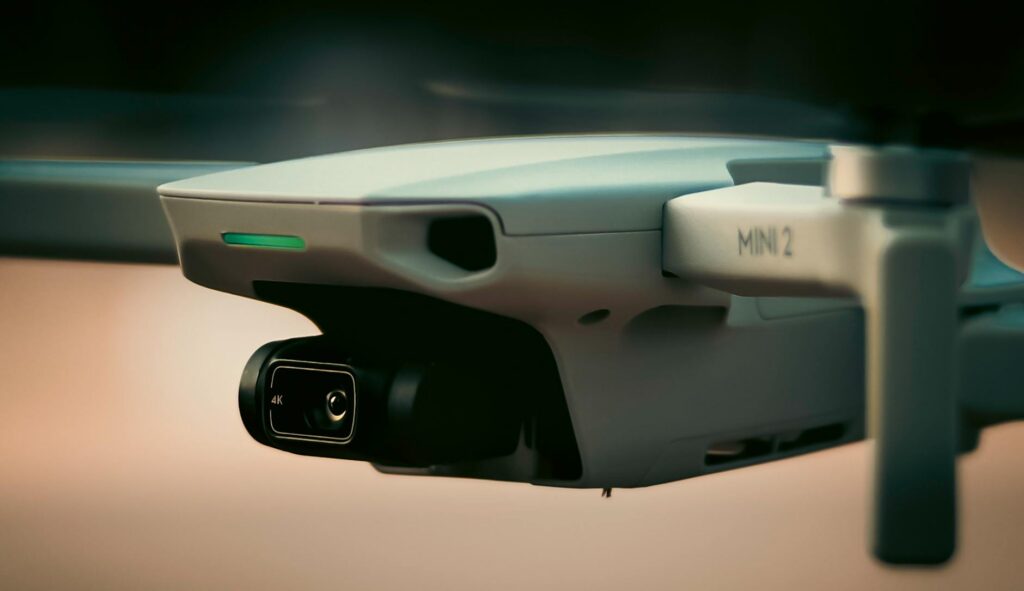
RTK also plays a pivotal role in the rise of autonomous systems. Autonomous drones rely on this technology for precise navigation during aerial surveying, power line inspection, and delivery missions, avoiding collisions and ensuring accurate task execution. Smart ports use RTK to guide automated container cranes and transporters, streamlining logistics operations and improving terminal efficiency. Even in law enforcement and emergency rescue, RTK provides centimeter-level positioning to track personnel, reconstruct accident scenes, and locate rescue targets, enhancing the safety and efficiency of on-site operations.
The Future of RTK: Evolving for Greater Scalability and Accessibility

As the demand for scalable high-precision positioning solutions grows, this technology is not standing still—it is evolving in tandem with complementary technologies to expand its capabilities. The combination of RTK with Precise Point Positioning (PPP) has given birth to PPP-RTK, a technology that delivers centimeter-level precision without the need for local reference stations, making it ideal for remote areas like ocean navigation and polar scientific expeditions. Additionally, RTK integrated with State Space Representation (SSR) technology enables the broadcast of universal GNSS error models across vast geographic areas, with one-way communication via IP or satellite L-band allowing unlimited users to access high-precision positioning services.
These advancements are making RTK more accessible and versatile than ever before. What was once a specialized technology for professional surveying is now becoming a foundational component of smart cities, autonomous transportation, and industrial IoT. As RTK continues to evolve with multi-frequency, multi-constellation satellite support and improved anti-interference capabilities, it will further break through spatial and environmental limitations, solidifying its position as the cornerstone of high-precision positioning in the intelligent age.
In summary, RTK is more than just a positioning technology—it is a revolutionary force that redefines how we perceive and interact with spatial data. Its centimeter-level precision, real-time dynamic performance, and adaptive architectures make it an essential tool for industries striving for accuracy and efficiency. As technology advances, RTK will continue to drive innovation, powering the next generation of intelligent applications and building a more precise, connected world.