As robotics technology becomes deeply integrated into industries such as manufacturing, logistics, services, and even autonomous driving, navigation and obstacle avoidance have emerged as core capabilities for measuring a robot’s intelligence level. Whether in structured factories or open streets, a robot’s ability to “perceive the environment, plan paths, and move safely” directly determines the feasibility and reliability of its applications. By 2025, related technologies have been widely implemented, yet key challenges remain. This article systematically examines the full development landscape of robot navigation and obstacle avoidance technology from four dimensions—technical principles, implementation status, typical applications, and future trends—providing a detailed reference for industry practitioners and technology enthusiasts.

I. Technical Principles: Four Core Modules Building Robots’ “Mobility Intelligence”
For a robot to achieve autonomous navigation and obstacle avoidance, it relies on the coordinated operation of four core modules: perception, localization, path planning, and control.
1. Environmental Perception: Multi-Sensor Fusion Becomes Mainstream
Robots acquire environmental information through various sensors, including:
- LiDAR (Light Detection and Ranging): Delivers high-precision point cloud data, ideal for mapping and obstacle detection;
- Visual Sensors (e.g.,RoboBaton-VIOBOT2): Enables semantic recognition and scene understanding;
- Millimeter-Wave Radar & Ultrasonic Sensors: Compensate for the limitations of vision and LiDAR in harsh weather or low-light conditions.
Through multi-sensor fusion, robots can build more comprehensive and robust environmental perception capabilities.
2. Localization Technology: SLAM as the Core, GNSS as Supplementary
In unknown or dynamic environments, SLAM (Simultaneous Localization and Mapping) is critical for real-time localization. Key approaches include:
- LiDAR SLAM: Achieves centimeter-level precision in indoor structured scenarios;
- Visual SLAM (vSLAM): Suitable for environments with sufficient computing power and rich texture;
- Integrated Navigation: In outdoor scenarios, GNSS (e.g., GPS, Beidou) is often fused with IMU (Inertial Measurement Unit) to address signal obstruction issues.
3. Path Planning: Combining Global and Local Strategies
- Global Planning (e.g., A*, Dijkstra algorithms): Calculates the optimal path based on a known map;
- Local Planning (e.g., Dynamic Window Approach (DWA), Artificial Potential Field (APF) method): Responds to dynamic obstacles in real time for on-the-fly obstacle avoidance and trajectory adjustment.
4. Obstacle Avoidance Control: From Geometric Methods to AI-Driven Solutions
- Traditional Algorithms (e.g., Bug algorithm): Relies on geometric rules, suitable for simple static scenarios;
- Deep Learning (e.g., YOLO object detection) and Reinforcement Learning-based methods: Can predict the behavior of dynamic obstacles (such as pedestrians and vehicles), enabling more intelligent obstacle avoidance decisions.
II. Current Engineering Implementation: Highly Mature with Remaining Bottlenecks
By 2025, robot navigation and obstacle avoidance technologies have been engineeringly applied in most scenarios, but performance varies with environmental complexity.
Achieved Progress
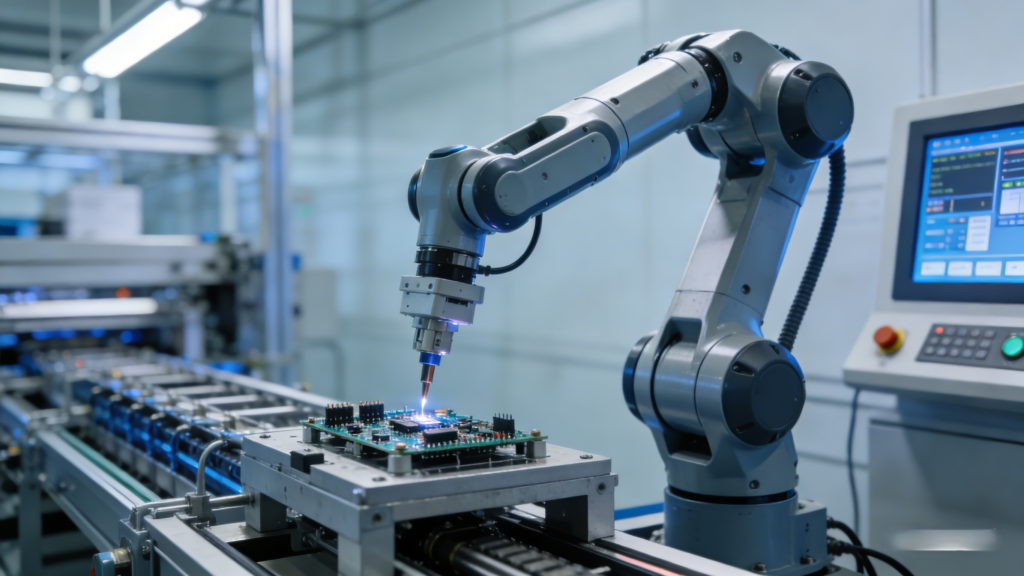
- In structured environments (e.g., warehouses, factories), AGV/AMR robots achieve navigation precision of ±5 cm, with an obstacle avoidance success rate of nearly 100%;
- Edge computing devices (e.g., NVIDIA Jetson) support millisecond-level real-time decision-making, meeting dynamic obstacle avoidance needs;
- Large-scale deployment of various robot types: including robotic vacuum cleaners, delivery drones, and autonomous vehicles.
Current Limitations
- In unstructured, highly dynamic environments (e.g., crowded crowds, irregular terrain), the obstacle avoidance misjudgment rate remains 5–10%;
- High-performance sensors (e.g., LiDAR) are costly, restricting large-scale popularization;
- Extreme conditions such as rainy/snowy weather, strong light interference, and sensor blockage may still cause system performance degradation.
III. Typical Application Cases: Successful Practices of Technology Implementation
1. Household Robotic Vacuum Cleaners (e.g., Roborock S8 Pro Ultra)
Adopting vSLAM and deep learning-based obstacle avoidance algorithms, it can identify and avoid low-lying obstacles such as wires and slippers, achieving a cleaning coverage rate of over 95%.
2. Industrial AMRs (e.g., Amazon Kiva Robots)
Leveraging LiDAR SLAM and multi-sensor fusion, it enables unmanned transportation and dynamic obstacle avoidance in warehouses, improving efficiency by over 30%.
3. Autonomous Vehicles (e.g., Waymo)
Through a fusion solution of LiDAR, vision, and millimeter-wave radar, it supports L4-level urban road navigation and can respond to traffic lights and pedestrians in real time.
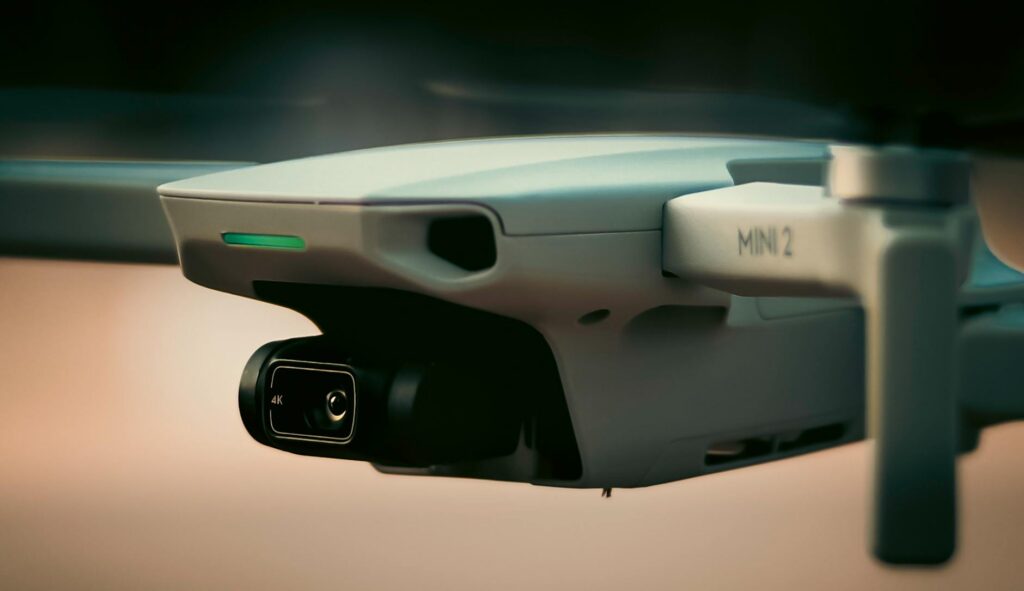
4. Drones (e.g., DJI Mavic 3 Enterprise)
Combining visual and ultrasonic sensors, it realizes low-altitude obstacle avoidance and path tracking in power inspection and logistics delivery scenarios.
IV. Future Trends: More Intelligent, Adaptive, and Accessible
1. Multi-Modal Fusion Perception
Integrating multi-dimensional data (e.g., vision, sound, vibration) to enhance system robustness in complex environments.
2. Continuous Learning and Adaptive Optimization
Robots will continuously adapt to new environments through online learning and optimize long-term operational efficiency.
3. Low-Cost Hardware and Algorithm Lightweight
As LiDAR prices drop and AI chips become more popular, high-performance navigation capabilities will extend to consumer-grade products.
4. Ethical and Safety Decision-Making Mechanisms
Particularly in autonomous driving, making ethically sound decisions in “unavoidable” scenarios will be key to aligning technology with societal needs.
5. Bio-Inspired Algorithms
Imitating the collaborative obstacle avoidance mechanisms of biological groups (e.g., ant colonies, bird flocks) to provide new ideas for multi-robot systems.
Conclusion
Robot navigation and obstacle avoidance technology has moved from laboratories to wide-ranging engineering applications, serving as the “legs” for intelligent robots to be deployed in real-world scenarios. Current technologies perform maturely in structured environments but still face challenges in handling highly dynamic scenarios, extreme conditions, and cost control. In the future, with deeper AI integration, accelerated hardware iteration, and improved ethical frameworks, robots are expected to serve humans safely and efficiently in more complex environments—the era of truly “ubiquitous autonomous mobility” is approaching.