Equipping robots with multiple senses allows them to perceive and interact with the world in a more human-like, intuitive way. This multimodal perception – the ability to combine inputs from vision, touch, hearing, and other sensors – effectively makes robots smarter and more capable. It’s an area of rapid growth; for example, the global market for sensor fusion in robotics (the technology enabling multimodal perception) is expected to more than double in the next four years, underscoring the demand for such smart robots. In this article, we introduce the concept of giving robots a “sixth sense” through multimodal perception, explain what it means in robotics, how vision and touch work together in particular, the sensors and AI technologies involved, key industry applications, benefits, challenges, and the future outlook for these smart robots.
Introduction to the Concept of a Robotic “Sixth Sense”
What do we mean by a robot’s “sixth sense”? In human terms, the phrase “sixth sense” is often used metaphorically to describe an extra sense or heightened intuition beyond the five classical senses. In robotics, it similarly refers to capabilities that go beyond a single sensory modality – allowing machines to perceive and respond in ways that a lone sensor (like a camera or a microphone) cannot. It’s not a literal psychic sense, but rather the synergy of multiple senses working together. By fusing data from various sensors, robots gain a more comprehensive awareness of their environment, which can seem almost intuitive or human-like in its richness. In essence, a robot’s “sixth sense” is the emergent perceptual capability that arises from integrating multiple sensory inputs – an ability to perceive the world in a multi-dimensional, context-aware manner that makes the robot smarter in its decision-making and interactions.
Humans accomplish this effortlessly. We constantly integrate sight, sound, touch, and more to understand our surroundings. For instance, when you watch someone speak, you combine visual input (lip movements) with auditory input (sound) to comprehend the words – a classic example of multimodal perception in action. Robots with a “sixth sense” attempt to replicate this kind of unified perceptual experience by using multiple sensors together. Instead of relying on just vision or just touch, a robot can merge both to get a unified picture of what’s happening. This makes their perception more robust – if one sense provides ambiguous information, another sense can clarify it. In short, multimodal perception is about giving robots a richer, more reliable understanding of the world, analogous to how we humans perceive our environment with multiple senses.
What Is Multimodal Perception in Robotics?
Multimodal perception in robotics refers to a robot’s ability to take in information through multiple types of sensors and combine it to form a coherent understanding of its environment. Just as our brains integrate sight, sound, touch, and other senses into one seamless experience, a robot uses sensor fusion to merge data from various sources (cameras, touch sensors, microphones, etc.) into a single, richer model of the world. Rather than perceiving the world in a piecemeal way, the robot can cross-reference and integrate sensory inputs, leading to better context awareness and smarter behavior.
In practical terms, this might involve a robot seeing an object with a camera while also feeling it through touch sensors – each modality contributes unique information. Vision might provide the object’s shape and color, while touch provides texture and hardness. By combining these, the robot knows far more than it would from one sense alone. This integrated approach is crucial for complex tasks and unpredictable settings. In fact, multimodal perception is considered essential for enabling robots to understand and interact with complex environments and even human partners, because it allows the machine to interpret diverse signals in context.
Importantly, multimodal perception goes hand-in-hand with the concept of sensor fusion. Sensor fusion is the technology or process that integrates data from multiple sensors to produce more accurate, reliable, and comprehensive information than any single sensor could provide on its own. Modern robots are equipped with a variety of sensors – from optical cameras and depth sensors (for vision) to lidar/radar (for distance), to tactile pads and force sensors (for touch), microphones (for hearing), and so on. Fusing all these inputs gives the robot a robust “world view.” For example, a camera might struggle in low light, but a sonar sensor can still detect obstacles in the dark; by combining their data, a robot can navigate reliably where one sensor alone would fail. This fusion not only improves perception but also builds redundancy (one sensor can compensate for another), which is akin to how our different senses compensate for each other (think of how your sense of touch becomes acute when vision is limited, like feeling your way in the dark).
In summary, multimodal perception in robotics is about imbuing machines with multiple senses and the ability to unify those sensory inputs. It transforms raw sensor data into meaningful insights by leveraging the strengths of each modality. The end result is a robot that perceives its environment in a richer, more human-like way – effectively endowing it with something akin to a “sixth sense” that transcends the capabilities of any single sense alone.
Vision and Touch: How They Work Together to Simulate a “Sixth Sense”

Among the various sensory pairings, vision and touch is one of the most powerful combinations for robots – particularly for tasks involving physical interaction. Humans naturally use vision and touch together all the time. Consider the simple act of closing a jar or inserting a key into a lock: your eyes guide the coarse motion (seeing the alignment and orientation), while your sense of touch fine-tunes the force and detects when the key slides into place or the lid’s threads catch. Each sense provides complementary information, and together they create a more complete understanding of the taskai.
In robotics, merging visual and tactile data can effectively give the machine a more intuitive grasp of objects and tasks, almost like an extra sense. Vision provides a global view – the shape, size, color, and position of objects in space. Touch provides local, contact-specific details – texture, stiffness, precise force feedback, and slip detection. When a robot has both, it can do things like pick up unknown objects with far greater success: the camera might identify a good spot to grasp an object, and the touch sensors in its gripper can tell when it has a firm hold or if the object is slipping, prompting the robot to adjust its grip in real time.
Research has shown the significant advantages of this vision-touch integration. For instance, roboticists have observed that vision and touch are especially important for contact-rich manipulation tasks – such as assembling parts, handling flexible objects, or performing fine motor actions like threading a needle. Vision alone might inform the robot of an object’s location and orientation, but without touch the robot might not know if it has actually gripped the object correctly or how much force to apply. Conversely, touch alone (like a blindfolded robot feeling around) is slow and limited to whatever the sensor directly contacts. Together, these senses allow the robot to both anticipate and react: vision can predict when contact is about to happen and guide the approach, while touch can confirm the contact and provide feedback about the result. This synergy effectively gives the robot a more “intuitive” understanding of interactions – a quality one could metaphorically call a sixth sense, since the robot can handle tasks with a human-like finesse and awareness that neither sense would achieve by itself.
A concrete example is a robot closing a water bottle. With its camera, the robot observes the bottle and cap – aligning them correctly by analyzing shapes and positions. Simultaneously, its tactile sensors feel the thread engagement and the turning force. Through vision it knows when cap and bottle are positioned to screw together; through touch it knows how tightly it’s turning and if the cap is slipping. The robot uses this combined perception to successfully perform the task, much like a human would. If misalignment occurs (vision catches it) or if too much resistance is felt (touch catches it), the robot can adjust accordingly.
In cutting-edge research, scientists are training robots with neural networks that fuse visual and tactile data, so the robot can learn the relationship between what it sees and what it feels. This has led to more adaptive and skilled manipulation. One study introduced a multi-modal learning model that took camera images and touch sensor readings as inputs, and it was able to predict the outcomes of the robot’s actions more accurately than vision alone. In other words, when a robot “sees” and “feels” simultaneously, it can foresee the consequences of its movements (like whether an object will slip or if a force is sufficient) much better – allowing for finer control and fewer errors. This enhanced predictive ability is a prime example of the “sixth sense” effect: the robot isn’t literally seeing the future, but the fusion of senses gives it an almost anticipatory awareness of what’s happening in the environment.
In summary, vision+touch is a cornerstone of multimodal perception that dramatically improves a robot’s interaction with the physical world. By simulating how humans use eyes and skin together, robots gain an almost instinctual capability to handle objects and tasks – a foundational step toward truly smart robots that can operate effectively in unstructured, real-world environments.
How Multimodal Perception Is Implemented: Sensors, AI, and Machine Learning
Achieving multimodal perception in robots requires an integration of hardware sensors and intelligent software algorithms that fuse sensor data. Let’s break down how a “sixth sense” system is implemented:
- Sensors Galore: First and foremost, the robot needs the right suite of sensors. Common sensor modalities include cameras (for vision), LiDAR or ultrasonic sensors (for distance and depth perception), microphones (for hearing), touch sensors such as force-torque sensors or pressure pads (for tactile feedback), gyroscopes and accelerometers (for balance and orientation, akin to an inner ear), and even chemical sensors (electronic noses and tongues for smell and taste). Each sensor type captures a different aspect of the environment. For example, a camera might identify an object’s visual features, while a tactile sensor can detect its texture and weight. The key hardware challenge is ensuring these sensors can all operate simultaneously and provide data in a format the robot’s computer can handle.
- Sensor Fusion Algorithms: Simply having multiple streams of data isn’t enough; the robot must fuse this data into a coherent picture. This is where algorithms come into play. At a basic level, statistical techniques like Kalman filters or Bayesian filters may be used to merge sensor readings (common in robotics for combining, say, GPS, IMU, and wheel encoder data for localization). In more complex perceptual tasks, robots leverage advanced machine learning algorithms to learn how to best combine modalities. For instance, deep learning models can take in camera images and tactile readings as inputs and learn intermediate representations that align the two. The Stanford AI Lab, for example, demonstrated a neural network architecture that encodes vision and touch separately and then merges them into a joint representation, allowing the robot to learn features that span both senses. Such learned representations enable the robot to interpret complex situations (like understanding an object’s shape from sight and feel together).
- Artificial Intelligence and Adaptation: AI is critical in enabling a robot’s “sixth sense.” Through machine learning, robots can improve their multimodal perception over time. They can be trained on datasets that include synchronized sensory inputs (e.g., video and force sensor data recorded together) so that the AI learns correlations between the modalities. A key approach is self-supervised learning, where the robot learns from unlabeled sensor data by setting up its own internal learning objectives (for example, predicting if a visual and tactile event happened at the same time). This reduces the need for manual labels and allows robots to effectively teach themselves how to align and interpret multiple senses. Additionally, AI-driven sensor fusion can handle context: it might learn to weight one sensor over another depending on conditions. If the lighting is bad (vision less reliable), the AI can rely more on other sensors like LiDAR or touch. Conversely, if physical contact is not yet made, it relies on vision to guide itself until touch kicks in.
- Processing Infrastructure: Integrating many sensors and AI algorithms requires significant processing capability. Robots often employ edge computing with powerful on-board processors (CPUs, GPUs, or specialized AI chips) to handle sensor fusion in real time. In some advanced systems, sensor data might even be streamed to cloud servers for heavy processing, though latency issues mean critical reflexes are processed locally. The point is, a sixth-sense robot needs a robust “brain” to crunch the data. The good news is that advances in hardware (faster processors, parallel computing, dedicated sensor-fusion chips) and software (optimized algorithms) have made real-time multimodal perception feasible. Researchers are continuously improving these algorithms for efficiency and accuracy, for instance by developing more advanced filtering techniques and deep networks that can chew through multi-sensor data without choking on noise or conflicting inputs.
- Calibration and Synchronization: Another practical aspect of implementation is making sure all the sensory inputs line up correctly. Sensors have different sampling rates and coordinate frames. A camera might run at 60 Hz, while a touch sensor might be 500 Hz; without synchronization, the robot could be trying to match a touch from one moment with an image from a slightly different moment. Engineers ensure there’s a common time base or use techniques to temporally align data. They also calibrate sensors so that, for example, the position a camera sees is translated to the same position in the robot’s tactile sensor frame. Proper calibration is foundational so that the data fusion is apples-to-apples in terms of space and time.
In summary, implementing multimodal perception involves equipping a robot with diverse sensors and employing sophisticated AI algorithms to merge the inputs. It’s a marriage of hardware and software: sensors gather the raw signals, and machine learning models plus sensor fusion algorithms interpret those signals collectively to extract higher-level understanding. The end result is a robotic system that can, for instance, see and feel an object at the same time and use that joint knowledge to act more intelligently. This technological integration is what breathes life into the robot’s “sixth sense.”
Key Applications in Industry for Multi-Sensory “Smart Robots”
Multimodal perception isn’t just a lab experiment – it’s enabling a range of powerful applications across industries. By giving robots vision, touch, and other senses together, we unlock capabilities that were previously difficult or impossible for machines relying on a single sense. Here are some key industry applications of these sixth-sense-enabled smart robots:
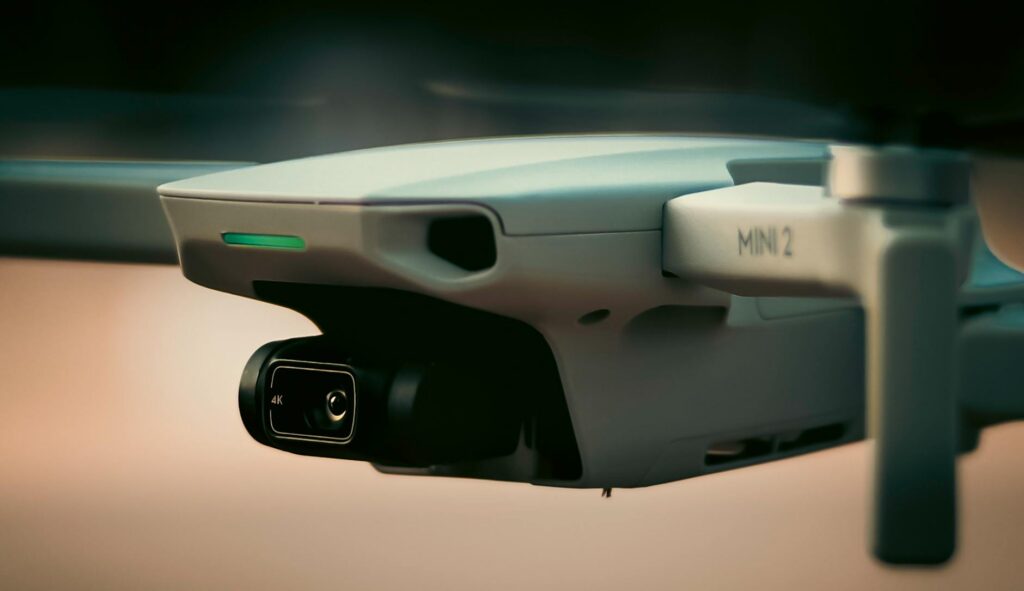
- Autonomous Vehicles and Drones: Self-driving cars, delivery robots, and drones exemplify multimodal perception in action. These systems fuse data from cameras, lidar, radar, GPS, and ultrasonic sensors to navigate safely. Sensor fusion is the backbone of autonomous navigation – a self-driving car, for instance, combines camera vision (to read lanes and detect traffic lights), lidar/radar (to sense distances and detect obstacles in 3D, even in low light), and GPS/IMU (for precise positioning) into one cohesive situational awareness map. Warehouse AGVs (Automated Guided Vehicles) use similar multi-sensor setups to move efficiently and avoid collisions. The result is that autonomous robots can reliably understand their surroundings, avoid hazards (like pedestrians or unexpected obstacles), and make real-time driving decisions. This multi-sensory approach enhances safety and reliability, reducing failures by covering edge cases where one sensor might falter (for example, a camera might be blinded by glare, but radar still detects the car ahead).
- Healthcare and Surgical Robotics: In medicine, robots with multimodal perception are making a big impact. Consider surgical robots: performing delicate procedures requires vision (endoscopic cameras providing the surgeon or AI with an inside view) and touch (force feedback to ensure the robot isn’t cutting too hard or is feeling the subtle resistance of tissue). Modern surgical robots integrate force/torque sensors, high-resolution cameras, even ultrasound or other imaging, to carry out minimally invasive surgeries with great precision. The tactile feedback allows the system (or the human operator) to sense pressure and texture, reducing the risk of tissue damage by guiding instrument force. Rehabilitation and assistive robots (like exoskeletons or prosthetic limbs) also rely on multiple senses: they may use muscle activity sensors (EMG), pressure sensors in the device, and motion sensors to interpret what a patient is trying to do and respond accordingly.
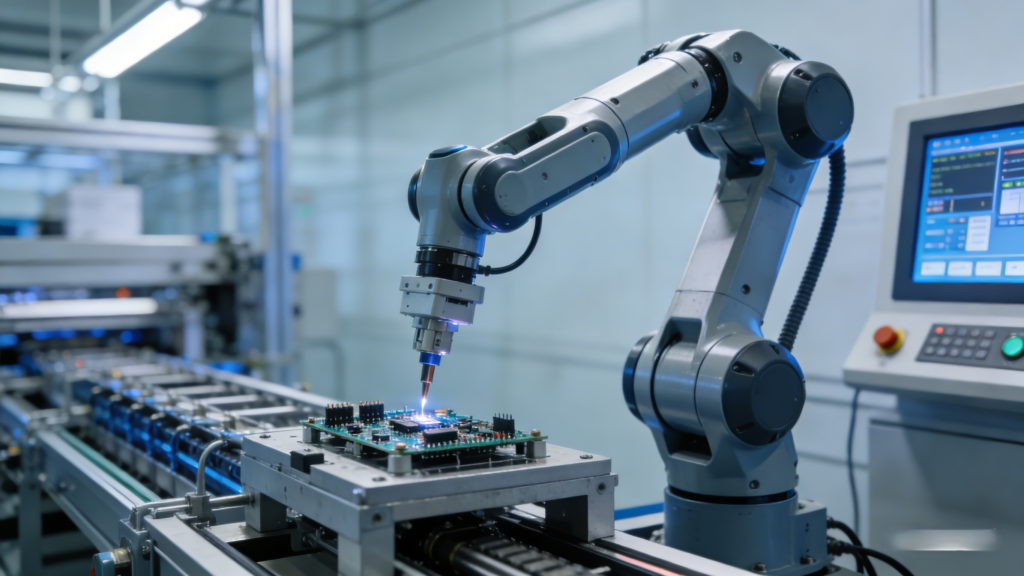
- Manufacturing and Assembly: Factory robots have much to gain from a “sixth sense.” Traditional industrial robots were often blind and deaf – they simply repeated programmed motions. Today’s smart manufacturing robots use vision systems, tactile sensors, and more to become flexible and intelligent. For instance, in assembly, a robot might use a camera plus a force sensor to align parts: the camera guides the arm to insert a peg roughly in a hole, and the force sensor detects contact and slight misalignments, prompting the robot to wiggle or adjust until the part fits perfectly. This way, even if parts aren’t in the exact expected position, the robot can adapt (much like a human would feel a screw engage threads). For quality control, multiple sensors are employed – cameras for detecting surface defects, laser scanners for precise dimensional checks, and even auditory sensors to listen for telltale sounds (like a machine running smoothly vs. making a grinding noise). Fusing these inputs in real time allows earlier and more accurate detection of issues on the production line. Manufacturing robots also use multimodal perception for predictive maintenance of equipment: vibration and temperature sensors on a robotic arm, for example, can pick up slight changes that indicate a bearing is wearing out, prompting maintenance before a breakdown occurs. Overall, sensor-fused robots in factories reduce errors, improve product quality, and enhance safety by quickly sensing and responding to anomalies.
- Agriculture and Field Robotics: Outdoors, conditions are unstructured and changing – a perfect scenario for multimodal perception. Agricultural robots (for planting, spraying, harvesting, etc.) combine GPS with vision and lidar to navigate farms. GPS gives coarse positioning, while cameras and lidar provide local awareness of rows of crops and obstacles. A farming rover might use a fusion of GNSS (satellite positioning), lidar, cameras, and inertial sensors to drive down a field, stay in the correct row, and detect obstacles like rocks or animals that wander into its path. In dusty or foggy conditions where cameras might be impaired, robots can incorporate radar to see through low visibility, ensuring they can operate in early morning fog or dusty afternoons. Soil-monitoring bots might smell (chemical sensors for soil composition), feel (moisture sensors in the ground), and see (imaging for plant health) all at once to provide a comprehensive assessment of crop status. By combining these senses, agricultural robots become far more reliable and effective in the unpredictable environments of farms, optimizing resource use and helping increase yields.
- Human–Robot Interaction and Service Robots: Robots that work closely with humans – whether as assistants, co-workers on the factory floor, or social robots in public – need a kind of sixth sense to navigate the nuances of human environments. Multimodal perception enables better understanding of humans by fusing visual cues (like gestures or facial expressions), auditory information (speech, tone of voice), and perhaps even proxemic sensors (to judge personal space). For example, a service robot in a hotel might use computer vision to recognize people and their facial expressions, microphones to understand spoken requests, and touch sensors to detect contact or handshakes. The combined input lets it respond more naturally – it can hear what you say, see if you look confused or happy, and feel safe interaction if someone touches it. In collaborative manufacturing settings, a robot arm uses vision to see where a human co-worker is and force sensors to detect any accidental contact, allowing it to safely pause or adjust its motion to avoid harming the person. Essentially, multimodal perception is crucial for robots to interpret complex human behavior and intentions in context. A single-sense robot might hear words but miss sarcasm or see gestures but miss verbal instructions; a multi-sense robot can cross-reference inputs to better infer meaning. This is paving the way for more intuitive human-robot collaboration, where robots have the awareness to be proactive helpers rather than just tools.
These examples across different sectors underscore that giving robots multiple senses isn’t just a gimmick – it’s foundational to unlocking advanced capabilities. Whether it’s a self-driving car avoiding an accident thanks to redundant sensors, or a surgical robot feeling what it sees inside a patient, multimodal perception is making robots significantly more effective and trustworthy in real-world tasks. By imitating the way humans (and animals) use multiple senses, industries are creating smart robots that can truly adapt to their surroundings, learn from them, and perform reliably under varied conditions.
Benefits of “Sixth-Sense” Robots (Multimodal Perception)
Implementing multimodal perception in robotics yields a host of benefits that contribute to making robots smarter, safer, and more efficient. Here are some of the major benefits of these sixth-sense-enabled robots:
- More Accurate and Robust Perception: By combining data from multiple sources, robots achieve a far more accurate understanding of their environment. One sensor can validate or refine another’s observations, reducing uncertainty. This multi-sensor cross-verification leads to greater precision in task execution – for example, sensor fusion in a robot can cut perception errors dramatically compared to a single sensor in isolation. The robot is less likely to be “fooled” or blinded by a single point of failure (such as a glare on a camera or a momentary drop in a signal) because other senses fill in the gaps.
- Enhanced Reliability and Safety through Redundancy: Multimodal systems introduce redundancy – if one sense fails or provides poor data, another can compensate. This makes robots more reliable in challenging or changing conditions. For instance, if visibility is low, a robot can still “feel” its way or use radar. This redundancy lowers the risk of system failure and accidents. In safety-critical applications (like autonomous cars or medical robots), having multiple sensory inputs can be life-saving – the robot’s decisions are informed by a broader situational awareness, making unintended events (collisions, errors) far less likely.
- Human-Like Adaptability and Context Awareness: A robot with a “sixth sense” can adapt on the fly much better than one with a single sense. It gets a contextual picture of the world – not just a flat image or a single reading. This means the robot can handle dynamic, unstructured environments much more gracefully. For example, a multimodal robot vacuum can see a obstacle (camera), estimate its distance (IR sensor), and gently bump it (tactile bumper) to confirm and then reroute, whereas a camera-only one might misjudge distance, or a bumper-only one would blindly hit everything. The fusion of senses yields an almost human-like intuition about context, enabling smarter navigation and interaction. Robots can also better generalize knowledge to new situations; by having rich sensory data, they can recognize patterns that persist across tasks (as noted in research, certain multimodal features generalize across different tasks, helping robots learn new tasks more quickly).
- Improved Efficiency and Task Performance: With richer information, robots can make decisions faster and more confidently, which often translates to greater efficiency. They spend less time “guessing” or correcting errors. In manufacturing, a vision+touch robot aligns parts correctly on the first try more often, speeding up assembly. In navigation, a multi-sensor drone can fly in one go without halting due to uncertainty. Additionally, sensor fusion can streamline data processing by filtering out noise – the robot’s AI can ignore contradictory or irrelevant data when other sensors provide clarity, focusing processing power on what matters. All this contributes to smoother, faster task execution and streamlined decision-making.
- New Capabilities and Expanded Functionality: Multimodal perception can open up entirely new capabilities for robots. For example, adding chemical sensors might allow a robot to detect gas leaks (a “nose” capability), or adding thermal imaging might let a rescue robot find humans by body heat. A single-sense robot simply couldn’t perform these tasks. By combining traditional senses with such specialized ones, robots can venture into roles like environmental monitoring, advanced medical diagnostics (sniffing out disease markers), or multi-faceted customer service (seeing and hearing and responding with empathy). The concept of a sixth sense also extends to proprioception (body awareness) – robots that model their own bodies and sense their own joint positions can detect damage or self-correct their movements, as researchers demonstrated with robots learning a self-model to adapt when a limb is damaged. This self-awareness is indeed a benefit of multimodal integration (vision to see oneself, internal sensors to feel oneself). It makes robots more resilient and autonomous.
In sum, giving robots multimodal perception yields smarter robots: they perceive more deeply and reliably, handle complexity better, and can tackle a wider range of tasks. These benefits all contribute to robots that are not only more capable but also more trustworthy in their operation, which is crucial as we integrate robots into daily life and critical applications.
Technical and Practical Challenges of Developing a Robotic Sixth Sense
While the advantages of multimodal perception are clear, achieving a seamless “sixth sense” for robots comes with numerous challenges and practical hurdles. Here are some of the key challenges engineers and researchers face:
- Sensor Integration Complexity: One of the biggest challenges is simply getting different sensors to work together effectively. Each sensor produces data in its own format, range, and timing. Integrating multiple sensory inputs can be complex and requires advanced algorithms to process and interpret the data. The robot’s system must correlate a visual frame with a tactile event or a sound with a location, which isn’t trivial. Combining streams in real time without information loss or misalignment is a demanding task. Developers often have to write sophisticated sensor fusion software and carefully calibrate systems so that, for example, the “bump” detected by a touch sensor can be mapped to the exact object seen on camera at that moment.
- Data Overload and Processing Power: More senses mean more data, often an avalanche of it. A single high-resolution camera can already produce a lot of data per second; add to that lidar point clouds, audio streams, etc., and the robot’s computer can be overwhelmed. Ensuring real-time processing and decision-making with such a data flood is challenging. It often requires powerful processors or distributed computing. There’s also the risk that in crunching so much data, the system introduces latency – a dangerous delay between sensing and action. Engineers mitigate this with efficient algorithms, edge computing optimizations, and sometimes by offloading to cloud processing (though that has limits due to network latency). In short, making sure the robot’s “brain” can keep up with its senses is a non-trivial engineering challenge.
- Sensor Reliability and Environmental Limitations: Each sensor modality has its failure modes and limitations, and combining them doesn’t automatically solve all issues. For instance, vision can fail in low light or glare; tactile sensors can give confusing readings if an object’s properties are outside their calibration range; microphones struggle in noisy environments. While sensor fusion helps, the robot still faces reliability issues under certain conditions. Some environments might degrade multiple sensors at once (imagine a smoke-filled room: cameras see poorly, and if it’s loud, audio is tough; a robot firefighter must rely on thermal imaging and other cues). Designing sensors that are robust to various conditions (waterproof, working in extreme temperatures, etc.) is an ongoing challenge. Additionally, sensors can drift or lose calibration over time – a depth sensor might become offset, or a force sensor might wear. Keeping all sensors calibrated and trustable is a continuous maintenance task.
- Size, Weight, and Power Constraints: Adding more sensors isn’t free – they take up space and weight, and they consume power. Sensors that are too large or heavy may not be suitable for smaller robots or drones, and each additional sensor draws power from the robot’s energy supply. This is critical because many robots (like drones or mobile robots) have limited battery life. Designers must often trade off which senses are most needed for a given application due to these constraints. For instance, a tiny medical robot might not carry a full camera system, or a drone might limit the number of heavy lidar units to save weight. The challenge is to miniaturize sensors and improve power efficiency so robots can carry a rich sensor suite without compromising their form factor or endurance.
- Complexity of Interpretation and Fusion (Software Challenges): Even with great sensors and powerful computers, getting meaningful insights from combined data is hard. The multi-sensor fusion algorithms must be carefully tuned. If the sensors disagree (which one is right?), the system needs logic or learning-based strategies to handle conflicts. For example, if vision says an object is 5 meters away but lidar says 5.5 meters, the robot has to reconcile that. In some cases, multimodal data can even be misleading if not handled correctly – a phenomenon known as “sensor fusion confusion.” Developers often need to use machine learning to have the robot learn how to weight and trust sensors in different contexts, which itself requires gathering comprehensive training data. Ensuring that the fused perception is reliable and does not produce unpredictable results is a big part of the challenge. Debugging a multi-sensor system is more complicated than a single-sensor one, because errors can come from any modality or the fusion process itself.
- Cost and Complexity of Deployment: More sensors and complex integration mean higher costs and more points of failure. For industries considering adopting sixth-sense robots, cost can be a barrier – high-quality sensors (like lidars or advanced tactile skins) are expensive. The complexity also means more specialized maintenance and fewer off-the-shelf solutions. There’s a challenge in justifying the added expense versus the benefit in certain applications. However, as technology advances and scales, costs are gradually coming down. Still, from a practical standpoint, engineers and project managers have to decide where multimodal perception is worth the complexity and how to implement it in a reliable, maintainable way.
- Algorithms and Learning Data Requirements: If using AI for sensor fusion, another challenge is the need for extensive training data that covers all sensor modalities simultaneously. Creating datasets that include, say, synchronized video, audio, and touch data for a wide range of scenarios is labor-intensive. Some researchers address this with self-supervised learning (letting the robot gather data itself), but that too can be time-consuming and requires careful task design. Moreover, AI models can be “black boxes,” making it hard to understand or trust their decisions – this is an emerging concern: how to make multi-sensor AI perception more explainable and verifiable (especially important in safety-critical fields like autonomous driving or medical robotics).
Despite these challenges, progress is steady. Each year, we see improvements in sensor tech (smaller, cheaper, more robust sensors), better fusion algorithms, and more powerful processors that help tackle these issues. Researchers are actively working on solutions, like advanced calibration methods, adaptive sensor fusion (where the system learns to ignore faulty sensors on the fly), and standardized frameworks for multimodal data. Overcoming these hurdles is key to fully realizing the potential of robots with a reliable sixth sense.
The Future Outlook for Smart Robots with Multimodal Perception

Looking ahead, the future for smart robots equipped with multimodal perception – their own kind of sixth sense – is incredibly exciting. As technology continues to advance, we can expect these trends and developments:
- Even More Advanced Sensors (Beyond the Five Senses): Future robots will likely incorporate new types of sensors, including ones that go beyond human senses. Researchers are already exploring sensors for things like electric and magnetic fields, air quality and chemical composition, and radiation detection as part of a robot’s sensory arsenal. For instance, a robot might have an “electrosense” to detect live wires or electrical currents (useful for maintenance robots) or a refined “heat sense” to feel temperature gradients from a distance. These additional modalities would expand a robot’s awareness even further, potentially giving it superhuman sensing abilities (imagine a robot that can “smell” gas leaks better than a human or sense magnetic north like a migratory bird). The combination of traditional and non-traditional senses will make robots versatile in environments that are hazardous or imperceptible to humans.
- High-Resolution “Artificial Skin” and Improved Tactile Sensing: On the touch front, a major area of development is artificial skin for robots – flexible sensor arrays that can cover a robotic arm or an entire robot body, giving a high-resolution sense of touch. This could allow robots to detect very subtle contact information (pressure, shear, even temperature) over large surfaces, making physical interaction far safer and more sensitive. Paired with vision, such tactile arrays would let robots grasp delicate objects (like ripe fruits or fragile merchandise) with the same care a human would, dramatically improving their usefulness in areas like agriculture or warehousing. We may see robots that can “feel” a pulse or a heartbeat, which could be transformative for caregiving robots that need to detect human vital signs through touch.
- More Sophisticated AI for Sensor Fusion (Learning and Adapting): The AI algorithms driving multimodal perception are expected to become more powerful and more autonomous in learning. Future robots might use deep learning models that are pre-trained on vast multimodal datasets, enabling them to recognize patterns across vision, sound, touch, etc., without needing as much task-specific training. We’ll likely see an increase in self-learning robots: machines that continuously learn from their own experience, refining how they fuse senses. For example, a home assistant robot could learn the normal audio-visual patterns of your home and develop a sixth sense for when something is off (like recognizing the sound + image of an appliance malfunctioning). Additionally, AI will help make sensor fusion decisions more context-aware – future systems might dynamically decide which sensors to trust more in a given situation (perhaps even turning off or on certain sensors to save power or reduce confusion). This means smarter, more efficient perception.
- Improved Human-Robot Interaction through Multimodal Understanding: In the future, robots will interact with humans in a far more intuitive way, thanks to multimodal perception. They will not only see and hear us better (with better speech recognition that uses lip reading, for example, and vision that uses gesture recognition), but also potentially sense our emotions or health cues (using thermal cameras to sense stress via body temperature changes, or subtle touch to gauge a person’s grip strength in a handshake). This could give robots a social sixth sense – the ability to read a room or understand human context in a way that’s closer to how humans do. We might have service robots that can tell if you’re upset or confused and adjust their behavior accordingly, or collaborative robots that anticipate what tool a human worker needs next by combining visual observation of the workspace and audio cues from the worker. The gap between human and robot communication will narrow as robots gain these perceptual skills, leading to smoother cooperation.
- Wider Adoption in Critical Fields: As multimodal perception becomes more reliable and cost-effective, expect to see sixth-sense robots in critical and new domains. In disaster response, for example, robots that can see through smoke (thermal imaging), hear cries for help, feel their way through rubble, and smell chemicals will be invaluable. In space exploration, rovers or planetary robots with multiple senses can adapt to unknown terrains and detect things like chemical signatures of life or navigate in darkness (using touch and radar). In healthcare, beyond surgery, we might see diagnostic robots that use a suite of senses to check patients – scanning them visually, listening to heart and lung sounds, even smelling biomarkers on breath. Such multi-sensory diagnostics could catch illnesses earlier or monitor patients non-invasively.
- Integration of Proprioception and Self-Modeling: Future “sixth sense” definitions in robots will likely include heightened proprioception – a robot’s sense of its own body. We saw early steps in robots learning a self-model to adapt to damage. Going forward, robots may continuously integrate external senses with internal ones. A robot might, for instance, visually observe its own limbs in action and compare that to expected internal readings, thereby calibrating itself or detecting anomalies. This could lead to robots that are self-aware (in a limited sense) of their physical form and can thus recover from injuries or reconfigure themselves (in modular robots) on the fly. It’s not consciousness, but it’s a closer step to robots that can autonomously maintain and optimize themselves, which is very useful in remote or dangerous deployments where human maintenance is tough.
- More “Natural” Multimodal AI and Brain-Inspired Systems: There is a trend toward making AI more brain-like in how it processes multiple modalities. We might see neuromorphic chips (hardware that mimics neural networks) handling sensor fusion more like a human brain does – efficiently and in parallel. Additionally, research in neuroscience about how our brains integrate senses (for example, how the superior colliculus merges visual and auditory stimuli) could inspire new algorithms that allow robots to merge senses with minimal training and high robustness. This could yield AI that gives robots an almost instinctive multimodal perception – a true artificial intuition built on hardware and software that operate analogously to biological neural circuits.
In summary, the future of robots with a “sixth sense” is one where machines are even more deeply endowed with sensory intelligence. They will be more perceptive than ever, not just matching human sensory capabilities but often exceeding them, and doing so in a coordinated, intelligent way. These smart robots will be able to enter environments and perform tasks we never thought possible for machines, working alongside humans as perceptive partners. As researchers overcome current challenges and expand the sensory and cognitive toolkit, we move closer to robots that genuinely understand and interact with the world as richly as we do – if not more so. The coming years promise a new generation of robots that, through multimodal perception, truly embody a sixth sense in the service of humanity’s needs.