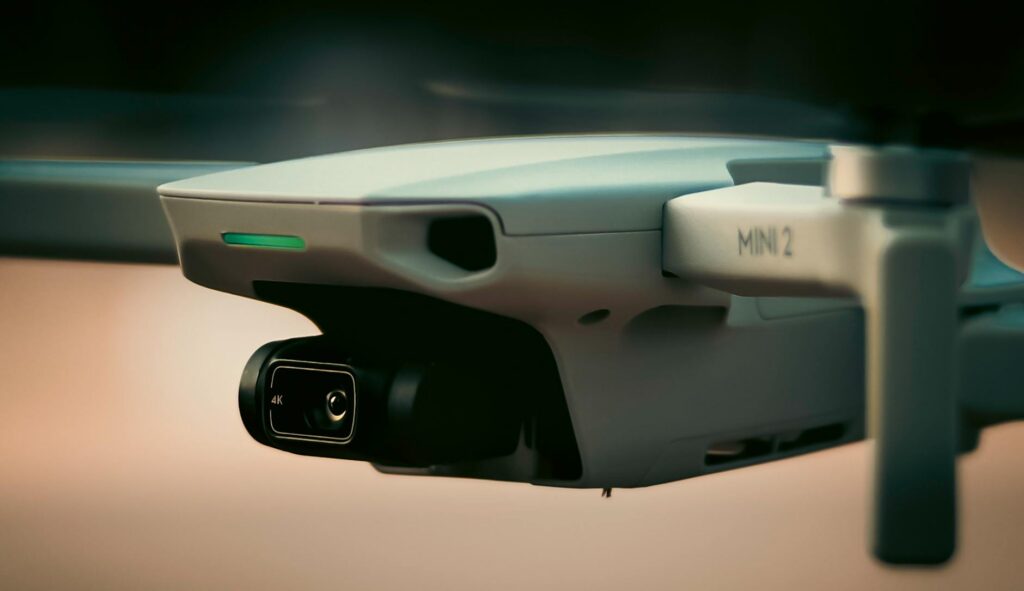
The navigation system is the “brain” that enables a UAV (Unmanned Aerial Vehicle) to achieve autonomous flight. Understanding the working principles, advantages, and limitations of various navigation technologies is key to mastering UAV applications in depth. This article will detail mainstream technologies—from satellite navigation to cutting-edge AI-enhanced navigation—to help you fully understand how UAVs perceive time and space.
I. Satellite Navigation System (GNSS): The Cornerstone of Global Positioning
Satellite navigation systems calculate a UAV’s 3D coordinates (longitude, latitude, altitude) and speed by receiving signals from satellites such as GPS, BDS (Beidou Navigation Satellite System), and GLONASS. It serves as the core for outdoor flight.
Application Scenarios: Waypoint planning, automatic return-to-home, long-distance route tracking, and agricultural crop protection.
Advantages: Provides global positioning with meter-level accuracy, suitable for large-scale operations in open areas.
Disadvantages: Signal is easily blocked and lost in environments like indoors, canyons, and urban buildings, leading to positioning failure.

II. Inertial Navigation System (INS): Autonomous Navigation Unaffected by External Interference
The inertial navigation system measures angular velocity and linear acceleration via gyroscopes and accelerometers to independently calculate position changes, without relying on external signals.
Application Scenarios: Short-term replacement for GNSS in tunnels; combined with GNSS to improve stability.
Advantages: Fully autonomous with strong anti-interference capabilities.
Disadvantages: Suffers from cumulative errors (drift); when used alone, it can only maintain reliability for minutes and must be combined with other systems.
III. Visual Navigation System: The “Intelligent Eyes” of UAVs
Visual navigation systems mimic biological vision and mainly include two types:
Optical Flow Positioning: Estimates displacement by using a camera to detect changes in ground texture.
Visual SLAM (Simultaneous Localization and Mapping): Uses depth cameras or binocular vision to real-time construct 3D environmental maps and achieve positioning.
Application Scenarios: Indoor flight, obstacle avoidance in complex terrain, target tracking, and precision agricultural spraying.
Advantages: Independent of GNSS and supports dynamic obstacle avoidance.
Disadvantages: Performance depends on ambient lighting; effectiveness decreases in dark environments or areas with uniform texture.
IV. Auxiliary Navigation Systems: Supplements for Altitude and Heading
1. Barometric Navigation
Principle: Estimates altitude by measuring changes in atmospheric pressure.
Applications: Altitude-hold hovering, altitude assistance for low-cost UAV models.
Pros & Cons: Low cost and fast response, but susceptible to airflow disturbances with low accuracy (error up to ±5 meters).
2. Geomagnetic Navigation (Electronic Compass)
Principle: Detects the Earth’s magnetic field direction to provide heading angles.
Applications: Calibrating initial orientation, assisting attitude control, and locking heading with GPS.
Pros & Cons: Low cost and fast response, but easily interfered by metal objects and electromagnetic sources (e.g., near high-voltage lines).
V. High-Precision Ranging and Integrated Navigation: Professional-Grade Solutions
1. Ultrasonic/LiDAR Ranging
Ultrasonic: Achieves centimeter-level ranging using the time of acoustic echo, used for low-altitude altitude holding (e.g., DJI Phantom series).
LiDAR (Light Detection and Ranging): Generates high-precision 3D point cloud maps via laser pulses, used for obstacle avoidance and terrain following in autonomous logistics UAVs.
2. Integrated Navigation Systems (Mainstream Solutions)
These systems fuse multi-sensor data to complement each other’s strengths, achieving stable and reliable high-precision navigation.
GNSS + INS: Satellite positioning compensates for INS drift, while INS fills in GNSS signal blind spots.
RTK (Real-Time Kinematic): Achieves centimeter-level positioning through ground base station correction, widely used in surveying and precision agriculture.
Multi-Sensor Fusion: Combines data from vision, LiDAR, and IMU (Inertial Measurement Unit), and optimizes results via algorithms like Kalman filtering. Representative products include the DJI Matrice 300 RTK and Amazon Prime Air logistics UAVs.
VI. Future Trends and Conclusion
UAV navigation systems are evolving toward greater intelligence, with key trends including:
Anti-Interference Technology: Quantum navigation and anti-spoofing GPS chips will enhance stability and security in complex electromagnetic environments.
AI-Enhanced Navigation: Neural networks will process sensor data in real time, enabling UAVs to better adapt to extreme environments.
Swarm Collaborative Navigation: Multiple UAVs will share positioning information to build distributed navigation networks, supporting large-scale applications.
I can further optimize the terminology for specific fields (e.g., agricultural UAVs or logistics UAVs) to make the translation more industry-specific. Do you need me to adjust it for a particular application scenario?