For decades, the image of bionic eyes has captured human imagination. Whether glowing red in futuristic movies or carefully described in novels about artificial intelligence, the idea of robots with human-like vision has fascinated researchers, writers, and engineers alike. In science fiction, these eyes often symbolized power, intelligence, or even danger. In today’s laboratories, however, they represent innovation, progress, and a realistic future for robotics.
Unlike traditional computer vision, which simply captures and processes images, robotic vision goes a step further. It involves perception, understanding, and real-time reaction. A robot equipped with bionic eyes does not merely see pixels—it identifies objects, perceives depth, predicts motion, and responds instantly to changes in its environment. This difference is critical because robotic vision determines whether a robot can safely interact with humans, adapt to complex surroundings, and perform advanced tasks in fields such as healthcare, manufacturing, transportation, and even domestic service.
Bionic vision is no longer confined to the realm of fantasy. It is becoming a powerful technological tool that allows robots to perceive, interpret, and interact with the world in ways that mimic human sight. This transformation from fiction to reality is not only reshaping how robots operate but also how humans understand the relationship between machines and biology.
This article explores the journey of bionic eyes, from their imaginative origins to their scientific foundations, their applications across industries, the challenges they still face, and their potential to shape the future of robotics.
1. Historical Origins of Bionic Eyes

Science Fiction Roots
The cultural fascination with bionic eyes began much earlier than modern technology. In novels from the 1940s and 1950s, androids and cyborgs were often imagined with artificial eyes capable of extraordinary perception. Writers used these eyes as symbols of superiority, surveillance, or alien intelligence. For audiences, the image of glowing mechanical eyes quickly became a shorthand for futuristic machines.
Popular culture reinforced this image in film and television. The cyborg hero of The Six Million Dollar Man had an eye capable of telescopic and infrared vision. The Terminator’s red gaze became one of the most iconic representations of robots with bionic vision. Such portrayals were not technically accurate, but they provided a powerful inspiration for scientists and engineers who were children at the time. Many later admitted that these fictional depictions encouraged them to pursue careers in robotics, AI, or biomedical engineering.
Early Medical Innovations
Outside fiction, medical research quietly began experimenting with prosthetic vision. By the 1970s and 1980s, researchers were designing retinal implants that could partially restore sight to blind patients. These early prototypes were limited, often producing only crude shapes or light patterns, but they demonstrated a groundbreaking principle: vision could be artificially simulated.
The Argus II retinal prosthesis, approved in the early 21st century, marked one of the first commercial examples of bionic eyes for humans. Though imperfect, it proved that technology could bypass damaged biological structures and deliver visual information directly to the brain.
Transition to Robotics
Once medical science proved the feasibility of bionic vision, robotics engineers began to adapt the concept. Why stop at restoring human sight when the same principles could give robots entirely new capabilities? In robotics, vision is not just about seeing—it is about understanding, predicting, and interacting. Early experiments in the 1990s used crude camera systems to help robots detect obstacles or follow simple lines. But as AI progressed, these systems became increasingly sophisticated.
By the 2010s, roboticists were no longer content with simple cameras. They began to design bionic eyes that mimicked the spherical shape, movement, and focusing ability of human eyes. Some research groups developed robotic eyeballs with artificial muscles, allowing them to “look around” just like humans. These efforts blurred the line between science fiction and scientific reality, showing how imagination and engineering could feed each other.
2. How Bionic Vision Works
Core Components
At the heart of bionic vision in robots is a combination of sensors, processors, and learning systems. A single robotic eye may include a high-resolution optical sensor, lenses for focusing, depth sensors for spatial awareness, and even adaptive iris-like mechanisms to control light intake.
But capturing images is only the beginning. The raw data from these sensors is overwhelming—potentially millions of pixels updated dozens of times per second. Neural processors must translate this information into structured data that the robot can act upon. In this way, bionic eyes act as both a gateway and a filter: they collect vast visual data and deliver only the most relevant parts for decision-making.
Beyond Human Limitations
Unlike natural eyes, bionic eyes are not restricted to the visible spectrum. Robotic vision systems can incorporate infrared sensors for night operations, ultraviolet detectors for material analysis, or multispectral imaging for agricultural monitoring. This means that robots can “see” in ways no human can, giving them unique advantages in fields such as astronomy, mining, or medical diagnostics.
For example, agricultural robots use bionic vision not only to identify crops but also to analyze plant health using invisible wavelengths. Similarly, security robots equipped with thermal imaging can detect people hidden in darkness. These capabilities extend the very definition of vision.
Cognitive Processing with AI
Once data is collected, AI plays a central role. Traditional cameras might only provide a picture, but bionic vision enables understanding. Deep-learning algorithms allow robots to identify objects, classify them, and predict their movement. Facial recognition software lets robots detect emotions, while gesture-recognition systems allow them to interpret human body language.
Modern experiments integrate reinforcement learning, enabling robots to improve their visual recognition over time. For instance, a warehouse robot with bionic eyes can learn to distinguish between thousands of different packages, adjusting for lighting, angles, or partial obstructions. Over time, its accuracy improves beyond the capability of any static camera system.
Integration with Robotics Systems
The last step is action. Vision without movement is meaningless for robots. Once a robot perceives its environment, it must act accordingly—whether aligning a surgical instrument, steering a car, or lifting a fragile object. Bionic vision is therefore deeply tied to robotics hardware, from arms and grippers to navigation wheels and flight systems.
The integration is bidirectional. Robots move to improve their visual input, just as humans shift their gaze to focus. Eye-tracking algorithms in robots simulate the way humans prioritize parts of a scene, reducing data overload and focusing on relevant details. This feedback loop makes bionic eyes not just passive sensors but active participants in robotic intelligence.e. Bionic eyes, therefore, are not just cameras but gateways to machine intelligence.
3. Applications of Bionic Eyes in Robots
Industrial Robotics
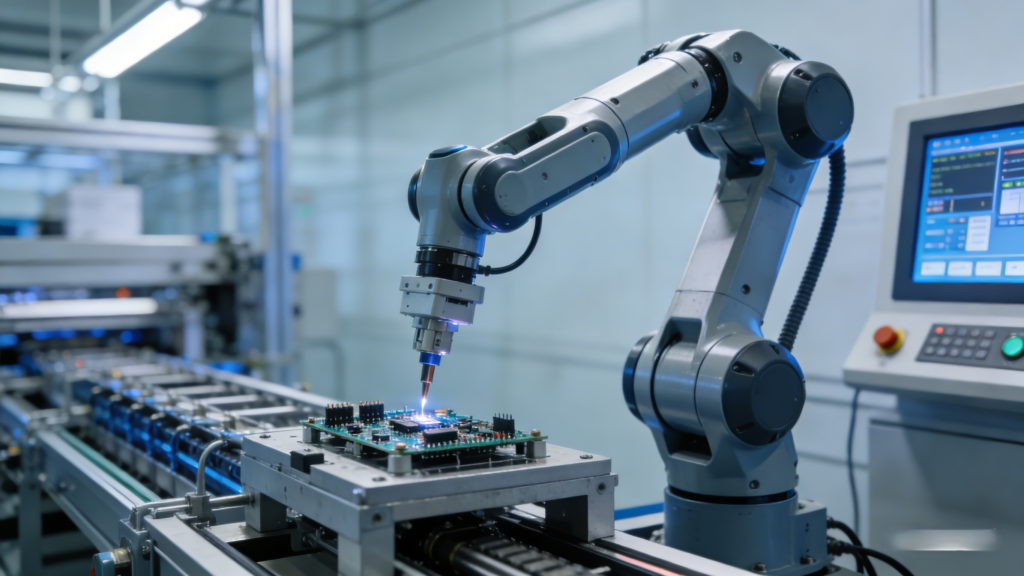
Factories increasingly depend on precision. Robots equipped with bionic eyes can detect microscopic flaws in products, align complex components, and adjust to variations in assembly lines. This adaptability reduces waste, improves efficiency, and sets the stage for fully automated smart factories.
Healthcare and Medical Robots
Medical robots are beginning to revolutionize surgery. With bionic vision, they can distinguish tissues, blood vessels, and organs with accuracy that rivals or exceeds human surgeons. In elderly care, robots with advanced eyes can monitor patient movement, detect falls, and provide real-time alerts to caregivers.
Autonomous Vehicles and Drones
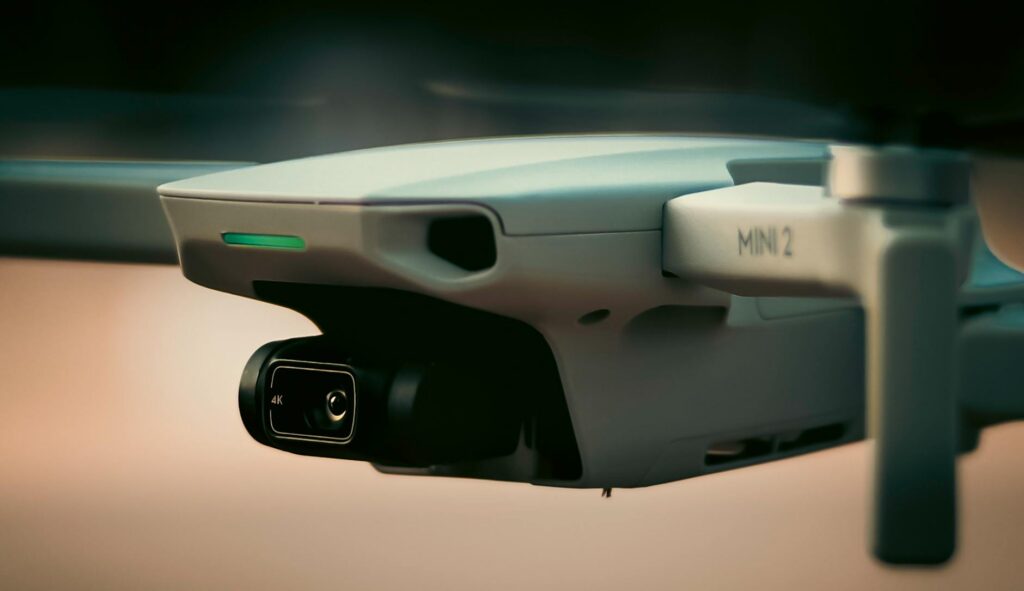
Self-driving cars and drones require reliable vision. Traditional cameras alone are insufficient. By integrating bionic eyes, these vehicles gain depth perception, advanced object recognition, and the ability to navigate safely in unpredictable environments such as crowded cities or disaster zones.
Security and Defense
Surveillance robots use bionic vision to detect suspicious activities, identify threats, and provide real-time analysis of environments unsafe for humans. In defense, robotic vision systems are being tested for reconnaissance and battlefield support, raising both opportunities and ethical questions.
Exploration and Space Missions
Perhaps the most exciting use lies in space. Robots with bionic eyes can explore planets, analyze terrain, and adapt to conditions beyond human survival. NASA and other space agencies are already experimenting with rotic explorers equipped with vision systems capable of autonomous decision-making.
4. Challenges and Limitations
Despite the promise, bionic vision in robots faces several hurdles.
Data Overload and Processing Power
High-resolution sensors produce enormous amounts of data. Robots must process this instantly to act in real time. Developing processors powerful enough to handle this information remains a challenge.
Latency and Speed
Even a delay of milliseconds can cause problems. A surgical robot with slow vision could harm patients. Autonomous vehicles with lagging perception could cause accidents. Ensuring real-time responsiveness is critical.
Energy Consumption
Human eyes function with remarkable efficiency, but robotic vision systems consume far more energy. Reducing power requirements is essential for portable or long-term autonomous robots.
Cost of Development
Advanced sensors and processors are expensive. Until costs fall, bionic eyes may remain confined to high-end robots rather than mass-market applications.
Ethical and Social Concerns
Robots with human-like eyes raise questions of trust, privacy, and surveillance. Will societies accept constant observation by machines? Can laws keep pace with the rapid development of bionic vision?
5. The Future of Bionic Vision in Robots

Integration with Artificial Intelligence
By 2030, experts predict that AI-driven bionic eyes will enable robots to understand not just objects but also human emotions, gestures, and intentions. This will make collaboration between humans and robots smoother and more intuitive.
Human-Robot Collaboration
Imagine a workplace where robots equipped with bionic vision can interpret a colleague’s facial expression or hand signal and respond accordingly. Such collaboration will redefine industries from manufacturing to healthcare.
Transhumanism and Cyborgs
As bionic eyes advance in robotics, they will also influence human enhancement. People with artificial eyes may eventually surpass natural vision, seeing wavelengths or details beyond human capacity. The line between humans and robots will blur.
Global Forecast
By the mid-21st century, robots with bionic eyes may become common in households, workplaces, and even personal companionship. While ethical debates will continue, the economic and social benefits of enhanced robotic vision will drive widespread adoption.
6. Case Studies and Current Research
Research into bionic eyes and their applications in robots is moving rapidly, with real-world projects already producing impressive results. These case studies highlight how the technology has advanced from theoretical possibility to practical implementation.
Medical Robotics
In 2023, researchers developed surgical robots enhanced with AI-powered bionic vision that improved tumor detection accuracy by more than 25%. Using advanced multispectral imaging, these robots could distinguish between healthy and cancerous tissue in ways that even experienced surgeons found difficult. Hospitals in Japan and the United States are piloting such systems, showing early promise in reducing surgical errors and improving recovery outcomes.
Industrial Inspection
Manufacturing companies have begun deploying robots equipped with bionic eyes to inspect microchips and other delicate components. Traditional inspection relied on human workers or static cameras, but errors were costly. With bionic vision, robots can now identify microscopic flaws in milliseconds, reducing waste and increasing production yields. For example, semiconductor firms in Taiwan and South Korea are investing heavily in robotic inspection systems to maintain global competitiveness.
Agricultural Monitoring
Another emerging case study comes from agriculture. Drones with bionic vision equipped with infrared and ultraviolet sensors are used to monitor large-scale crop health. By detecting stress patterns invisible to human eyes, these drones can inform farmers of irrigation needs, pest infestations, or nutrient deficiencies. Early tests suggest yield improvements of up to 20% when robotic vision is integrated into farming practices.
Space Exploration
In 2022, the European Space Agency tested a lunar rover with bionic eyes that navigated a simulated lunar surface without human input. The rover’s ability to interpret terrain, recognize hazards, and adapt autonomously represents a leap forward for extraterrestrial missions. NASA is conducting similar research, developing rovers with vision systems capable of geological analysis.
Collaborative Robotics (Cobots)
In workplaces, collaborative robots—or cobots—are increasingly using bionic eyes to ensure safe interaction with humans. Vision systems help detect sudden human movements, preventing accidents and enabling fluid cooperation. Companies like ABB and Universal Robots are pioneering cobots with enhanced visual awareness, aiming to redefine how humans and machines share workspace.
Academic Research and Future Directions
Academic research is equally dynamic. Universities and research institutes worldwide are experimenting with eye-like sensors, neuromorphic processors, and bio-inspired algorithms. According to a recent article in IEEE Spectrum, neuromorphic vision chips are making it possible for robots to process images with far less energy, a development that could remove one of the biggest barriers to widespread adoption of bionic vision.
Together, these case studies show that bionic vision in robots is not an abstract dream but a technology actively shaping industries. From medicine to agriculture, from microchips to space travel, robots with bionic eyes are already beginning to transform daily life and global economies.
7. Ethical Reflections
The more robots resemble humans, the stronger the psychological response they provoke. Robots with bionic eyes can trigger trust or discomfort depending on design. Researchers must balance realism with functionality to avoid the “uncanny valley” effect.
There is also the question of surveillance. If bionic vision is used for constant monitoring, society must ensure privacy rights are respected. Ethical frameworks will be as important as technical innovations.