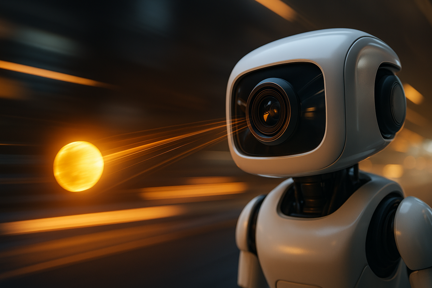

In the evolution of robotics, visual perception has become one of the most critical capabilities. Whether it is autonomous vehicles speeding down highways, drones navigating complex terrains at high speed, or industrial robotic arms performing rapid pick-and-place operations, robots must be able to see clearly and react quickly.
However, in high-speed scenarios, conventional cameras face major limitations such as motion blur, insufficient frame rate, and processing delays. These issues lead to situations where robots effectively “see blind,” undermining their ability to make accurate decisions and act in time.
This challenge has spurred the development of Dynamic Vision technologies. The goal of dynamic vision is to enable robots to capture clear and reliable visual information, even in extreme, high-speed environments. In this article, we will explore three core technologies that are redefining robotic perception: Event Cameras, High-Speed Cameras, and Temporal Vision. We will analyze how these innovations overcome the “seeing blind” problem and look at the emerging applications and future trends.
1. The Problem of “Seeing Blind” in High-Speed Motion
1.1 Motion Blur
Motion blur occurs when either the robot or the observed object moves too fast during a camera’s exposure time. The resulting smeared images lose critical edge and detail information. While this may be tolerable for the human eye, it is disastrous for robots that rely on precise edge detection and feature extraction.
1.2 Insufficient Frame Rate
Most industrial cameras operate at 30–60 FPS, with some high-end devices reaching 120 FPS. But for autonomous vehicles traveling at 100 km/h, the environment changes dramatically in milliseconds, and tens of frames per second are far from sufficient. This creates a “frame gap” where the robot effectively misses crucial moments.
1.3 Processing Latency
High-speed environments not only require faster image capture but also faster computation. If the robot’s processor cannot keep up with the data load, visual recognition lags behind reality. This leads to the paradox where the robot “saw it,” but reacted too late, resulting in errors or accidents.
1.4 Complexity of Real Environments
High-speed motion is often accompanied by rapid changes in lighting, occlusion, and vibration. For instance, a drone flying through a forest faces rapidly alternating shadows, moving branches, and camera shake, all of which exacerbate the risk of visual failure.
2. Dynamic Vision: The Technologies That Solve “Seeing Blind”
To overcome these challenges, researchers and companies have developed Dynamic Vision solutions. Three approaches stand out: event cameras, high-speed cameras, and temporal vision. Each has strengths, limitations, and specific application domains.
2.1 Event Cameras
Principle
Unlike standard cameras, event cameras do not capture full frames at fixed intervals. Instead, they output asynchronous events whenever the brightness at a pixel changes. The result is a sparse, continuous stream of change data.
Advantages
- Ultra-high temporal resolution: Microsecond response, compared to millisecond latency in traditional cameras.
- Low latency: Only changes are recorded, reducing redundancy.
- No motion blur: Edges of fast-moving objects are sharp, since brightness changes are directly captured.
- Energy efficiency: Produces less data, saving bandwidth and power.
Applications
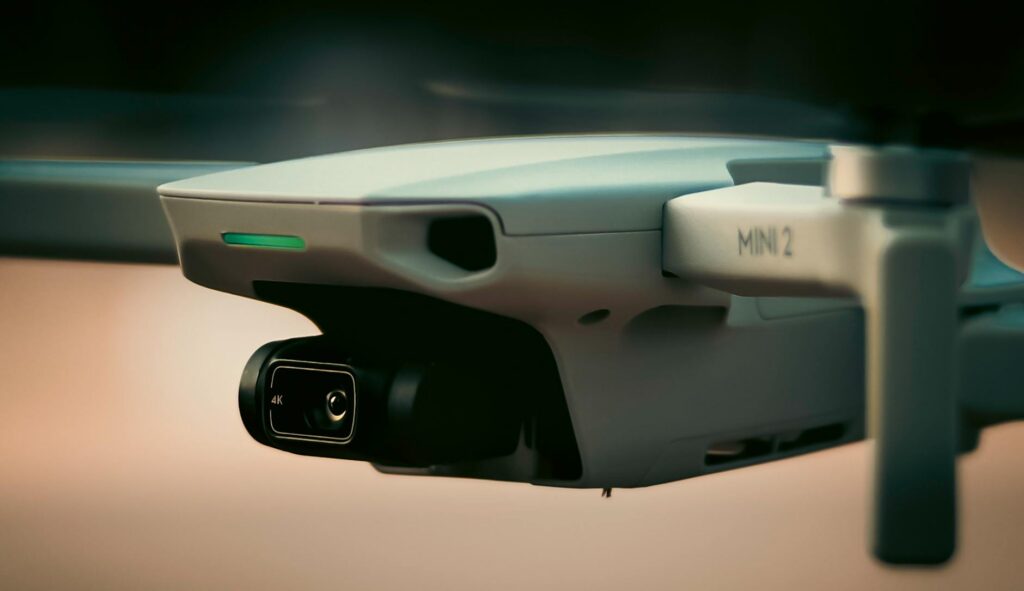
- Drone racing: Event cameras help drones fly at 200 km/h through complex tracks, maintaining precise navigation.
- Autonomous driving at night: Event cameras handle low light and high dynamic range, detecting pedestrians that normal cameras miss.
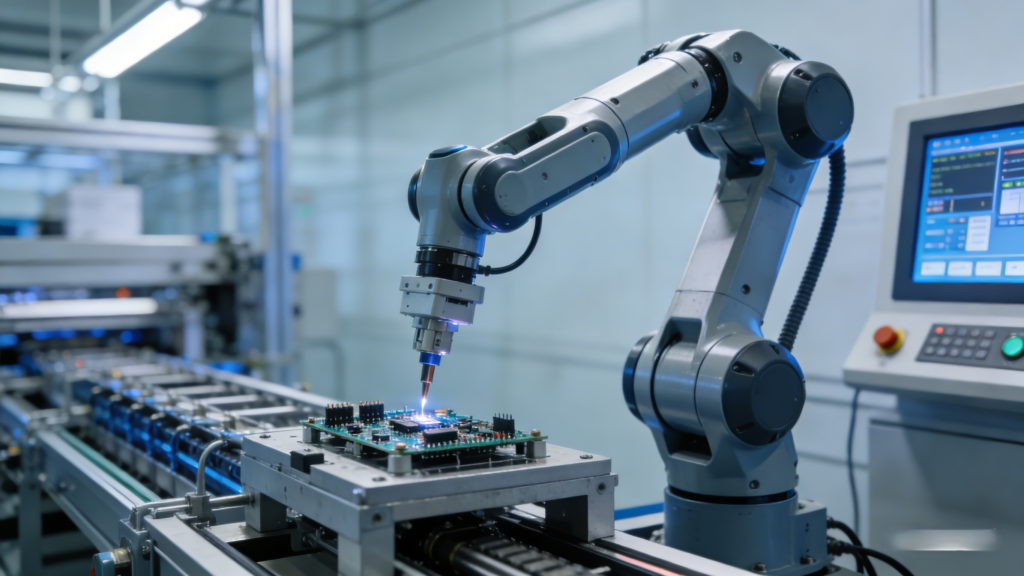
- Industrial robotics: On conveyor belts, they capture edge details of fast-moving parts, allowing robotic arms to grab them with millisecond precision. For more details about event-based vision technology, check out this introduction to event cameras from industry experts.
2.2 High-Speed Cameras

Principle
Another solution is to increase the frame rate. High-speed cameras capture hundreds or even thousands of frames per second.
Advantages
- Continuous imagery: Even at extreme speed, objects remain visible.
- Compatibility: Works with existing computer vision frameworks.
- Versatility: Useful for detection, inspection, and research.
Challenges
- Massive data: 1000 FPS generates huge data loads, stressing storage and transmission.
- Processing pressure: Algorithms must keep up, or latency reappears.
- Cost and power: Expensive and energy-intensive, limiting wide adoption.
Applications
- Industrial inspection: Detects defects on fast-moving production lines, from bottles to semiconductors.
- Sports robots: Helps ping-pong or soccer robots predict ball trajectories.
- Scientific research: Used in labs to study collisions, explosions, and fluid flows.
2.3 Temporal Vision
Principle
Temporal vision is not a hardware device but a software approach. It emphasizes the time dimension, combining information across frames.
Methods
- Optical flow: Calculates pixel-level motion between frames.
- Temporal deep learning: Convolutional or Transformer models capture sequential features.
- Multimodal fusion: Integrates vision with IMU or LiDAR for robustness.
Advantages
- Latency compensation: Infers missing details when frame rates are low.
- Noise robustness: Smooths out environmental disturbances.
- Cost-effective: Relies on algorithms, not expensive sensors.
Applications
- Autonomous driving: Fuses camera and IMU data for stable lane and pedestrian detection.
- Industrial arms: Predicts object trajectories during high-speed grasping.
- Security systems: Recognizes continuous human actions, reducing false alarms.
3. Real-World Applications of Dynamic Vision

Dynamic vision is not just theory. It is already reshaping industries.
- Drone Swarms
Drone swarms require millisecond-level reaction. Event cameras capture edges, high-speed cameras provide continuous frames, and temporal vision predicts movement. Together, they allow drones to fly in formation, dodge obstacles, and search disaster zones. - Autonomous Vehicles
On highways, autonomous cars need to process vast amounts of information instantly. Dynamic vision reduces delay and prevents blind spots, enabling safer and smoother driving. - Industrial Robotics
On production lines, robotic arms must sort, grab, and inspect items at lightning speed. Dynamic vision makes this possible, improving throughput and reducing errors. - Sports and Medical Robots
Robots that play sports or assist rehabilitation need to track fast-moving objects or human limbs. Dynamic vision provides the clarity and prediction they require. - Smart Cities and Traffic
Vehicles and infrastructure share visual data through V2X communication, effectively forming a robotic swarm. Dynamic vision ensures smooth traffic flow and accident prevention.
4. Future Trends and Challenges
Dynamic vision is progressing rapidly, but several key trends and challenges will shape its next phase of development.
4.1 Hardware–Software Integration
Future systems will require close co-design between sensors and algorithms. Event cameras and high-speed cameras generate unique data, but without optimized temporal models, the value is limited. Conversely, even the most advanced AI requires high-quality input. Hardware and software must evolve together.
4.2 Edge Computing and Efficiency
Processing vast amounts of visual data in real time demands on-device AI chips. Cloud-only approaches introduce unacceptable latency. The trend is toward edge computing platforms that deliver trillions of operations per second while maintaining low power consumption, especially important for drones and mobile robots.
4.3 Standardization and Ecosystem
The field is still fragmented. To scale, dynamic vision needs standards for data formats, benchmarks, and interfaces. An ecosystem of interoperable sensors, algorithms, and SDKs will lower integration costs and accelerate adoption across industries.
4.4 Cost and Scalability
High-speed cameras remain expensive, while event cameras are not yet mass-market. For logistics, agriculture, or consumer robotics, cost is a barrier. Achieving affordable, scalable production of dynamic vision sensors will be critical for mainstream deployment.
4.5 Multimodal Fusion
Vision alone is not always reliable. In fog, rain, or low light, robots must combine cameras with LiDAR, radar, or IMU to achieve robust perception. The challenge lies in real-time fusion without overwhelming computation resources.
4.6 Training Data and AI Models
Event-based data and ultra-high-frame-rate video differ from standard images. Future research will require new deep learning architectures and large annotated datasets. Simulation and synthetic data generation may help bridge this gap.
4.7 Regulation and Safety
As dynamic vision enters critical systems like self-driving cars and drones, safety certification and regulation will become necessary. Industry standards must ensure reliability in diverse conditions to gain public trust.
5. Conclusion
In the past, the inability to “see clearly” under high-speed motion was a major bottleneck for robotics. Today, with advances in Event Cameras, High-Speed Cameras, and Temporal Vision, robots are overcoming these limitations.
Whether it is drones flying at extreme speeds, autonomous cars navigating highways, or robotic arms sorting products in milliseconds, dynamic vision provides the reliable eyes they need. In the near future, dynamic vision will no longer be optional—it will be a fundamental requirement for any robot operating in real-world, high-speed environments.