
Stereo vision is a fundamental technique in computer vision that enables machines to perceive depth by mimicking human binocular vision. By analyzing the disparity between two images captured from slightly different viewpoints, stereo cameras can estimate the distance to objects in a scene. This capability is crucial for applications such as autonomous navigation, 3D reconstruction, and robotic manipulation.
1.Stereo Camera Working Principle
1.1 Stereo Vision and Triangulation
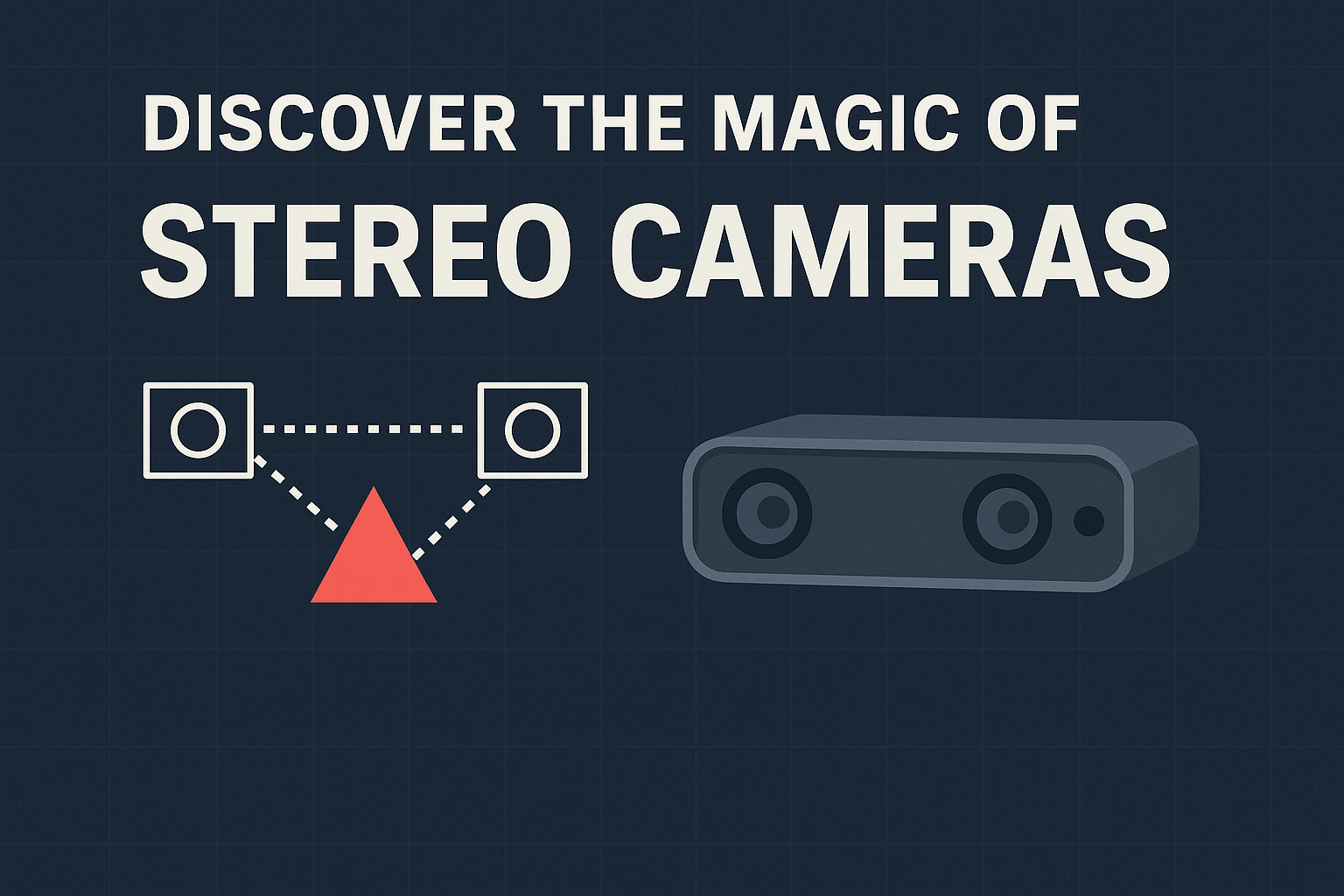
Stereo cameras operate on the principle of triangulation, similar to human depth perception. When two cameras capture images of the same scene from different horizontal positions, corresponding points in the images are shifted horizontally. This shift, known as disparity, is inversely proportional to the distance of the object from the cameras. By knowing the baseline distance between the cameras and their focal lengths, the depth (Z) of a point can be calculated using the formula:
Z = f × B / d
where:
- f is the focal length,
- B is the baseline distance between the cameras,
- d is the disparity between corresponding points in the two images.
This method allows for accurate depth estimation, provided that the cameras are properly calibrated and the images are rectified.
1.2 Epipolar Geometry and Image Rectification
To simplify the depth calculation process, stereo images are often rectified. Rectification transforms the images so that corresponding points lie on the same horizontal line, known as the epipolar line. This alignment reduces the search space for matching points, making the disparity calculation more efficient. Epipolar geometry plays a crucial role in ensuring that corresponding points can be accurately identified between the two images.
2. Key Technologies and Algorithms
2.1 Camera Calibration
Accurate depth measurement requires precise camera calibration to determine intrinsic parameters (such as focal length and optical center) and extrinsic parameters (such as the relative position and orientation between the cameras). Calibration is typically performed using a known pattern, like a checkerboard, and specialized algorithms that minimize the reprojection error between observed and projected points.
2.2 Feature Matching and Disparity Calculation

Once the images are rectified, the next step is to find corresponding points between the left and right images. Feature matching algorithms, such as SIFT (Scale-Invariant Feature Transform), SURF (Speeded-Up Robust Features), and ORB (Oriented FAST and Rotated BRIEF), are commonly used for this purpose. These algorithms identify distinctive features in the images and match them across the stereo pair. The disparity is then computed as the horizontal shift between corresponding points.
2.3 Depth Map Generation and Optimization

The disparity map, which represents the disparity at each pixel, is used to generate the depth map. However, disparity maps often contain noise and require refinement. Techniques like block matching, semi-global matching, and graph cuts are employed to improve the accuracy and smoothness of the disparity map. Additionally, depth maps can be further enhanced using deep learning-based methods that learn to predict depth from stereo images.
3. Applications
Stereo cameras are widely used in various fields:
- Autonomous Vehicles: For obstacle detection and navigation.
- Robotics: To enable robots to understand and interact with their environment.
- 3D Reconstruction: In applications like virtual reality and cultural heritage preservation.
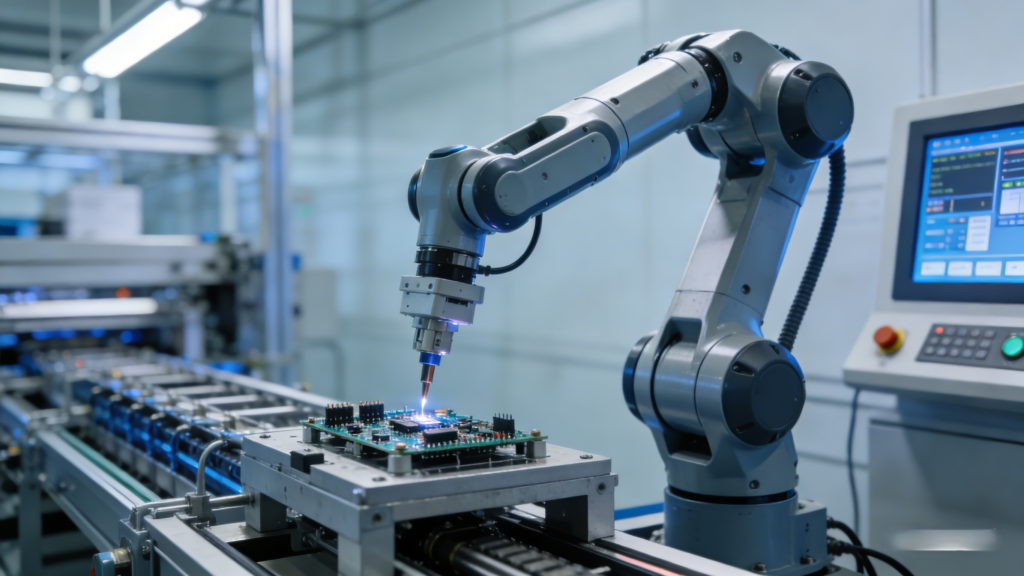
- Industrial Automation: For quality control and assembly line monitoring.
These applications benefit from the stereo camera’s ability to provide accurate depth information, enabling systems to make informed decisions based on the spatial arrangement of objects in their environment.
4. Berxel’s P-Series 3D Camera: A Cutting-Edge Solution
In response to the challenges posed by traditional stereo vision systems in complex environments, Berxel Photonics has developed the P-Series 3D camera. Leveraging advanced polarization-structured light technology, the P-Series offers unparalleled depth perception capabilities.
4.1 Core Technological Advantages
- High Contrast Grating (HCG) VCSELs: The P-Series utilizes HCG VCSELs, which provide a high polarization extinction ratio, effectively mitigating issues like multi-path reflections and glare from glossy surfaces.
- Compact Blind Spot Design: Models like the iHawk P100Q feature a minimal blind spot of just 0.1 meters, making them ideal for applications requiring precise near-field measurements.
- Multiple Interface Options: The P-Series supports various interfaces, including Type-C, Ethernet, and Micro USB, ensuring seamless integration with different platforms and systems.
- High Frame Rate Output: With resolutions up to 1280×800 at 7 frames per second, the P-Series delivers real-time depth information, crucial for dynamic environments.
4.2 Diverse Application Scenarios
The P-Series 3D camera is versatile, finding applications across various industries:
- Robotics: Enhances robot navigation and obstacle avoidance in complex environments.
- Autonomous Vehicles: Provides accurate depth sensing for safe and efficient driving.
- Smart Manufacturing: Facilitates precise measurements and quality control in production lines.
- AIoT: Enables intelligent interaction and environmental awareness in connected devices.
4.3 Industry Recognition
Berxel’s P-Series 3D camera has garnered acclaim for its innovative approach to depth sensing. The integration of polarization-structured light technology sets it apart from traditional systems, offering enhanced performance in challenging conditions.